Every once in a while, a conversation lands with the kind of clarity that makes the whole field feel a little less foggy. Our recent Impact Quantum interview with Dr. Kevin A. Villegas Rosales of Quantum Machines was one of those moments. Kevin sits right at the heart of the industry’s fastest-growing zone: the control layer, customer success, and hands-on work with real quantum hardware as it moves from experimental wonder to usable technology. Talking with him felt like watching two worlds, deep physics and practical engineering, finally learning how to finish each other’s sentences.
The result was not another round of futuristic predictions. It was a grounded, refreshingly honest picture of quantum computing in 2025, built from the challenges and breakthroughs happening in actual labs and deployments.
The Control Layer Is Becoming the New Center of Gravity
Kevin’s work at Quantum Machines centers on the orchestration and control systems, the quiet machinery behind the qubit curtain. He described customer success in this space as something unlike traditional technical support. It is about walking universities, labs, and startups through onboarding, tuning, calibration, experimentation, and the long, steady arc of optimization. It is relational work. Human work.
And it matters because this layer is where theory becomes action. Headlines like to focus on chip counts and qubit types, but Kevin reminded us that the real progress often happens in the orchestration logic, measurement routines, and experimental workflows that make qubits stable enough to trust. These are the gears that turn quantum hardware from a fragile science project into a usable system.
Quantum Computing Is Not Living on an Island
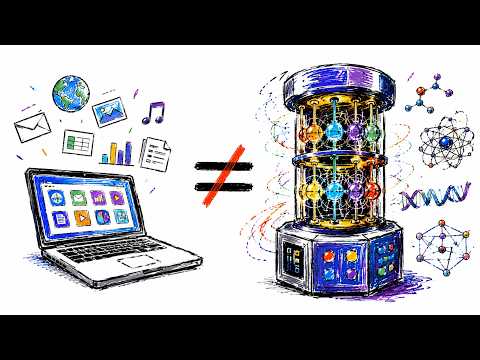
One of my favorite moments was Kevin’s gentle dismantling of the idea that quantum computing is some mystical alien technology separate from the classical tools we already live with. He explained that everything from smartphones to MRI machines already depends on quantum mechanics. The difference is not the physics. It is the information model.
Classical computers use devices built on quantum principles to manipulate classical bits. Quantum computers manipulate quantum information directly. It is a subtle shift, like switching the lens on a camera. The same light remains, but the framing changes. Kevin’s way of explaining this did more than demystify quantum computing. It made it feel familiar, connected, and continuous with the technology we already understand.
The Quantum Workforce Will Not Be Limited to Physicists
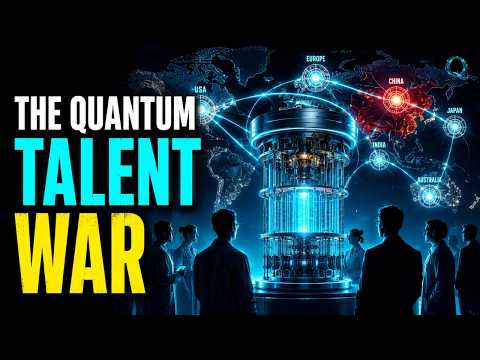
Another thread that kept weaving through the conversation was talent. Quantum may have grown out of physics, but it will not grow up inside physics alone. Kevin talked about the multidisciplinary teams inside Quantum Machines. Physicists collaborate daily with control engineers, FPGA specialists, software developers, cloud architects, and even marketing and sales folks who know how to translate complex systems into something humans can hold onto.
This shift feels like an inflection point. For years, the field has been framed as a domain for the mathematically fearless. But today’s companies need people who can build, integrate, communicate, and support real systems. The future workforce looks more like a vibrant ecosystem than a narrow pipeline.
Quantum and AI Are Not Merging Overnight
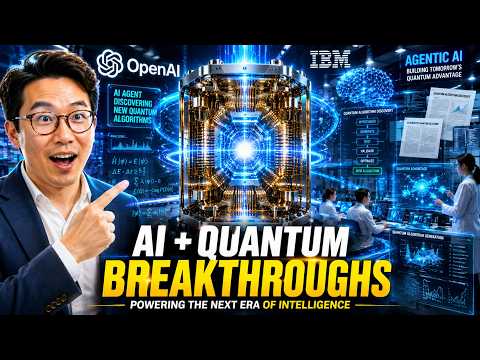
We also explored the often-hyped idea that quantum computing and AI are racing toward some dramatic convergence. Kevin offered a more grounded perspective. Modern AI has leapfrogged ahead so quickly that quantum’s practical algorithmic contributions are still catching up. Quantum machine learning remains exciting, but the two fields are currently running in parallel rather than intertwining.
It was refreshing to hear someone describe this without diminishing either domain—just a clear and calm acknowledgment of where we are.
Calibration Is Still the Mountain We Are Climbing
If there was a recurring heartbeat to this interview, it was calibration. Spectroscopy, measurement fidelity, resonators, pulse sequences, the quiet and invisible work that has to happen before a single quantum algorithm can even stretch its legs. Kevin spoke about calibration with the curiosity of someone who sees puzzles in everyday hardware behavior and still wants to understand the story behind each one.
These challenges, tucked away behind the glossy announcements and conference stages, are where some of the most meaningful breakthroughs will happen. It is the kind of work that rewards patience and precision, like tuning an orchestra where every instrument changes pitch whenever the room temperature shifts.
Community and Curiosity Are the Real Engines
We ended in a place I keep coming back to: people. Mentorship. Community. The importance of seeing someone who made the path possible. Kevin talked about progress as a collective accomplishment built not only from equations and protocols but also from curiosity. The kind of curiosity that nudges you to ask one more question, run one more calibration, or explore one more unexpected resonance peak.
Quantum computing thrives on that kind of curiosity. Every answer creates three new mysteries. Every breakthrough opens a new hallway. And somehow that is what makes the field feel so alive.
This interview reminded me that the quantum ecosystem is not just a collection of technologies. It is a community learning to explore together, build together, and keep asking better questions.
This comes from Episode 24, which was recorded on 9-8-2025.