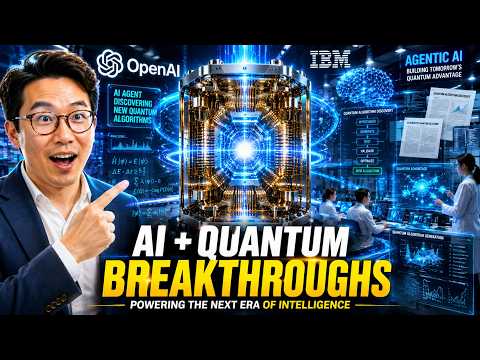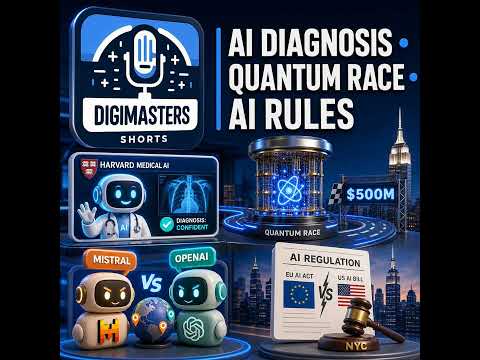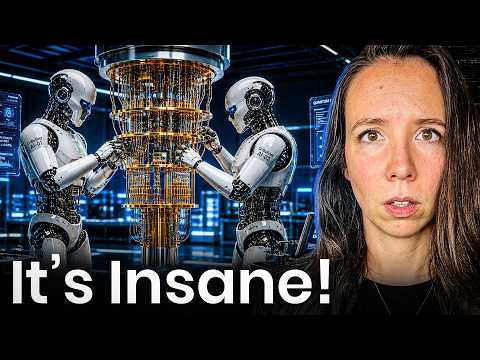
Something subtle yet seismic has just occurred in the world of science and technology. A development of remarkable significance may be quietly reshaping the boundaries of what we believe is possible. As speculation spreads through the internet’s interconnected channels, a deeper story is emerging: a quantum AI breakthrough hinting at capabilities once confined to science fiction.
Based on content from Luminox Zenith
In recent reports surfacing thick and fast, the intrigue and mystique around quantum artificial intelligence expand. Typically, the tales of discovery claim divine status, but peeling back the rhetoric reveals something equally fascinating, if less mystical: a marriage between AI and quantum computing poised on the brink of surreal possibilities.
To comprehend why this narrative is captivating the world, let us first untangle the jargon. Take the stage Microsoft’s newly minted Majorana 2, a quantum chip engineered to defy the relentless decay of cubits. Until now, cubits—the building blocks of quantum computers—fell apart with a whisper of disturbance. Yet, Majorana 2 promises a thousandfold improvement in their lifespan. Imagine the reclusive genius: fragile to touch, but unstoppable once comfortably ensconced.
This development was buoyed by Microsoft’s proprietary AI system, Discovery, underscoring a feedback loop where AI itself greases the wheels of scientific progress, catalyzing further quantum discoveries. It’s a collaboration, an iteration that mirrors the cyclicity of seasons—AI crafting better quantum machinery that, in turn, augments AI’s own capabilities. Here, we observe the dawn of an exponential cycle, arresting not just to the immediate architects but to all who envision the ripples of technological endeavor.
These revelations suggest that once perceived barriers in drug discovery or climate modeling could soon become mere technicality. For medical scientists, this means collapsing timelines, from lab trials to life-saving treatments—all powered by genuine quantum simulations rather than their classically approximated counterparts.
Yet, there’s an undertone of caution carried within this narrative’s flow. Consider cryptography—the guardian of our digital sanctuaries—which now stands at an inevitable junction. Quantum computing’s prowess threatens to dissolve the sanctity of existing encryption methods, demanding a swift yet comprehensive migration to post-quantum encryption paradigms.
Zoom out, and you see how AI isn’t merely playing sides; it’s actively scripting the play. AI-directed scientific exploration, as demonstrated by systems like Microsoft Discovery, is not a proposition of yesteryear sci-fi but a present-day reality where AI autonomously charts new scientific territories—unexpected pathways that human intuition alone might not venture upon.
Against this backdrop, imagine a landscape where small teams—academics in far-flung universities, nimble startups in resource-bare settings—now possess tools once reserved for elite institutions. What once required colossal infrastructure can be achieved through distributed AI-augmented labs, democratizing discovery across glimmers where innovation lurks, untethered from geographic and financial encumbrances.
As we ponder these intertwining advancements, it prompts the question that should persist with all of us, long after the scroll ends: What does the ascent of quantum AI herald, not just for those who engineer at its edge but for every sentient being it will imperceptibly impact? The immediacy of our action today will echo through tomorrows, unwritten yet waiting to be transformed by reimagined capabilities. As this quiet revolution unfolds, the boldness of our curiosity beckons us forward—ever further into the tapestry of sentience and technology’s entwined dance.
—