When we talk about the future of quantum computing, the conversation usually turns to hardware, algorithms, and which company or country might get there first. But there’s another race happening at the same time, and it may ultimately matter just as much.
It’s the race for people.
Quantum computing needs more than powerful machines. It needs researchers, engineers, developers, educators, communicators, and business leaders who understand how to build the technology, explain it, and eventually put it to work. The countries and companies that succeed in quantum may not simply be the ones with the best technology. They may be the ones that build the strongest community of people around it.
Based on content from Quantum SystemHub
Perhaps the most pressing bottleneck in today’s quantum domain isn’t technological at all—it’s the scarcity of human capital. The demand for expertise in quantum technology far outstrips the current supply, with estimates suggesting there is only one qualified quantum candidate available for every three job openings globally. This deficit extends beyond physicists; it encompasses systems integrators, software developers, and engineers specializing in nascent fields like photonic engineering, where the pool shrinks to mere handfuls globally.
Corporations have taken the reins, with tech giants like IBM and Google leading the charge, accounting for the majority of quantum job postings in the US and Europe. They’ve become the new nerve centers for talent acquisition, eclipsing traditional academic bastions. To meet their voracious demands, these companies are casting their nets wide, often recruiting talent from adjacent fields such as semiconductors and investing heavily in role-specific training.
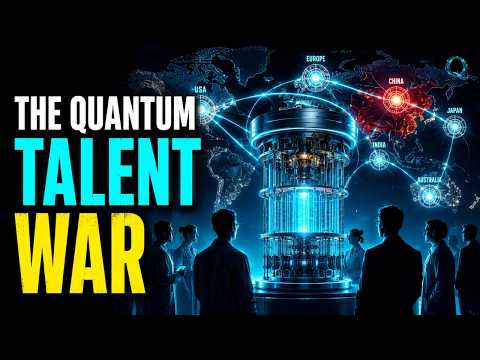
On the international stage, quantum initiatives reflect a spectrum of aspirations and strategies. The US’s $2.5 billion National Quantum Initiative vies against Europe’s emerging Quantum Academy, while China, with its prolific production of STEM PhDs, doubles down on a high-volume pipeline. Smaller nations, too, craft specialized hubs—Canada’s inclusive pathways and Australia’s quantum job forecasts are cases in point. Each seeks a slice of the burgeoning quantum economy and fears the shadow of technological dependency looms large.
Beneath this quest for talent lies a paradox of knowledge sharing. Once a bastion of open exchange, scientific collaboration now faces the imposition of ‘deemed exports’—legal designations that rigorously guard quantum intellectual property. Such controls mean even sharing research with an international student can be seen as an export, complicating the flow of ideas across borders. These restrictions, while securing national interests, risk stunting innovation by potentially driving talent to less restrictive shores.
Amidst these stringent regulations, the scientists and corporations find themselves enmeshed in a new reality: navigating a landscape of detailed compliance and geofencing. Like the Cold War era of aerospace, today’s quantum endeavors must segregate open science from sensitive data meticulously. For multinational corporations, this means geographically isolating research and carefully policing capital flows to ensure alignment with complex geopolitical stipulations.
The future of quantum technology hinges upon a delicate balance—safe-guarding national interests while fostering a global community of inquiry and innovation. The stakes are high, and amid export controls that outline an exhaustive web of restrictions, the strategic priorities evolve. Surviving this environment necessitates a shift from pure speed to resilience and flexibility, ensuring long-term stability over short-term gains.
Ultimately, the nation that masterfully cultivates, attracts, and retains quantum talent may very well dictate the pace and direction of this fledgling industry. Whether through strategic autonomy or international partnerships, the landscape is set for transformation. In the quiet spaces between policy lines and research papers, a question echoes: Will the true victors of the quantum race be those who hold the keys not to machines, but to minds?
In this dance of intellect and innovation, the narrative unfolds with complexity and intrigue, setting the stage for what promises to be a pivotal era in technological history. The unfolding story of quantum computing is as much about the dreams that power it as the brilliant, diverse minds that will undoubtedly bring them to life.
—