In the quiet corridors where technology meets the complexity of human lives, the weight of progress can sometimes feel like a whisper echoing through the halls. This notion might resonate particularly with the recent developments highlighted in the Digimasters Shorts, where rapid advancements in AI and quantum computing meet the nuanced landscape of geopolitical and regulatory dynamics.
Based on content from Digimasters UK
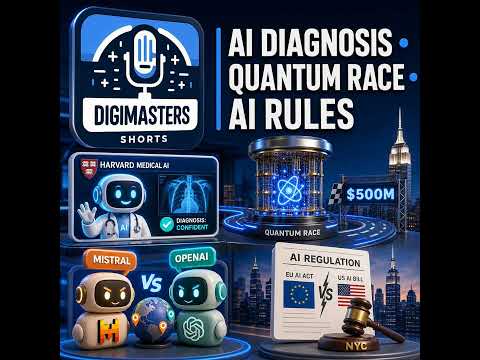
The study from Harvard and Stanford, revealing ChatGPT’s superior performance in medical diagnostics compared to numerous seasoned physicians, opens a Pandora’s box of questions—not solely about the capabilities of AI, but its readiness for real-world applications. Published in the esteemed journal, Science, the findings—while impressive—come with a caveat from lead author Adam Rodman, who reminds us that AI’s role in medicine is not yet fully realized. However, the allure of such a tool has led hospitals nationwide to adopt generative AI with a haste that is both unprecedented and somewhat alarming. In a field where time is typically a guardian of safety, this whirlwind integration poses both opportunities and risks.
The creeping spread of AI in healthcare without FDA approval tells a story of both innovation and concern. While AI could indeed revolutionize the diagnosis of rare diseases, it also carries the specter of erroneous outputs that mislead more than they aid. A balance between innovation and regulation seems elusive, snuggled somewhere between the shadows. As AI tools proliferate and dodge full oversight by labeling themselves as wellness apps, they seem to stand on a fine line, straddling the realms of assistance and overreach.
On the other hand, the ambitious project led by PsiQuantum and the state of Illinois presents a different frontier. Backed by a monumental $500 million investment, the race to create a reliable quantum computer isn’t merely a technological milestone; it’s a statement of geopolitical intent. PsiQuantum’s approach veers from the incremental to the audacious, aiming from the start for a fault-tolerant system—a pursuit underlined by political maneuvering as much as scientific zeal. Governor J.B. Pritzker’s investment in creating a quantum hub on Chicago’s south side reflects a desire to reclaim technological hegemony, reminiscent of Silicon Valley’s rise.
In Europe, the dance of AI geopolitics plays on a different stage. The Mistral versus OpenAI scenario at the G7 underscores how regional tensions can pivot around technological prowess. Mistral CEO Arthur Mensch has long advocated for European autonomy in AI, and recent actions by the US government concerning Anthropic only fuel this sentiment. Reflected in political arenas and satirical social media alike, this episode casts a light on the demand for technological sovereignty—a position less about leading the dance and more about controlling the music.
Meanwhile, in New York, the confluence of technology and politics finds a tangible battleground in Assemblyman Alex Morse’s congressional bid. It’s a microcosm of a larger conflict, where the need to regulate AI tangles with industry interests. The primary battle has become a proxy for broader ideological divides regarding the governance of cutting-edge tech. Here the personal is indeed political, with voters not just choosing a representative, but a vision for how tech fits—and regulates—into our collective future.
As these narratives unfold, the strands of innovation, policy, and sovereignty weave a complex tapestry. Each development whispers reminders of both the potential and the caution inherent in our technological evolution. While the march towards more sophisticated machines continues, perhaps the real question to ponder is how humanity will choose to accompany this progress with wisdom and restraint. As we peer into an uncertain horizon, these stories encourage not just reflection, but thoughtful discussion on how we navigate the intersections of technology and society.
—