Technology has a habit of making us believe the next big thing will replace everything that came before it. Quantum computing is no different. As these machines become more powerful, it’s easy to imagine a future where our laptops and traditional computers suddenly seem outdated.
But that’s probably not how this story unfolds.
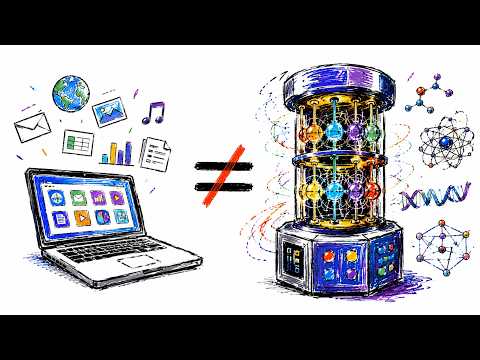
Quantum computers aren’t being built to replace the computers we use every day. They’re being developed to solve certain kinds of problems that traditional computers struggle with. The future is much more likely to be one where quantum and classical computers work alongside each other, each doing what it does best.
Based on content from Wonder Cairn
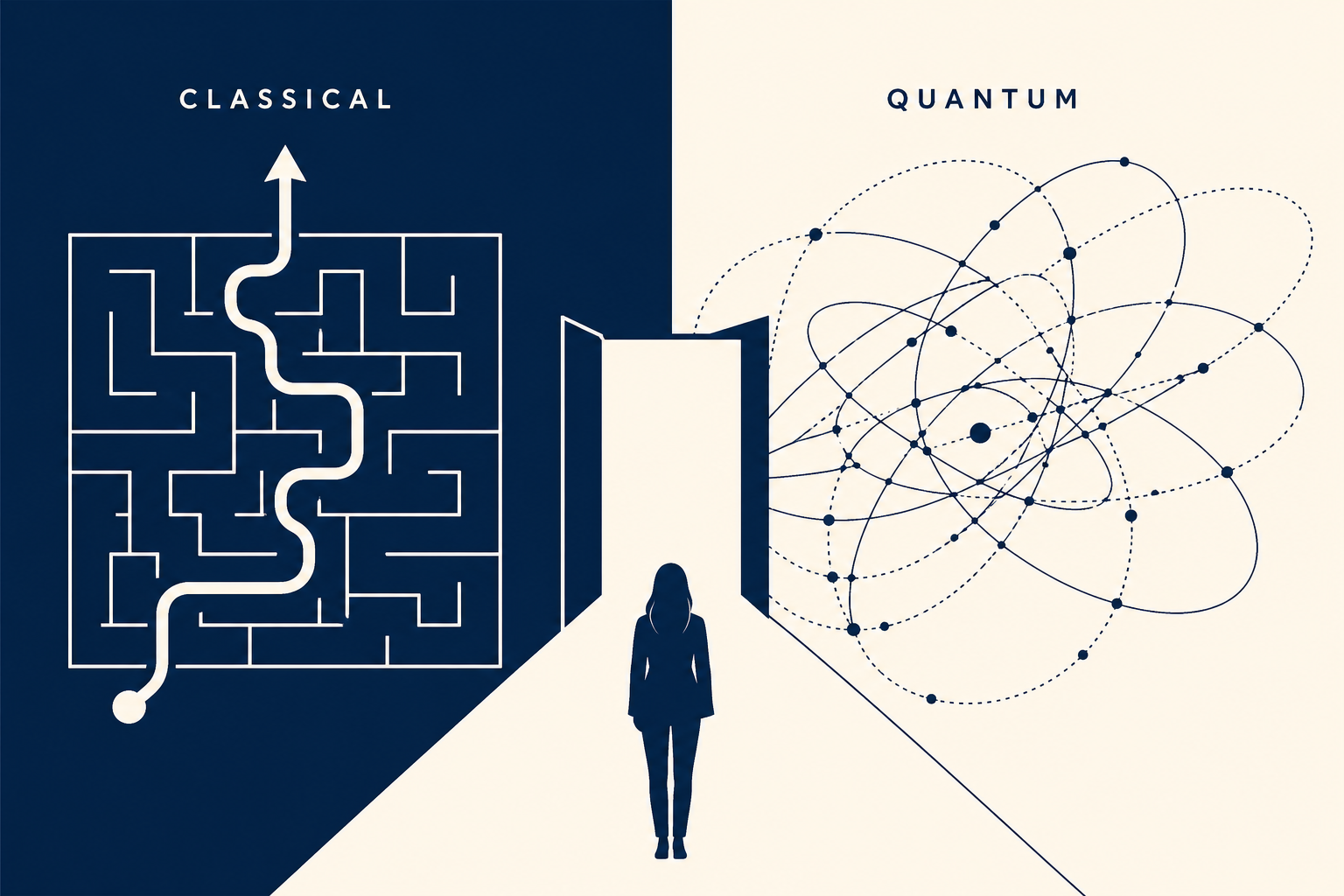
Quantum computers, in their essence, are transformative not because they are simply an evolution of the personal computers we use daily, but because they forge an entirely new path in computational capability — a departure rather than a direct successor. Our laptops, with their dependable binary systems, are built to handle everyday tasks: from simple computations and web browsing to more intricate processes like video editing and data management. These machines function by manipulating bits, straightforward yet profoundly effective building blocks that represent either a zero or a one. In contrast, quantum computers transcend this binary dance.
Imagine a world of problems with complexities woven into the very fabric of their existence. Optimization on scales unfathomable to classical systems, intricate molecular interactions in drug discovery, or the exploration of novel materials at the atomic level. Here, amidst billions of possible combinations, quantum computing offers a new approach; not through sheer brute force as one might expect, but through principles as ethereal as the whisper of quantum mechanics — concepts like superposition and entanglement come into play, providing quantum systems the ability to approach such problems from a fundamentally different angle.
Yet, the picture isn’t all tranquility and inevitable triumph. The same quantum characteristics that bestow potential also burden these machines with vulnerability. Cubits — the fundamental unit of quantum information — are fragile, imperceptibly sensitive to environmental disruptions: the faintest vibration, an errant heat wave, or a stray electromagnetic field. These can all unravel the delicate quantum fabric. Consequently, the current challenge is two-fold, straddling the lines of hardware and software — the engineering precision required remains daunting.
The effort isn’t solely in the creation of quantum computers but in their mastery. Quantum error correction emerges as a vital puzzle piece here, striving to cloak the fragile quantum states in reliability, although this pursuit demands monumental increases in physical cubit quantities, all meticulously controlled. It’s akin to conducting an orchestra where each musician plays the most delicate instrument, and the symphony depends on their perfect harmony amidst a tempest.
Perhaps we should not be waiting for a future where quantum machines supplant classical computing entirely. Instead, picture a collaborative future — a symbiosis. In this envisioned landscape, quantum computers and classical computers coexist, each complementing the other’s strengths, compensating for their weaknesses. Classical setups would continue performing everyday tasks with proficiency and consistency, while quantum systems step forth for those moments when reality’s complexity demands a scaffold built from strange quantum rules.
Thus, in the very quiet of our technological march forward, it might be wisest to consider that the defining characteristic of future computing is not singular dominance but rather subtle orchestra. You might never possess a personal quantum computer, yet you may unknowingly benefit from one — operating quietly in the background, turning the wheels of complexity when needed, invisible and yet intrinsic to the very makeup of the digital world.
In contemplating this future, a question lingers: How will our understanding and interaction with technology evolve, once these unfathomable layers blend seamlessly into our familiar world? The answers, it seems, are just as tantalizing as the questions quantum computing itself seeks to resolve.
—