The dawn of the quantum era brings extraordinary promise: computers that can outthink today’s most powerful supercomputers, new materials designed atom by atom, and pharmaceuticals modeled in days instead of decades. Yet, beneath this technological renaissance lies a profound ethical challenge: who benefits from quantum progress, and who is left behind?
Quantum technologies are emerging in a pattern similar to what we’ve seen before, concentrated in nations and corporations with deep capital reserves. The same dynamic that once defined the digital divide of the internet age is resurfacing; only this time, the stakes are far higher. Quantum computing could accelerate everything from the discovery of clean energy to personalized medicine. But without deliberate governance, these breakthroughs will primarily empower those who already own the infrastructure, reinforcing a hierarchy of technological privilege.
To ensure that the quantum revolution becomes a story of shared progress rather than exclusion, innovation must be guided by inclusion. That means investing not just in qubits, but in people, education, and equitable access.
Ethical Frontiers and Misuse Prevention
As quantum capabilities transition from the lab to the marketplace, the global community faces an urgent crossroads: how to design governance frameworks that keep pace with exponential innovation. We’ve already seen how unregulated disruption can backfire. Artificial intelligence, once heralded as purely transformative, is now a case study in the ethical lag between invention and oversight. Quantum must not repeat that mistake.
A forward-looking ethical framework for quantum technologies should be culturally sensitive, globally coordinated, and rooted in shared human values. It can draw on lessons from AI governance and the Ethical, Legal, and Social Issues (ELSI) initiatives pioneered during the rise of nanotechnology. These frameworks emphasized one essential principle: technology must serve humanity, not the other way around.
For quantum innovation, that means three things:
Technological Robustness and Accountability: Every quantum device, algorithm, and cloud service should meet standardized benchmarks for reliability and transparency. Independent audits must confirm results, avoiding the “black-box” opacity that plagued AI.
Data Protection and Privacy: Quantum computing’s ability to break classical encryption poses an existential risk to cybersecurity. Ensuring compliance with global privacy laws, and accelerating the adoption of post-quantum cryptography (PQC), is not optional; it’s imperative.
Social and Sustainable Application: From drug discovery to defense, quantum technology must be deployed in ways that minimize harm, prioritize sustainability, and promote global benefit.
Encouragingly, international bodies are beginning to mobilize. The International Telecommunication Union (ITU) launched its Quantum for Good initiative in 2025, emphasizing the ethical and developmental applications of quantum technology. Meanwhile, the G7 Cyber Expert Group (CEG) warned of emerging risks to global finance, urging member nations to fund PQC transition strategies now, before “harvest-now, decrypt-later” attacks become irreversible.
Quantum ethics can no longer be an afterthought; it must evolve in tandem with the science, integrated into every stage of design, deployment, and dissemination.
Beyond Hardware: The Race for Software, Algorithms, and Talent
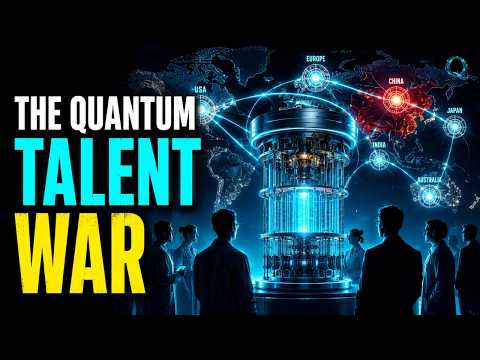
When people talk about the “quantum race,” they often picture cold laboratories filled with superconducting circuits or trapped ions. But the actual contest lies elsewhere: in software, algorithms, and human talent.
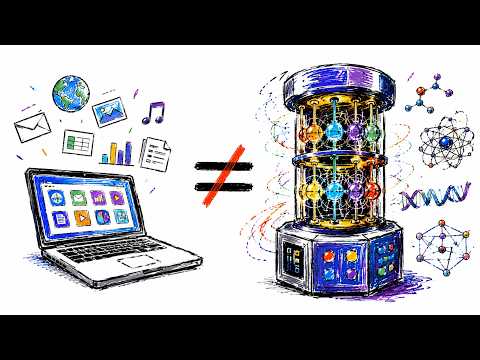
Quantum hardware comes in various forms, including superconducting qubits, trapped ions, neutral atoms, and photonics. Each modality has its own advantages, but none will succeed in isolation. To achieve valuable quantum, we need advanced abstraction layers, software that bridges the gap between physics and computation. Frameworks like IBM’s Qiskit, AWS Braket, and Xanadu’s PennyLane are doing precisely that, making it possible to design algorithms that run across diverse systems.
Yet the greatest bottleneck isn’t in the machines; it’s in the minds. There’s a global shortage of professionals who can build, program, or even conceptualize quantum systems. The challenge isn’t just technical; it’s educational and economic. Without inclusive training pipelines, the world risks creating a small elite of quantum-literate nations surrounded by digitally disenfranchised ones.
This is where quantum equity becomes an act of global security. Collaborative initiatives that train the next generation, especially in the Global South, aren’t charity; they’re strategic investments in the stability of our shared digital future.
Collaboration vs. the Zero-Sum Game
Quantum technology embodies a paradox: it’s both a tool for collaboration and a potential weapon.
The same principles that enable breakthroughs in materials or medicine also underpin Shor’s algorithm, which threatens to break public-key encryption. For governments, this duality transforms quantum research into a geopolitical arms race. Yet even amid competition, there are domains where cooperation is essential.
Standards and Benchmarks: The world needs universal, transparent measurement systems to validate quantum performance. This is the only way to distinguish genuine progress from hype.
Governance and Transparency: High-impact research, especially with defense implications, requires international trust frameworks to prevent misuse and maintain stability.
PQC Implementation: Because global communication systems are interconnected, post-quantum cryptography must be a collective effort. A single weak link could compromise the entire chain.
The quantum era cannot thrive in silos; progress must strike a balance between competition and collaboration, embracing open standards, ethical partnerships, and coordinated resilience.
The Decade Ahead: Milestones to Watch (2025–2035)
2025–2030: The NISQ Utility Phase
The next five years will bring practical, domain-specific quantum advantage. Expect breakthroughs in variational quantum eigensolvers (VQE) applied to materials science, logistics, and pharmaceuticals. Hardware systems will scale rapidly, with Rigetti targeting 100+ qubits and neutral atom platforms approaching 1,000. Enterprise-grade PQC migration will begin in earnest.
2030–2035: The Decisive Window
By the mid-2030s, we’ll enter the race for fault-tolerant quantum computing. Reliable logical qubits will emerge, marking the threshold where quantum systems outperform classical supercomputers across multiple applications. This is also the critical period when current encryption may become obsolete. The urgency for full PQC adoption will peak, with 2035 being defined as the last safe harbor before Q-Day.
Toward an Equitable Quantum Future
Quantum technology is not just another wave of innovation; it’s the foundation of a new digital civilization. Whether that civilization is equitable or exclusionary depends on our actions now.
If governance, education, and access keep pace with discovery, the quantum age could become a bridge across divides rather than a wall between worlds. But if power consolidates without accountability, the gap between quantum haves and have-nots could become the most dangerous divide of the 21st century.
The future isn’t quantum or human; it’s quantum because it’s human.
And that means building a world where every community has a place in the equation.