For decades, “quantum computing” has felt like one of those shimmering sci-fi promises, in a superposition state between imagination and inevitability. But that shimmer has now solidified into something far more real. The quantum revolution isn’t a headline waiting to happen. It’s already humming quietly in research labs, supercomputing facilities, and startup offices around the world. And ready or not, it’s about to reshape everything: how we secure information, discover medicine, power cities, and even imagine our own careers.
Unlike classical computers—the ones dutifully flipping between ones and zeros—quantum computers think in a kind of cosmic harmony. They use qubits, particles that can exist in multiple states at once. In this strange and beautiful world, logic is not binary.
Through superposition, a qubit can be both 0 and 1 simultaneously. It’s as if you asked a question and got every possible answer at once—until observation collapses the options into one. Entanglement, on the other hand, links qubits so intimately that changing one instantly changes the other, even across vast distances. Albert Einstein famously called this “spooky action at a distance,” but today, it’s becoming the backbone of a new computing era.
These aren’t physics party tricks. They’re why quantum machines can tackle problems so vast that even the world’s most powerful supercomputers can’t scratch the surface.
Real Breakthroughs, Right Now
Quantum innovation is already accelerating fields that once felt stuck in slow motion. In drug discovery, researchers can now simulate molecules at atomic resolution, dramatically reducing the time to identify promising treatments. In materials science, new alloys, catalysts, and superconductors are being designed before they ever touch a lab bench.
This is already happening. But the bigger ripple is what comes next.
Industries on the Edge of Reinvention
Quantum computing won’t simply replace industries. It will reinvent how they make decisions.
- Finance: Risk modeling and fraud detection will evolve from prediction to near-perfect precision.
- Logistics & Manufacturing: Entire supply chains could reroute in seconds, cutting waste and increasing stability.
- Healthcare: Treatments will shift from generalized medicine to deeply personalized care—medicine for you, not for a demographic.
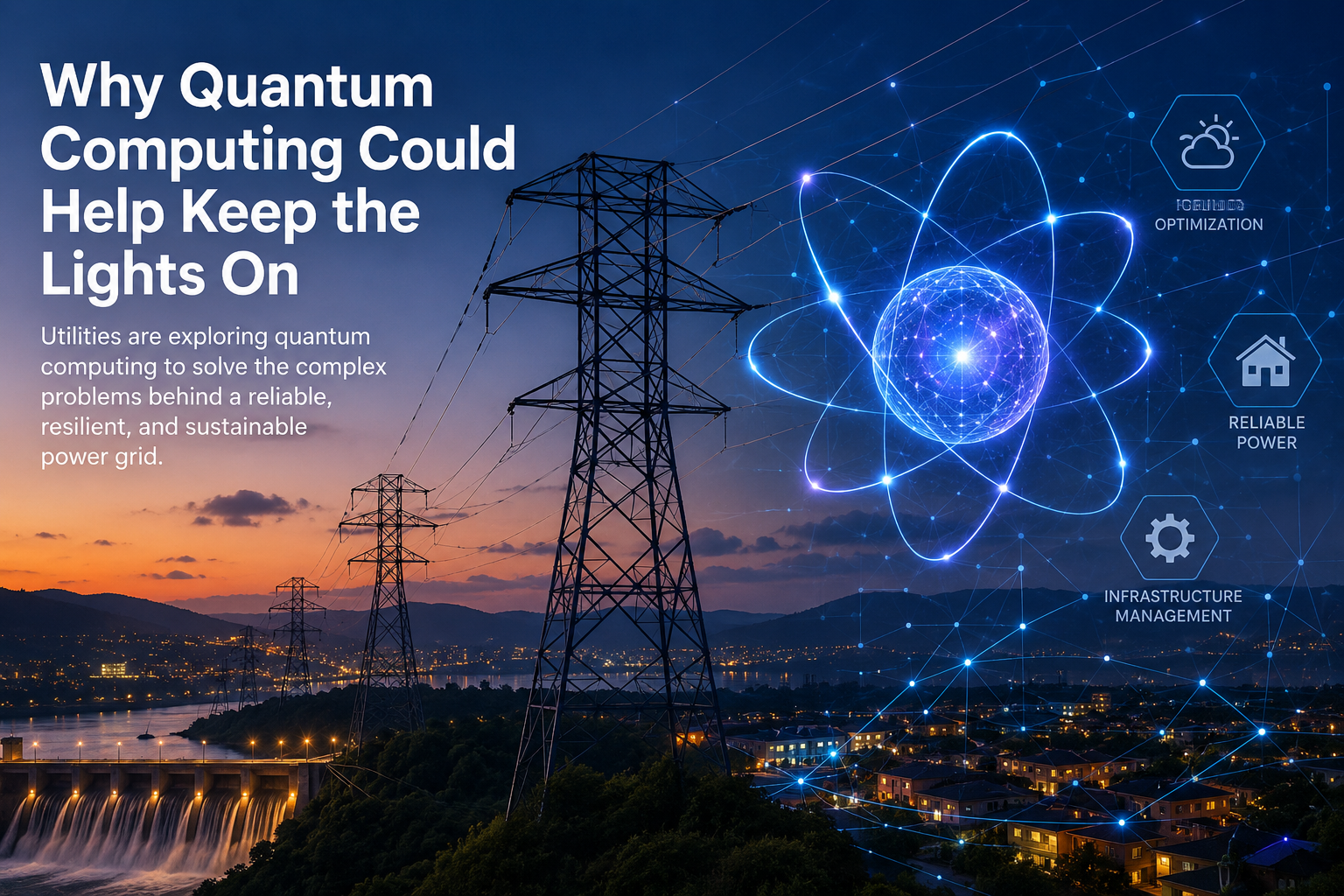
- Energy: Smart grids will anticipate demand dynamically, balancing resources in real time.
- Cybersecurity: This is the thunderclap moment. Quantum computing will render many of today’s encryption methods obsolete, forcing a global race toward quantum-safe cryptography.
It’s as though the digital world is about to be rebuilt from the quantum layer up—and every organization that depends on secure data or complex modeling will need to evolve alongside it.
A New Workforce for a New Reality
Yes, automation will reshape some traditional roles. But quantum computing isn’t about taking jobs away; it will change what “work” even means. New fields are emerging almost as fast as we can name them:
- Quantum Algorithm Developer
- Quantum Data Scientist
- Quantum Security Analyst
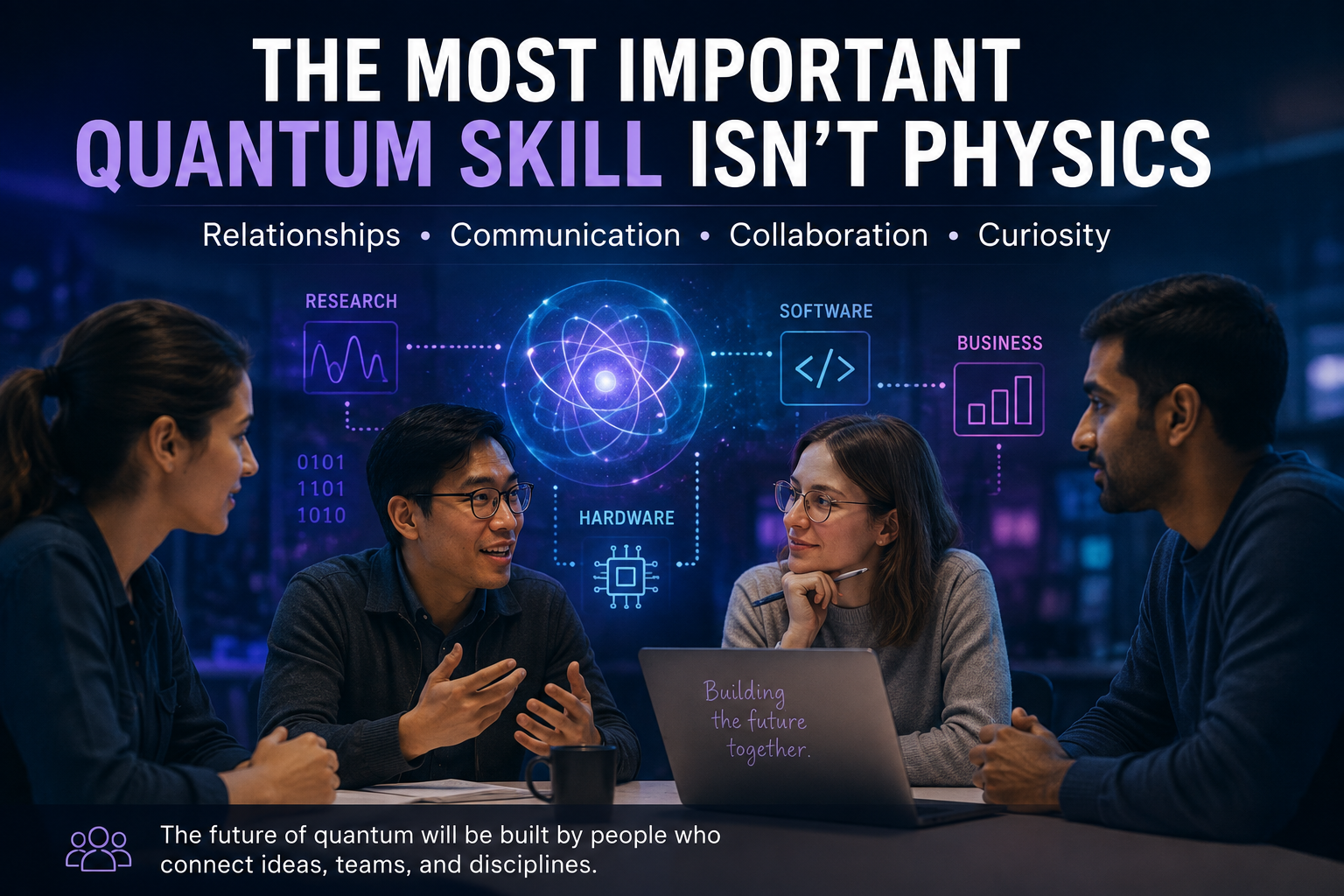
These aren’t just physics roles. They’ll require partnerships across engineering, ethics, policy, economics, and design. The most valuable skill of all will be adaptability: the ability to think critically, collaborate creatively, and learn continuously.
In many ways, the next generation of innovators will need to think less like coders and more like composers, layering disciplines, harmonizing ideas, and finding rhythm in complexity.
Ethics: The Responsibility We Cannot Outsource
Every technological leap brings a mirror, reflecting who we are and what we value. The fusion of quantum computing and AI will be no exception.
Who governs decisions made faster than we can fully understand?
Who gets access to this immense power, and who gets left behind?
If we allow quantum capabilities to concentrate in a handful of corporations or nations, we risk deepening a new kind of digital divide—one not of bandwidth, but of potential.
MIT researchers and ethicists have already called for proactive governance frameworks to ensure quantum progress benefits humanity as a whole (“MIT News, 2024”). Transparency, accessibility, and education must be part of the foundation, not an afterthought.
Preparing for the Quantum Future
The best strategy isn’t panic—it’s curiosity.
Start with the basics: learn a little math, physics, and Python. Explore open platforms like IBM’s Qiskit or Google’s Cirq. Stay connected to the growing network of quantum educators, university programs, and online communities dedicated to making this field accessible.
Position yourself at the intersection of innovation and empathy—where technology meets real-world impact. Because the coming shift isn’t just about faster computing; it’s about expanding what humans can imagine and solve together.
Quantum computing won’t replace our potential. It will amplify it. If AI changed how we work, quantum will redefine what’s possible.
This future isn’t reserved for physicists in lab coats. It’s for the dreamers, the builders, the lifelong learners—the ones who understand that curiosity is the most powerful code we’ll ever write.