Every so often on Impact Quantum, a guest says something that doesn’t just inform. It rearranges. It tilts the lens just enough that you find yourself seeing the entire landscape differently. That moment happened in Episode 26 thanks to Christopher Bishop.
Now, it would be easy to be dazzled by Christopher’s résumé alone. He’s lived what feels like eight lifetimes: a touring rock musician, a studio player backing legends like Chuck Berry, a 15-year veteran at IBM, a TEDx speaker, a futurist, and now the host of Qubit Confidential. He practically lives in the shape-shifting space between disciplines.
But the real magic of this episode wasn’t just in his experience. It was in his clarity.
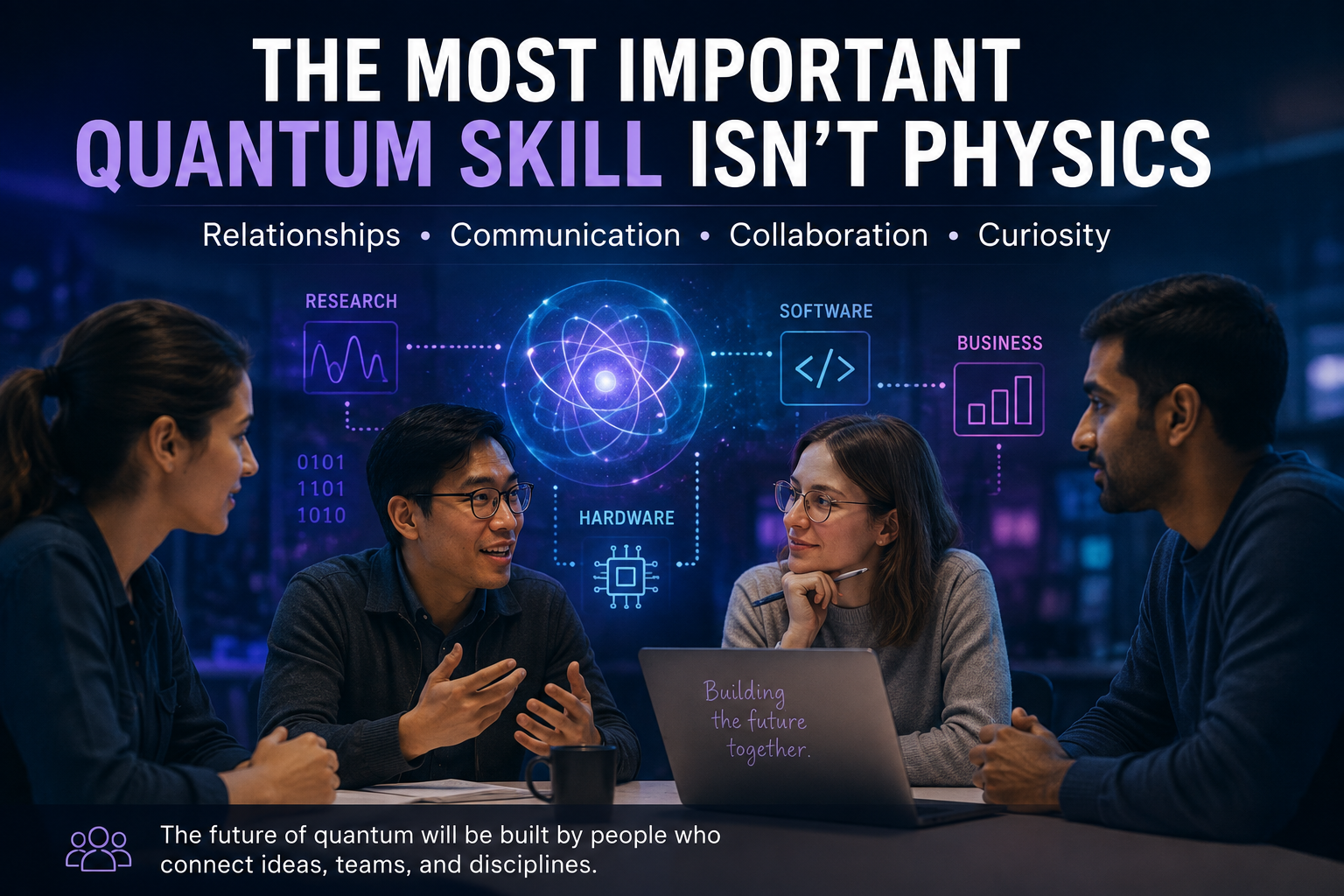
“The future of quantum careers will be built by curious humans, not just physicists.”
That line hit like a tuning fork. Simple. Resonant. True.
Breaking the Myth of the Quantum Gatekeeper
Christopher brought something to the conversation that often gets lost in the hype: accessibility. He dismantled the myth that you need a PhD in quantum mechanics or advanced mathematics to participate in this field. You don’t.
Because at the end of the day, quantum companies are still companies. They may be shaping the frontier of physics. Still, they also need communicators, designers, product strategists, storytellers, marketers, UX thinkers, policy folks, business developers, and all the other roles that help organizations thrive.
If you’re curious, if you know how to learn, and if you bring skills that translate across disciplines, there is a place for you in quantum. In fact, there is a growing need for you.
A Stick in the Dirt to Subatomic Particles
One of the most striking moments in the episode came when Christopher reframed the history of technology in a single sentence:
“Humans have been using technology since the Pleistocene, when our most advanced tool was a long stick with a sharp end. Today it’s manipulating subatomic particles.”
What sounds like a clever one-liner is actually a quiet paradigm shift. We’re not standing at the edge of something alien. We’re continuing a story that has always been ours. From sharpened wood to qubits, it is the same impulse: adapt, solve, improve, connect.
Quantum computing isn’t a break from the human story. It is the next verse.
Why It Matters Now
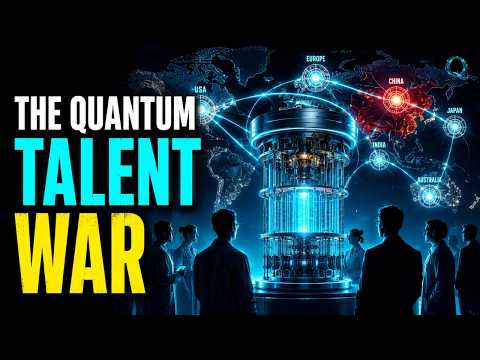
What makes Christopher’s message so timely is that quantum is growing fast. Not just in technical capabilities, but in commercial urgency. Companies like IBM, Xanadu, Q-CTRL, and Sandbox AQ are hiring, and not just for physicists. They are building businesses. They are reaching markets. They need systems thinkers, community leaders, operations professionals, and translators of complexity.
If we want quantum to scale in an ethical, accessible, and impactful way, then the talent pipeline needs to be as wide as the ambition behind it.
That is why Christopher’s toolkit — Voice, Antenna, and Mesh — felt less like career advice and more like a compass. It is a way to navigate ambiguity, stay tuned to new opportunities, and build connections that matter. Reinvention is not just a bonus skill here. It is the job.
The Human Core of a Quantum Future
What stayed with me after the mic went off was not just what Christopher said, but how it made the future feel different. It reminded me that quantum is not some pristine realm reserved for academic elites. It is messy. It is human. It is a field being built in real time by people who ask better questions, who cross boundaries, and who chase what makes them curious.
Episode 26 was not just a conversation about quantum careers. It was a call to anyone who has ever felt on the outside of a technical field, looking in, to step forward.
The doors are not locked.
They are open.
And if you are someone who adapts, questions, reinvents, and keeps showing up with curiosity,
Quantum is already waiting for you.