Inspired by Dr. Bob Sutor, The Sutor Group, and former IBM Quantum
If you watch a great dancer, you don’t just see motion; you see intention. Each step, each turn, is part of a pattern so fluid it feels effortless. According to Dr. Bob Sutor, that’s precisely what happens inside a well-designed quantum algorithm. “When people dance,” he explained, “they come together, separate, and maybe dance with someone else. For some reason, I started calling a quantum algorithm the dance of the qubits.”
It’s a fitting image. Classical algorithms march in tidy, predictable lines. Quantum algorithms move differently. They glide through possibilities, entangling and separating, their steps choreographed by mathematics rather than rhythm—but no less elegant for it.
Entanglement as Choreography
In a quantum circuit, entangled qubits don’t behave like unruly partners stepping on each other’s toes. Their movements are correlated, not chaotic. When one qubit “spins,” its entangled partner responds instantly, no matter how far apart they are. To outsiders, this seems mysterious or even magical. To those in the field, it’s choreography is a way to ensure the computation moves as one coherent performance.
Every quantum gate, every interference pattern, is a cue in this dance. Apply a Hadamard gate, and a qubit pirouettes into superposition. Introduce a controlled-NOT gate, and two qubits join hands, their states linked in rhythm. The algorithm continues through these coordinated moves until, at measurement, the music stops and the dancers freeze, revealing an answer encoded in their final positions.
From Randomness to Elegance
Dr. Sutor reminds us that this isn’t random motion. It’s structured, precise, and deeply mathematical. The “elegance” comes from how interference eliminates wrong paths while amplifying correct ones. It’s the computational equivalent of a troupe erasing missteps mid-performance, leaving only the perfect sequence visible to the audience.
That distinction matters. To the untrained eye, quantum algorithms can seem like controlled chaos, a probabilistic mess that somehow works. But inside that apparent uncertainty is extraordinary discipline. The qubits are not guessing; they are exploring multiple realities in parallel, following a choreography designed to converge on truth.
The Human Element
What makes this metaphor resonate is its humanity. For decades, Dr. Sutor helped translate the abstract beauty of quantum mechanics into something builders and dreamers could grasp. His analogy bridges that gap: algorithms as art, computation as choreography. It reframes quantum programming not as cold logic but as collaboration, a partnership between physicist, engineer, and machine.
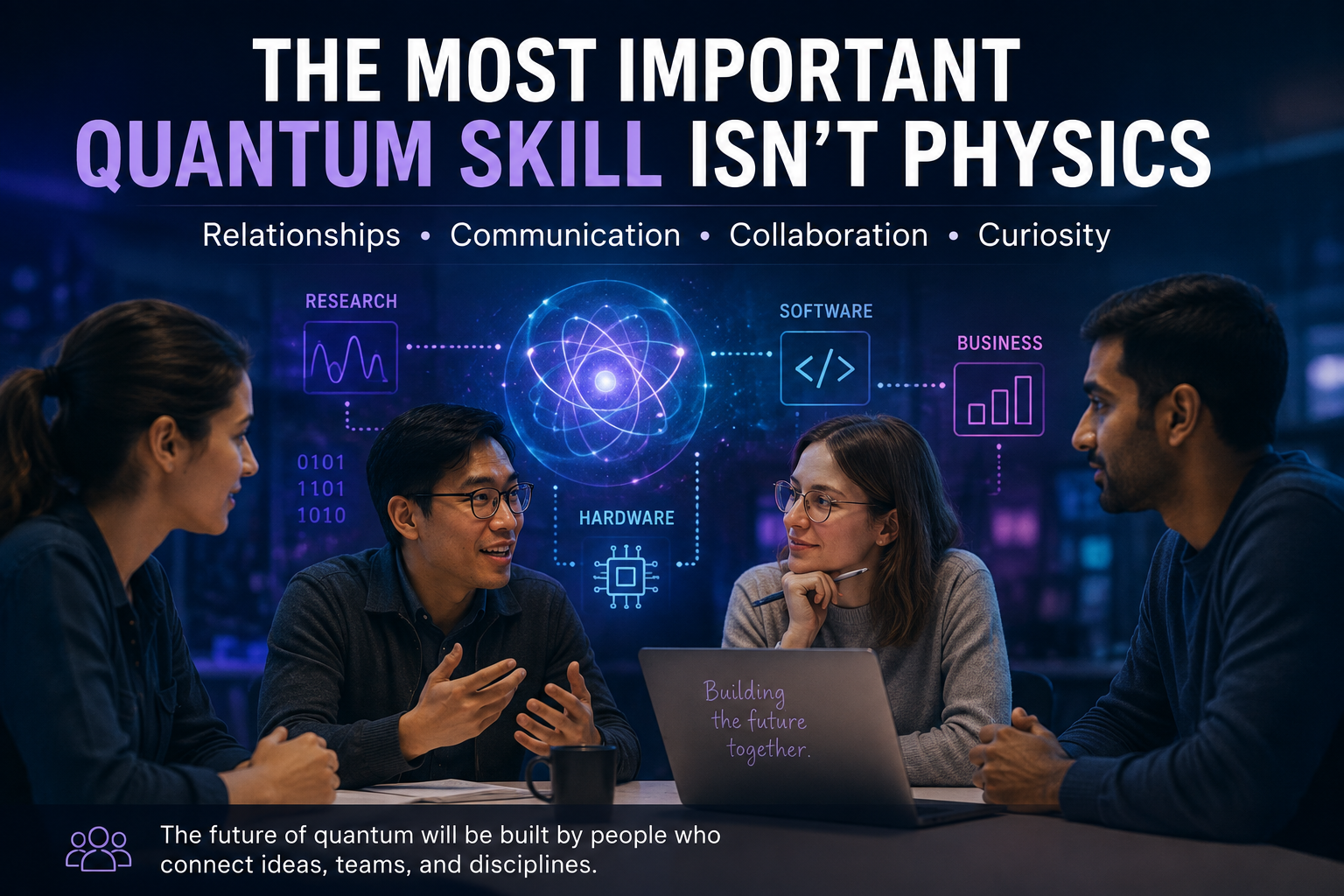
Just as dancers rely on trust and timing, quantum teams depend on shared understanding between disciplines. Physicists design the stage; software engineers set the tempo; theorists compose the steps. When everything aligns, the result feels almost alive.
Why It Matters
The future of computing won’t belong to rigid systems marching in lockstep. It will belong to those who can move fluidly through uncertainty, synchronizing logic and imagination. Quantum computing, in this sense, mirrors human creativity. Both require intuition, pattern recognition, and a willingness to let go of control without losing direction.
When Dr. Sutor calls algorithms “the dance of the qubits,” he’s offering more than a metaphor. He’s reminding us that progress in science isn’t only about precision; it’s about grace under complexity. Each calculation, each circuit, is a rehearsal for a new kind of harmony between mathematics and motion.
So the next time you hear someone describe quantum computing as strange or chaotic, think instead of a dance floor full of entangled qubits, moving together in perfect time. Their elegance is proof that even at the smallest scales of reality, beauty and logic can share the same rhythm.