Quantum computing, a field pushing the very boundaries of human understanding, is often perceived as a realm for only the most elite and conventionally brilliant minds. Yet, a compelling argument is emerging: what if the next breakthroughs in this complex domain come not from a uniform cognitive profile, but from the rich tapestry of neurodiversity? This perspective suggests that the unique cognitive strengths associated with conditions like autism, ADHD, and dyslexia might not just be beneficial but intrinsically well-suited to the demands of quantum computing. For those curious about the future of technology and passionate about inclusive innovation, this intersection presents a truly fascinating landscape.
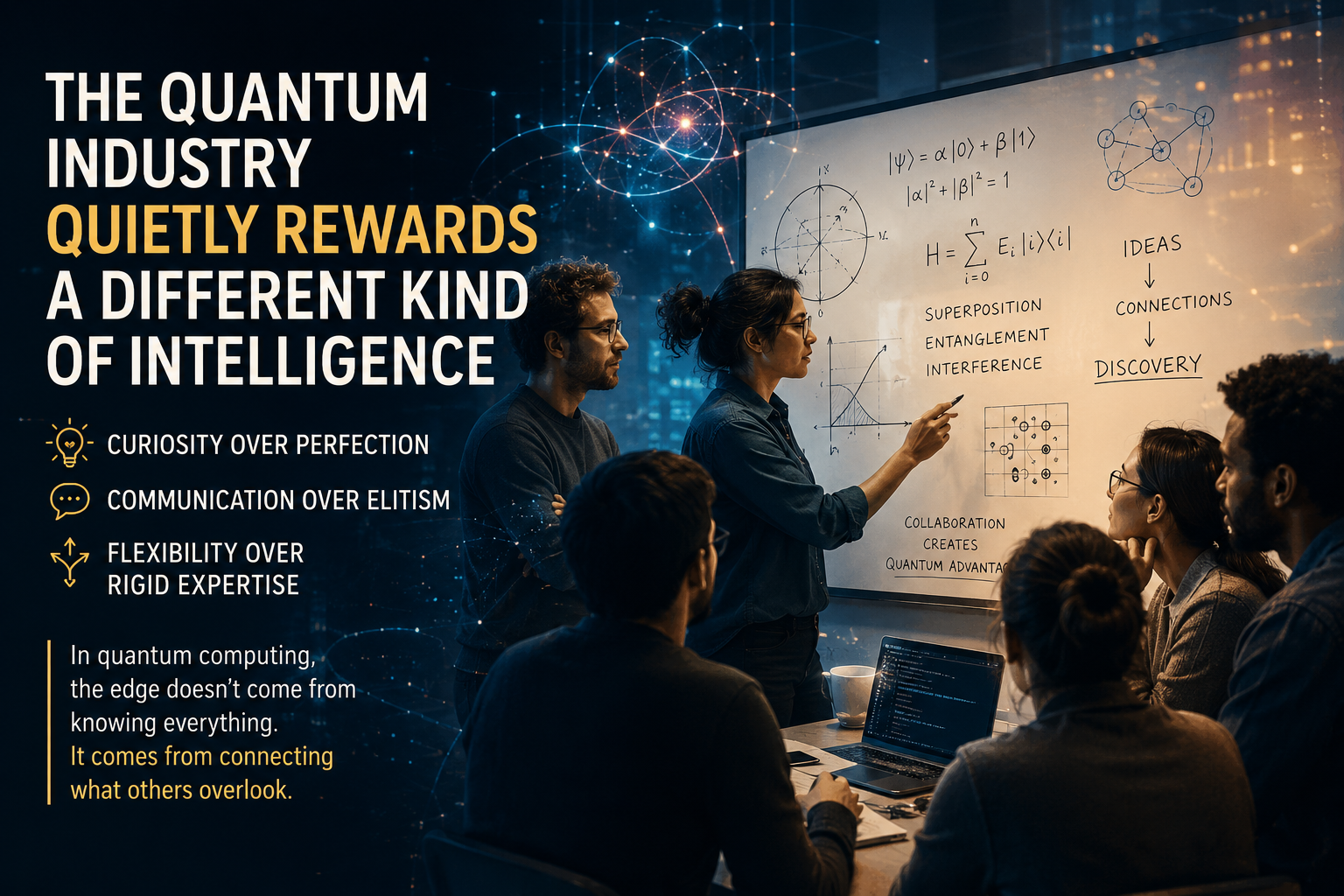
At its core, quantum computing operates on principles that defy classical intuition. It’s a world of superposition, entanglement, and probabilistic outcomes like concepts that demand a departure from linear, step-by-step reasoning. This is where the neurodivergent mind often shines. Individuals with autism, for instance, are frequently noted for exceptional pattern recognition abilities and an intense focus on detail. Imagine applying this to the intricate, often counterintuitive patterns of quantum algorithms, where a subtle shift can have profound implications. The ability to discern order within seemingly chaotic quantum states could be a significant advantage.
Similarly, ADHD, often characterized by “nonlinear thinking,” might be perfectly aligned with the non-classical nature of quantum mechanics. While traditional problem-solving usually favors a sequential approach, quantum problems frequently require novel connections and leaps of intuition. The ADHD mind, less bound by conventional cognitive pathways, could be uniquely poised to identify these unconventional solutions, seeing possibilities where others might only see roadblocks. This capacity for divergent thinking, for exploring multiple avenues simultaneously, mirrors the very probabilistic nature of quantum systems themselves.
Dyslexia, too, brings a unique set of cognitive strengths that are often underestimated in conventional academic and professional settings. Research suggests that dyslexic individuals usually possess enhanced spatial reasoning and a powerful ability to grasp complex systems holistically. Quantum computing, with its multi-dimensional spaces and abstract representations of information, could greatly benefit from these strengths. Visualizing qubit states, entanglement networks, and quantum gates requires a sophisticated spatial intuition that a dyslexic mind might naturally excel at, bypassing the limitations of purely linguistic or linear representations.
The traditional “genius” archetype often favors a singular, standardized form of intelligence. However, the complex, multifaceted challenges of quantum computing may necessitate a broader definition of brilliance. The field is not just about crunching numbers; it’s about conceptualizing entirely new computational paradigms. This calls for a diversity of thought, a melting pot of cognitive styles that can approach problems from radically different angles. Neurodivergent individuals, often accustomed to navigating a world not built for their cognitive style, have developed an inherent knack for unconventional problem-solving and adaptive thinking: skills that are invaluable in a frontier technology like quantum computing.
Moreover, the sheer novelty of quantum computing means there are no established “best practices” or entrenched ways of thinking. This fertile ground is perfect for minds that thrive on originality and are less constrained by existing paradigms. The deep focus often observed in neurodivergent individuals, sometimes called “hyperfocus,” could enable sustained engagement with the incredibly intricate and abstract problems posed by quantum mechanics, leading to breakthroughs that others might abandon due to sheer complexity.
Embracing neurodiversity in quantum computing is not just an act of inclusion; it’s a strategic imperative. By actively recruiting and supporting neurodivergent talent, the quantum community stands to unlock a vast, untapped reservoir of cognitive power. This means fostering environments that value diverse thinking, providing accommodations that allow individuals to thrive, and recognizing that different minds contribute pieces that are different yet equally vital to the grand puzzle of quantum discovery.
The future of quantum computing is not just about faster calculations; it’s about reimagining computation itself. And in this audacious quest, it may be that the minds once considered “different” are precisely the ones destined to make the most profound difference. The quantum leap, it seems, might well be powered by the beautiful spectrum of neurodiversity.