There’s something about the idea of a “quantum city” that feels almost metaphorical at first. Like a phrase meant to signal ambition rather than something you could actually walk into. But then you look closer at what’s unfolding around Quantum City, and it becomes less abstract. More physical. More deliberate. Almost like watching a blueprint quietly become a place.
It’s not just a research center. Not just a lab. It’s an attempt to close a gap that’s been sitting in the quantum ecosystem for years—the space between discovery and use.
And that’s where it starts to feel different.
A place where quantum stops being theoretical
At its core, Quantum City aims to do something deceptively simple: bring together the people who build quantum technologies and those who might actually use them. Researchers, developers, companies, governments—all in one system that’s designed to move ideas forward, not just study them.
That sounds obvious. It isn’t.
Most quantum ecosystems still feel fragmented. You have brilliant physics happening in one corner, startups trying to commercialize something in another, and industry leaders watching from a cautious distance, unsure when it becomes “real enough” to act.
Quantum City is trying to collapse that distance.
It’s building infrastructure—fabrication facilities, collaborative spaces, applied programs—while also shaping something softer but just as important: pathways. Ways for quantum to move out of theory and into systems that actually touch energy grids, healthcare pipelines, and logistics networks.
There’s a subtle shift in language here. Not “what quantum could do someday,” but “what problem are we solving now?”
The quiet architecture of momentum
If you zoom in, the details start to matter.
The opening of the qHub in 2025, for example. Over 17,000 square feet, but it’s not the size that feels significant. It’s the intention behind it—a space designed for collision. Conversations. The kind of unstructured exchange where ideas stop being owned by one discipline and start becoming shared.
There’s something almost psychological about that design choice.
Quantum is notoriously complex. It can intimidate, isolate, fragment thinking. So creating a physical environment that encourages openness isn’t just logistical—it’s strategic.
It lowers the barrier to entry in ways that aren’t immediately measurable.
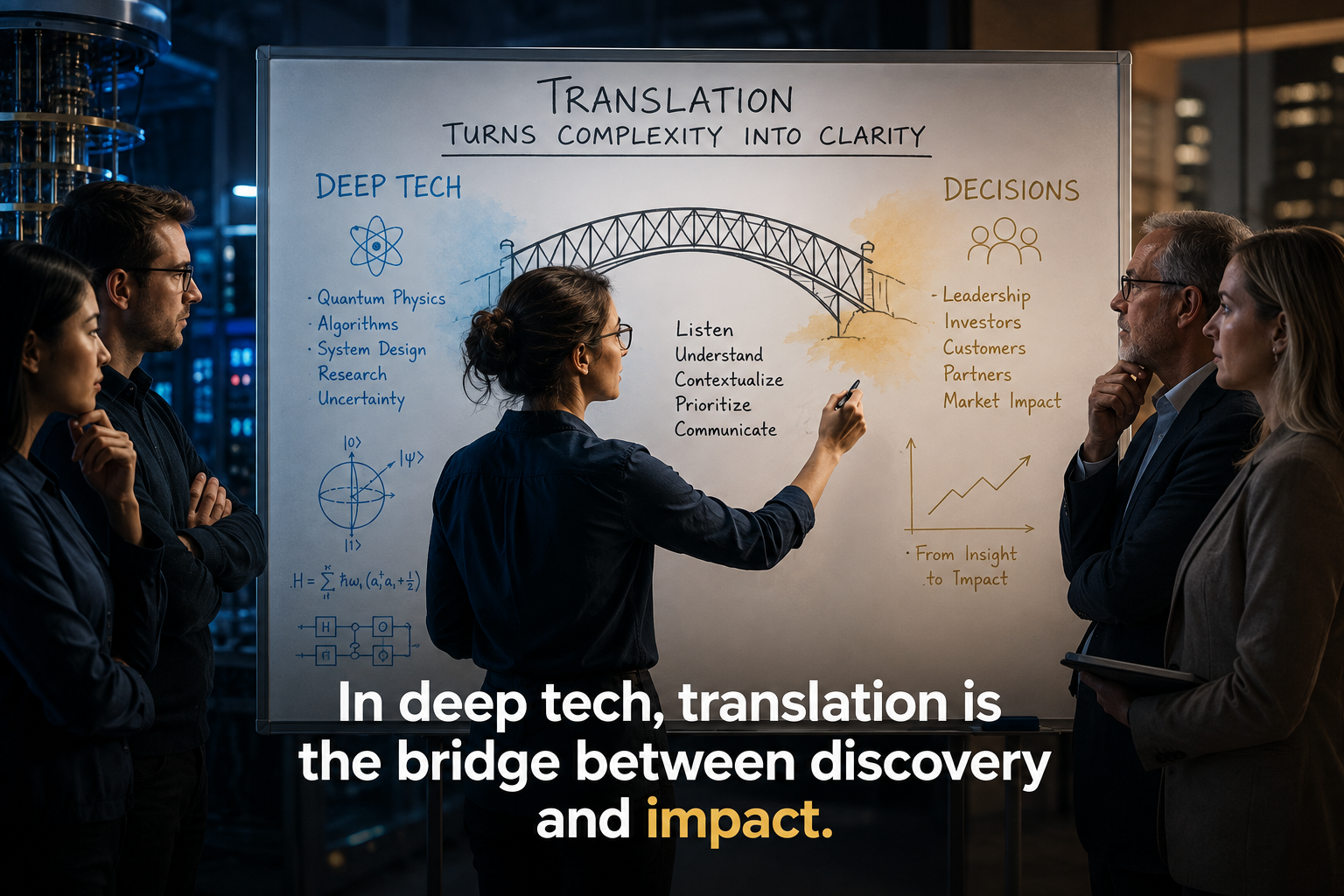
And then there are the programs. Challenge series. Industry collaborations. Scientist-in-residence initiatives. Each one feels like a small bridge—connecting someone who understands the math to someone who understands the problem.
You can almost feel the system trying to teach itself how to move faster.
Why Calgary—and why now
Canada has never lacked quantum credibility.
Between the University of Waterloo, D-Wave Systems, Xanadu, and the broader push through the National Quantum Strategy, the country has built something rare: depth across research, hardware, and early commercialization.
But even in a strong ecosystem, there are gaps.
Geographic fragmentation. Uneven industry adoption. A tendency for innovation to stay close to academia longer than it should.
This is where Calgary—and Quantum City—start to feel like a deliberate counterbalance.
Calgary already sits at an interesting intersection. Energy, finance, logistics, environmental systems—industries that are complex enough to actually need quantum solutions. Not as a novelty, but as a necessity.
So instead of building quantum capacity in isolation, Quantum City embeds it inside sectors that can absorb it.
That changes the timeline.
It shortens the distance between “this works in a lab” and “this changes how something operates.”
The economic layer you can’t ignore
There’s also a quieter narrative running underneath all of this—one that doesn’t always get highlighted in technical conversations.
Jobs. Talent. Identity.
Quantum City isn’t just about technology. It’s about positioning Alberta, and Calgary specifically, as a place where the next phase of quantum actually happens. That means training hundreds of people, supporting startups, attracting global partners, and creating an environment where companies don’t just visit—they stay.
Over $100 million in combined public and private investment has already gone into building this foundation.
But what’s more interesting is how that investment is structured.
It’s not just funding research. It’s funding translation.
And that’s where many ecosystems stall.
A different kind of honesty about quantum
There’s a line buried in Quantum City’s values that feels easy to overlook: a commitment to avoiding hype.
That’s rare.
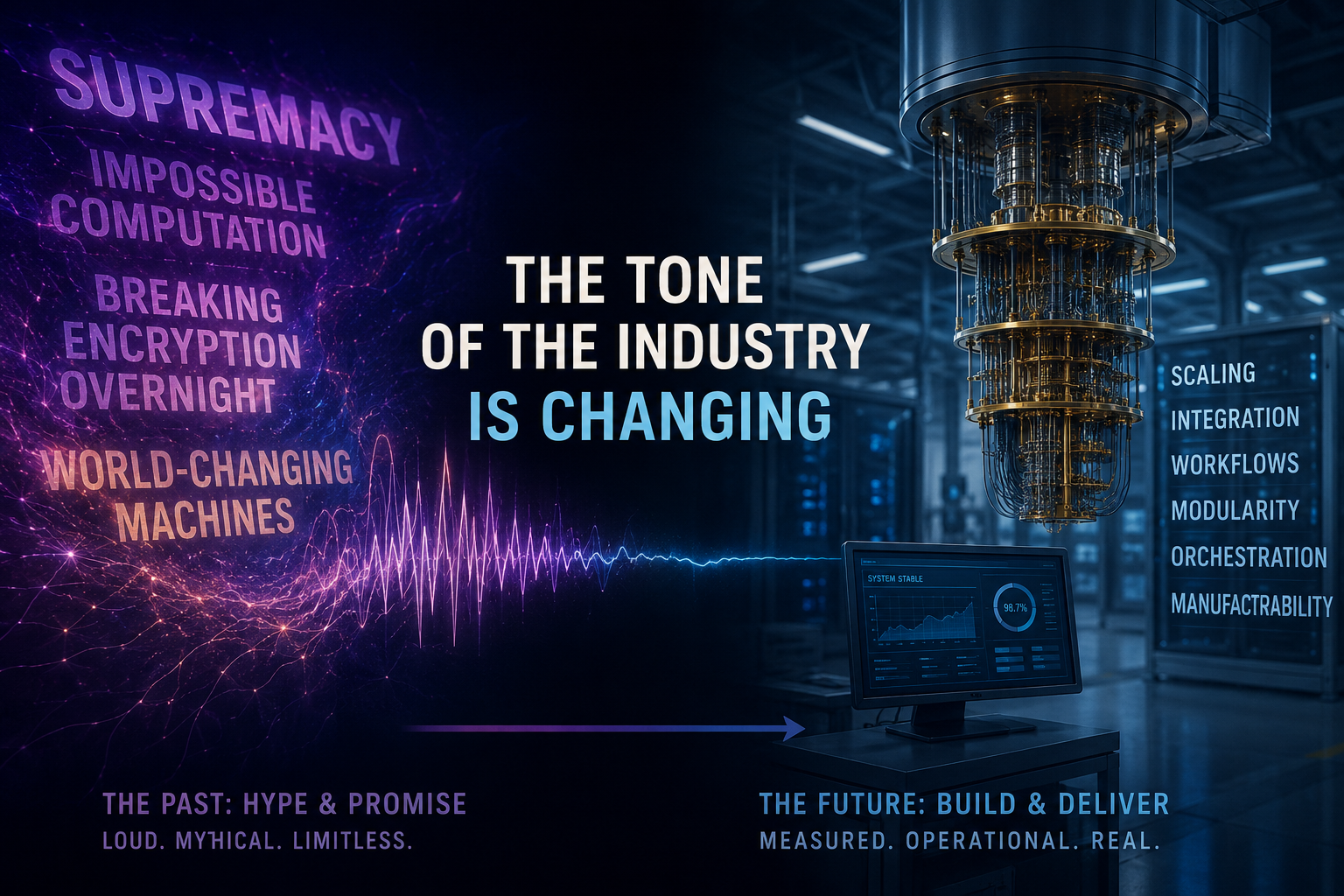
Quantum, as a field, has spent years oscillating between overpromising and underdelivering in public perception. Either it’s framed as world-changing overnight, or it’s dismissed as perpetually “ten years away.”
Quantum City seems to be taking a quieter stance.
Less spectacle. More scaffolding.
It’s building systems that assume quantum will arrive unevenly—sector by sector, use case by use case—and preparing organizations to meet it where it actually shows up.
That kind of realism doesn’t always trend.
But it tends to work.
The feeling of something aligning
If you step back, what’s happening here feels less like a single initiative and more like a convergence.
Infrastructure, talent, policy, industry need, global timing.
Even the symbolic layer matters. The fact that this is unfolding alongside global efforts like the International Year of Quantum Science and Technology adds a kind of ambient momentum. A sense that multiple timelines are syncing.
And when that happens, things tend to accelerate.
Not all at once. Not dramatically.
But steadily.
There’s a moment—if you’ve been watching this space long enough—where you start to notice a shift.
Conversations change.
They move from “What is quantum?” to “Where does it fit?”
From curiosity to positioning.
From observation to participation.
Quantum City sits right in that transition.
It’s not trying to prove that quantum matters. That part is already understood. It’s trying to answer a more difficult question:
What does it look like when quantum actually becomes part of how systems run?
And maybe more quietly:
Who gets to be involved when that happens?
There’s something almost grounding about it.
Not flashy. Not abstract. Just… intentional.
A city, in the making—not of buildings, but of connections.
And if you pay attention, you can feel it taking shape.