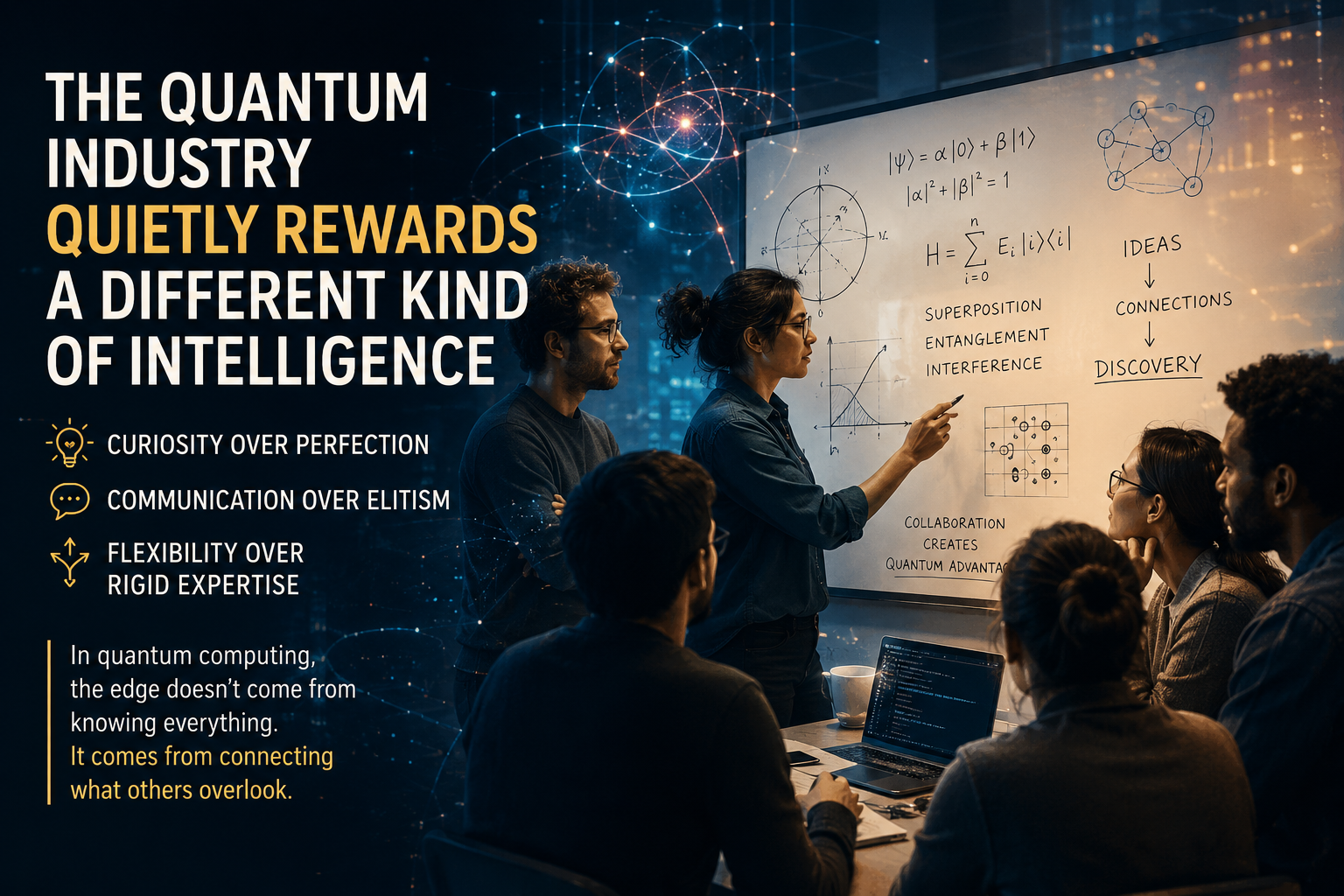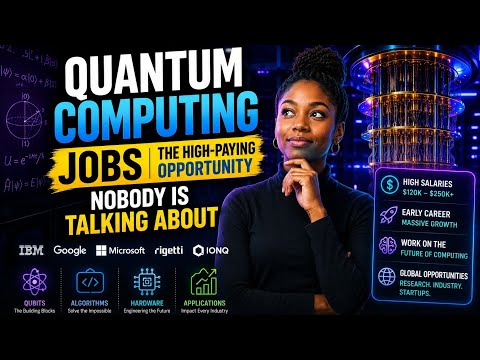
In the quiet corridors of innovation, a profound development stirs, mostly unnoticed by the layperson. Quantum computing, once relegated to the annals of speculative science fiction, is quickly emerging as a tangible force in the technology industry. It’s a field that begs for more skilled professionals, and the urgency is palpable across tech giants like IBM, Google, Microsoft, and Amazon. They are avidly seeking expertise that is, surprisingly, not bound to physics backgrounds. These nascent opportunities offer not just career advancement but a purposeful plunge into frontier tech that could redefine the future.
What we refer to as “quantum computing” is, simply put, a revolutionary approach to computation utilizing quantum-mechanical phenomena such as superposition and entanglement. The implication here isn’t just about faster computers; it’s a rewrite of how we process information, solve complex problems, and realize what is computationally feasible.
Based on content from Uplatz
Well-Paying Jobs on the Horizon: As we edge towards 2026, several roles are emerging at the forefront of this quantum shift. Take the Quantum Software Developer, for instance. These are the architects of quantum algorithms, wielding languages like Qiskit and CIRQ. For Python enthusiasts, the transition is relatively smooth and can culminate in lucrative salaries ranging upwards of $250,000 annually in the US. Equivalent compensation reverberates across Europe and Australia, illustrating the global appetite for these skills.
Then there’s the role of a Quantum Solutions Architect. This position serves as a bridge between classical and quantum computing realms, orchestrating strategic implementations that align with business goals. It’s a landscape rife with global demand and competitive remunerations.
Finally, the Quantum Machine Learning Engineer embodies the confluence of artificial intelligence and quantum capabilities. As AI systems and models increasingly pivot towards quantum-friendly architectures, the demand for such expertise only swells.
Why Now? A significant gap persists between the current supply of approximately 15,000 quantum professionals globally and the estimated need for over 100,000 by 2028. This yawning chasm represents a window of opportunity for current and aspiring tech professionals. As of now, ample resources like free courses offered by IBM Quantum and Microsoft Azure Quantum provide a platform for initiating your foray into this dynamic field. Interestingly, prior expertise in physics isn’t a barrier here; rather, it demands strong logical thinking and a grounding in mathematics.
The trajectory we observe in quantum computing today is eerily reminiscent of AI’s evolution in 2016—a pivot point before the massive waves of adoption and integration. Unlike AI’s explosion, you’re now afforded the foresight to prepare and capitalize on what is unmistakably a forthcoming tech revolution.
Why should you aspire for a quantum computing career? Because within these lattice structures and quantum gates lie potential solutions to problems we’ve yet to solve thoroughly in conventional computing terms. The capacity for breakthroughs in medicine, cryptography, finance, and logistics is profound.
For those embarking on this path, the journey is as valuable as the destination. Dive into our comprehensive quantum computing fundamentals course, designed to make you job-ready in a matter of months, fully accessible regardless of your geographic location. The key is to begin before the field becomes saturated.
In this ever-evolving digital landscape, quantum computing presents an anomaly—a field hungry for growth, ripe with promise. The choice to leap into it now could well be your opportunity to ride the crest of the next major wave in technology. The quantum journey is one worth pondering, embarking on, and eventually mastering. Let this be your invitation into a realm brimming with potential.
—