Every emerging technology develops its mythology.
Artificial intelligence had its “robots will replace everyone” phase. Cloud computing went through the “just lift and shift” oversimplifications. And now, as quantum computing steadily moves from research curiosity toward commercial relevance, its own set of persistent myths is taking hold.
The challenge is not just academic. Misconceptions shape hiring strategies, investment decisions, learning paths, and executive expectations. In a field as technically nuanced as quantum, clarity is not a luxury. It is infrastructure.
What follows are three of the most common myths currently circulating in the quantum conversation—and the realities that practitioners inside the ecosystem are quietly emphasizing.
Myth #1: Quantum Is Quickly Learnable
There is a familiar pattern in modern tech culture. A new field emerges, online courses appear, and within months, the narrative becomes: “Anyone can master this fast.”
Quantum computing resists that pattern.
The reality is not discouraging, but it is sobering. Building meaningful quantum intuition typically requires sustained effort over an extended period. This is not because the field is intentionally gatekept or inaccessible. It is because quantum mechanics operates in ways that directly challenge classical mental models.
Professionals entering from software, analytics, or business backgrounds often encounter the same initial friction point: the concepts feel fundamentally different from anything they have previously internalized.
Superposition is not just a new vocabulary word.
Entanglement is not just a more complex dependency graph.
Noise in quantum systems does not behave like classical system noise.
These differences matter.
The individuals who make the most progress in the field tend to adopt a long-horizon mindset early. They treat quantum literacy less like a certification sprint and more like learning a new scientific language. They experiment, revisit concepts, and allow their intuition to develop gradually.
For organizations, this has an important implication. Teams exploring quantum should be evaluated on trajectory and depth, not on unrealistic speed benchmarks. The companies that understand this distinction are building far more resilient quantum capability pipelines.
Myth #2: More Qubits Automatically Means Better Performance
If there is one metric that consistently dominates headlines, it is qubit count. Announcements often lead with increasingly large numbers, creating the impression that quantum progress can be tracked the same way classical computing once tracked transistor density.
But experienced practitioners know the situation is far more nuanced.
Qubit count is only one variable in a complex performance equation. Hardware modality, gate fidelity, coherence times, connectivity, and error mitigation strategies all play decisive roles in determining whether a system can execute meaningful workloads.
In practical terms, this means:
- A system with fewer high-quality qubits may outperform one with a larger but noisier register.
- Circuit depth limitations can nullify theoretical scaling advantages.
- Error characteristics can dramatically shape real-world usability.
For enterprise leaders trying to interpret the quantum landscape, this is a critical mindset shift. The question is not simply “How many qubits?” but rather the following:
- What kind of qubits?
- With what fidelity?
- Running what depth of circuit?
- Under what noise conditions?
This is where the industry is still maturing. Marketing narratives often prefer simple numbers. Engineering reality rarely cooperates.
As the ecosystem evolves, expect the conversation to move gradually from raw qubit counts toward more holistic system benchmarks. Those who understand this early will be better positioned to separate signal from noise in vendor announcements.
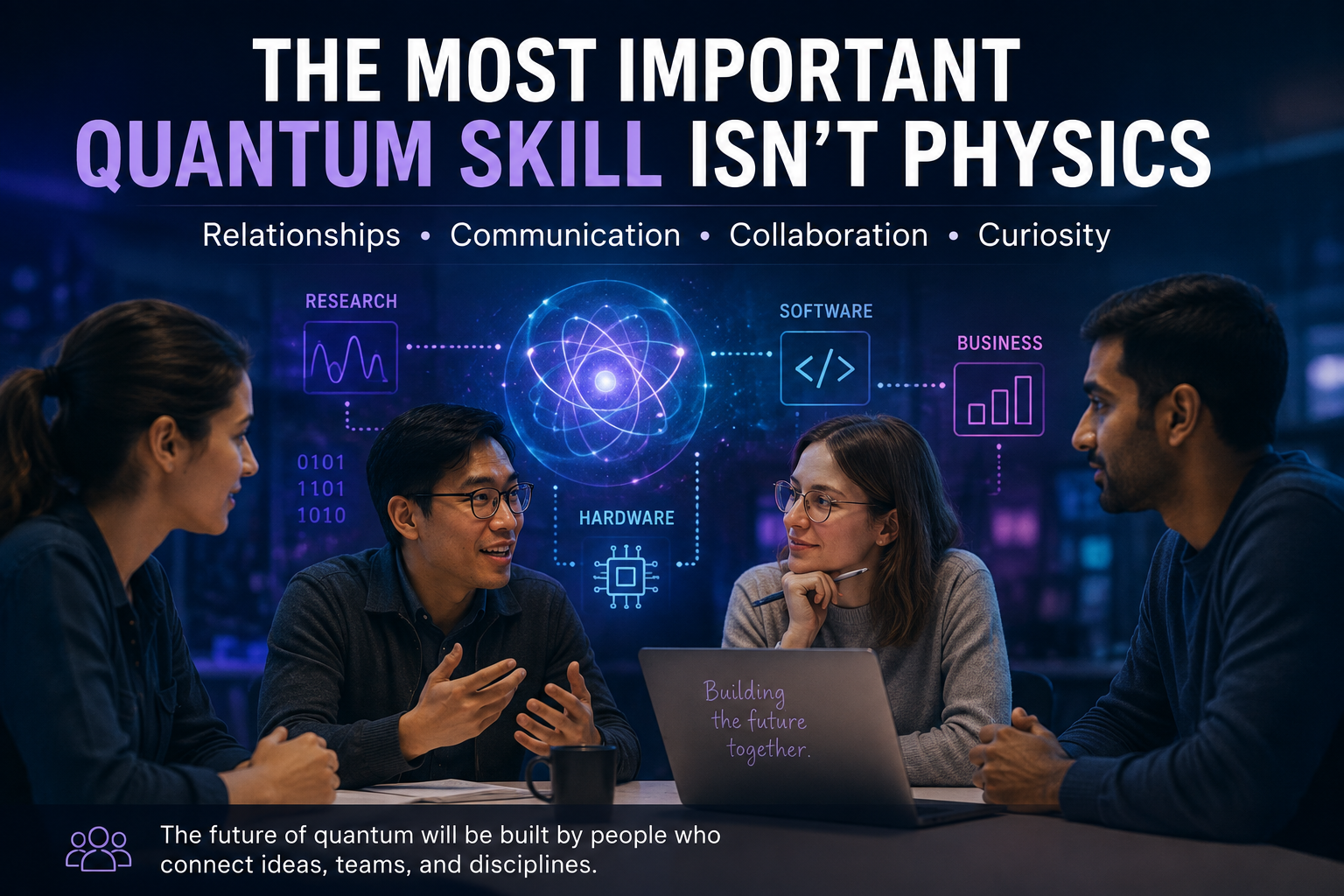
Myth #3: You Must Be a Physicist to Contribute
Perhaps the most limiting myth in the current quantum narrative is the belief that meaningful participation is restricted to quantum physicists.
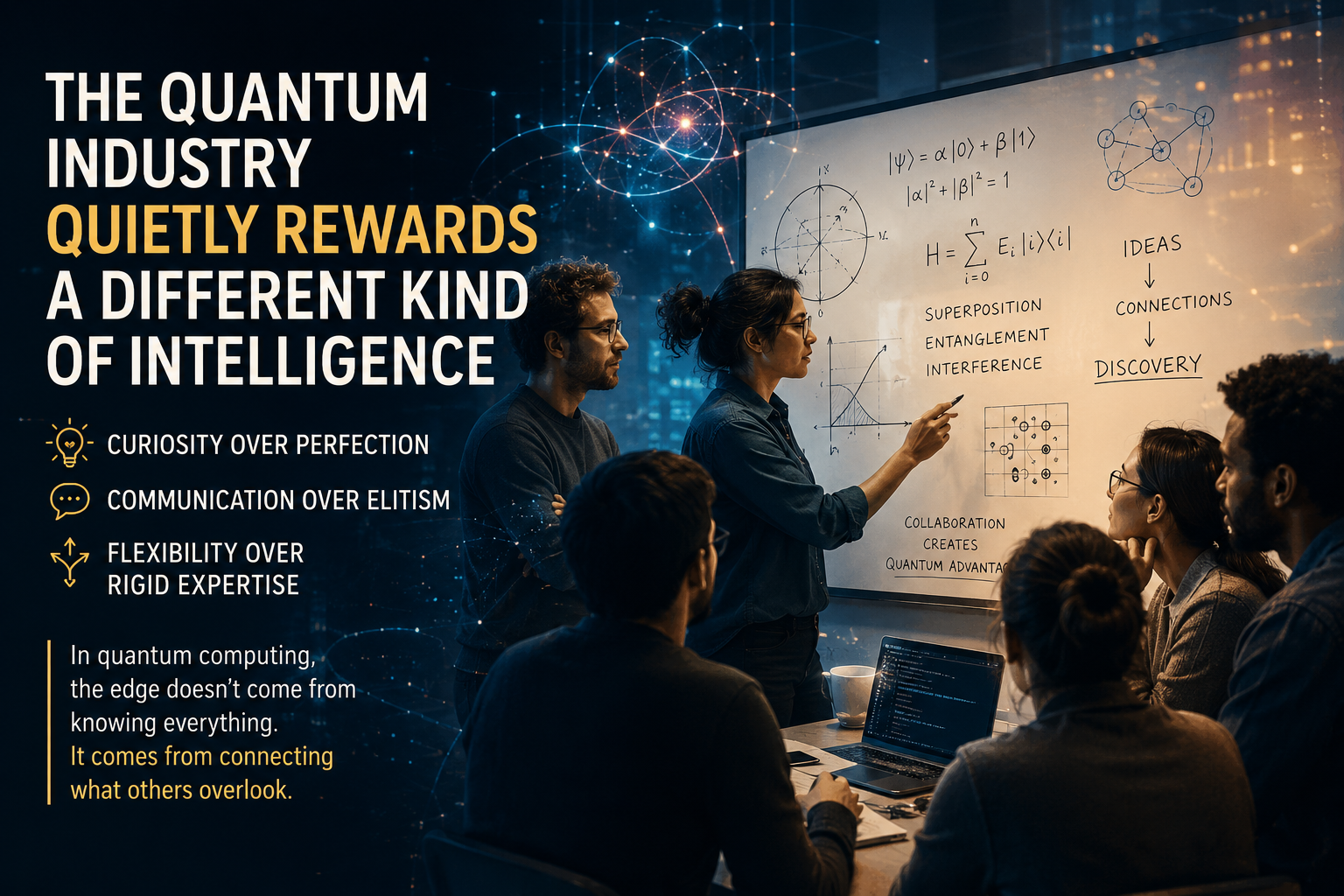
Physics expertise is undeniably foundational to the field. But the modern quantum ecosystem is expanding rapidly beyond pure research environments. As it does, the range of valuable roles is widening in ways many observers still underestimate.
Today’s quantum landscape increasingly requires the following:
- Software engineers building development tooling
- Product leaders translating use cases
- Security experts preparing for post-quantum transitions
- Educators making concepts accessible
- Business strategists aligning investment decisions
- Technical communicators bridging stakeholder groups
In many organizations, one of the most critical emerging roles is the technical translator, someone who can move fluently between deep technical teams and executive decision-makers.
This function becomes especially important in quantum physics because the subject matter is inherently counterintuitive. Miscommunication risk is high. Oversimplification can distort meaning. Over-technical explanations can lose business stakeholders entirely.
Professionals who can maintain technical integrity while creating strategic clarity are becoming disproportionately valuable.
For newcomers evaluating whether they “belong” in quantum, this is an important reframing. The ecosystem does not need only more physicists. It needs more cross-disciplinary connective tissue.
Why Myth-Busting Matters Right Now
The quantum industry is entering a delicate phase.
On one hand, technical progress is real and accelerating. On the other hand, market narratives are becoming louder, faster, and sometimes less precise. This creates the perfect environment for durable misconceptions to take root.
Left unchecked, these myths can create tangible friction:
- Talent pipelines may narrow unnecessarily
- Executive expectations may become misaligned
- Investment decisions may over-index on the wrong metrics
- Learning journeys may be abandoned prematurely
Clear, grounded communication is one of the most valuable contributions the ecosystem can make to itself at this stage.
The Path Forward: Precision Over Hype
Quantum computing does not need exaggeration to be compelling. Its genuine potential is already extraordinary. What the field needs now is disciplined storytelling that balances accessibility with technical honesty.
For practitioners, this means continuing to share grounded insights from inside the work. For enterprises, it means asking sharper questions and resisting overly simplified metrics. And for newcomers, it means approaching the field with curiosity paired with patience.
Quantum is not instantly learnable.
Qubit counts are not the whole story.
And no, you do not have to be a physicist to help move the field forward.
The ecosystem is bigger—and more interesting—than the myths suggest.
Which quantum myth do you still see circulating most often in your network?