Quantum computing is advancing at a breathtaking pace. New hardware milestones arrive almost monthly. Error mitigation techniques are improving. Hybrid workflows are maturing. The technical stack is moving forward with real momentum.
And yet, there is a quieter friction point that deserves more attention.
It is not about qubit counts.
It is not about coherence times.
It is about human understanding.
After a recent Impact Quantum podcast conversation, one observation kept resurfacing for me. Frank made a simple but powerful point during the discussion: visual representations help people grasp counterintuitive physics. That statement may sound obvious at first glance, but its implications for the quantum ecosystem are profound.
Because for many learners, quantum computing is not difficult because it is complex. It is difficult because it is presented in ways that do not match how their brains naturally process information.
And that distinction matters.
The Cognitive Diversity We Rarely Talk About in Quantum
STEM education has historically favored a narrow band of cognitive styles. Symbolic reasoning, equation-heavy workflows, and abstract formalism have long been treated as the default entry point into advanced technical fields.
For some minds, this is ideal. Mathematical abstraction feels natural. Dense notation is energizing rather than intimidating. These individuals often thrive quickly in traditional physics and computer science environments.
But many highly capable people think differently.
Some are visual-first processors.
Some are pattern recognizers.
Some understand systems spatially rather than symbolically.
Some need to see motion before they can internalize structure.
In neurodiversity work, we see this every day. Intelligence is not the limiting factor. Presentation is.
When we design learning environments around only one cognitive pathway, we unintentionally filter out a tremendous amount of potential talent.
Quantum computing, perhaps more than any emerging field, is currently feeling the effects of that bottleneck.
Why Quantum Feels So Hard (Even for Smart People)
Quantum mechanics is famously unintuitive. Concepts like superposition, entanglement, and decoherence do not map cleanly onto everyday human experience. Even experienced engineers often describe their first exposure to quantum theory as mentally disorienting.
Traditionally, the response has been predictable: more equations, more rigor, more formalism.
But here is the uncomfortable truth.
For many learners, textbooks did not fail because the material was too advanced. They failed because the interface to the material was incomplete.
If you are a strong visual thinker, being handed pages of Dirac notation without an accompanying intuitive visual framework can feel like being asked to navigate a city with only GPS coordinates and no map.
The information is technically there.
But it is not cognitively accessible.
This is where the conversation around quantum fractal art becomes far more than an artistic curiosity. It begins to look like the early emergence of something much more important: a new interface layer for quantum understanding.
When Quantum States Become Something You Can See
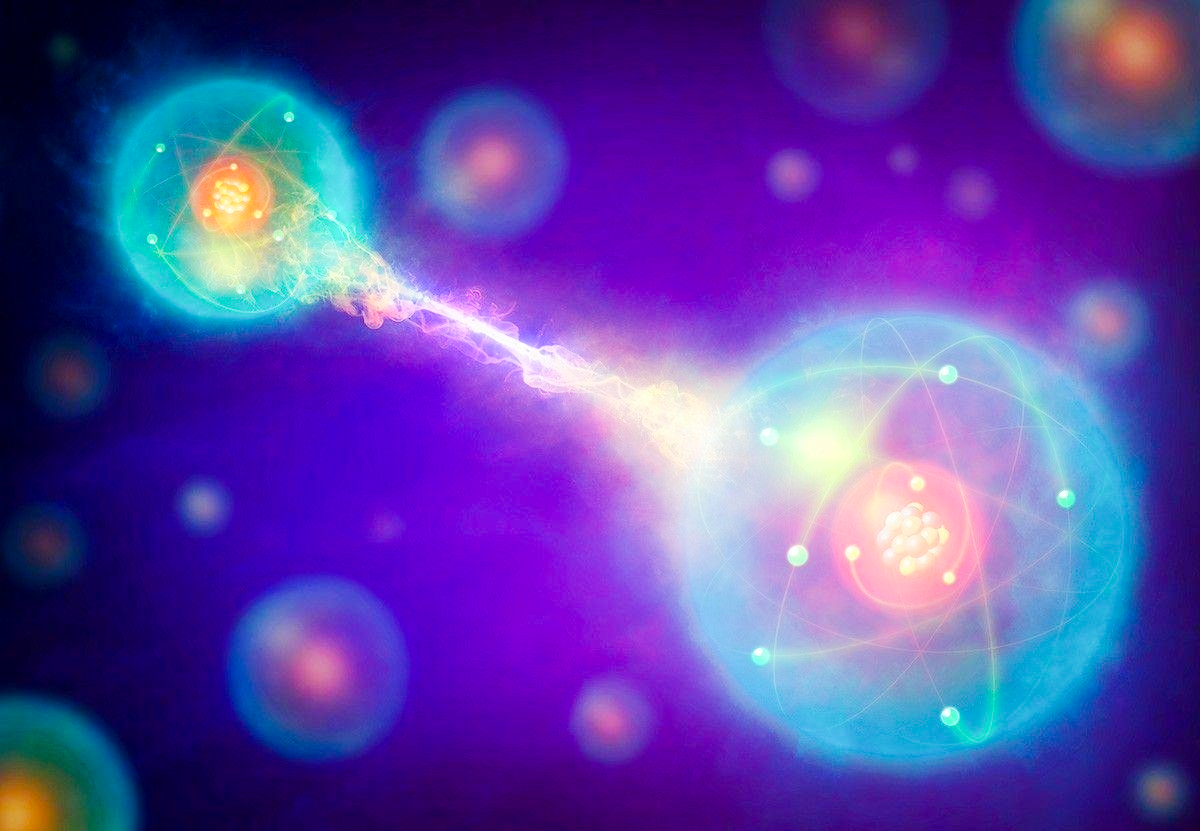
One of the most compelling developments we are beginning to observe is the translation of quantum state data into visual, evolving structures.
Instead of describing quantum amplitudes purely through complex numbers on a page, these approaches map quantum information into fractal geometries that change dynamically as the underlying state evolves.
Something fascinating happens when learners encounter these representations.
The conversation shifts.
Instead of asking, “What does this equation mean?” learners begin asking, “Why is that pattern changing?”
That is a fundamentally different cognitive entry point.
Pattern recognition is one of the brain’s most powerful natural capabilities. Long before humans developed formal mathematics, we were identifying structure in nature — coastlines, snowflakes, branching trees, spiral galaxies. Fractals, in many ways, tap directly into this deeply embedded perceptual machinery.
When quantum behavior is expressed through fractal systems, it begins to speak a language the visual cortex already understands.
And for many learners, that is the moment the fog starts to lift.
The Neurodiversity Advantage in the Quantum Era
This is where the IncludeUs perspective becomes especially relevant.
As the quantum workforce expands, the industry will need more than traditional physicists. It will need:
- systems thinkers
- creative problem solvers
- interdisciplinary translators
- visual modelers
- UX designers for quantum tools
- educators who can bridge abstraction and intuition
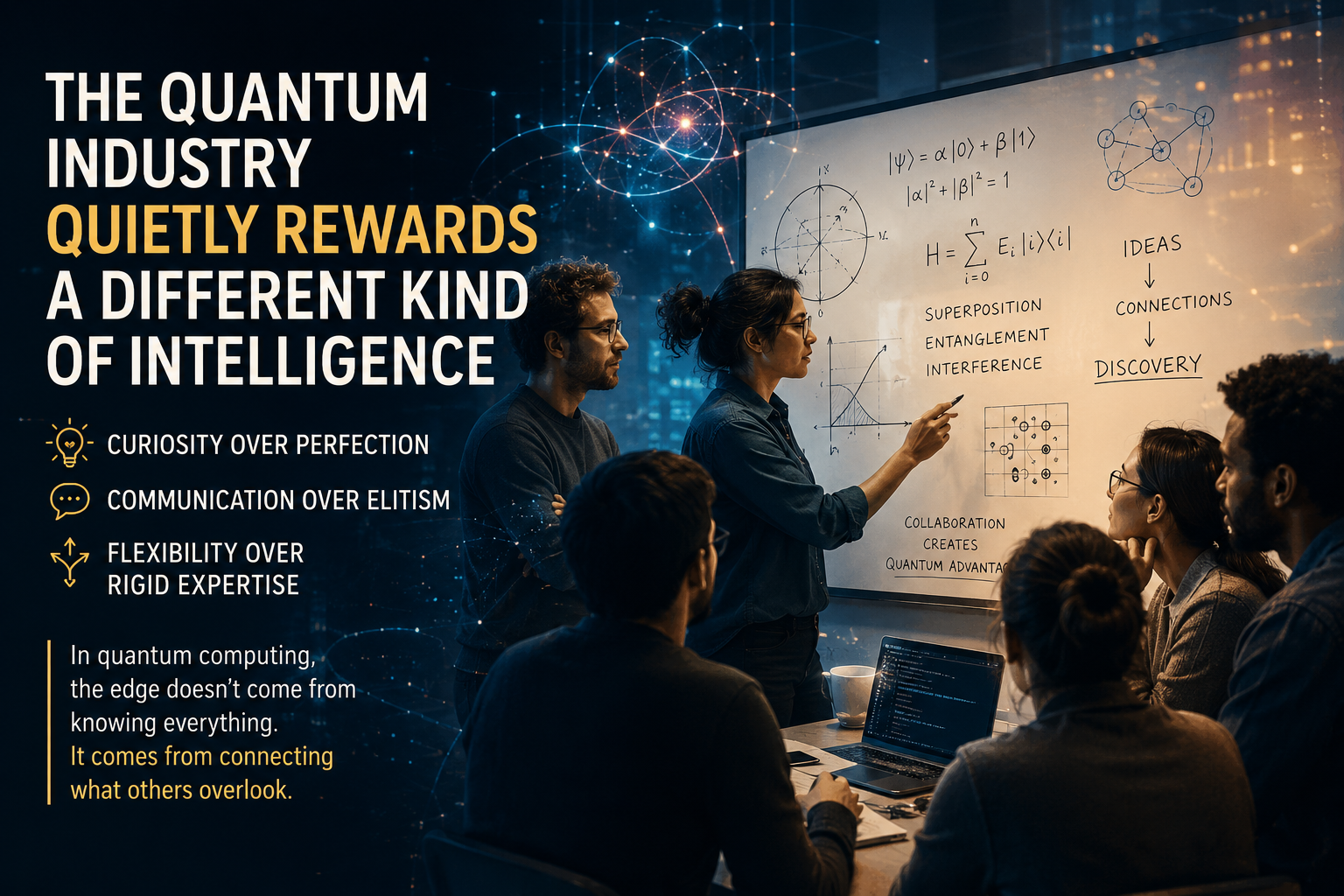
In other words, the field will increasingly benefit from cognitive diversity.
Visual learners — including many neurodivergent individuals — often bring exceptional strengths in pattern detection, spatial reasoning, and nonlinear thinking. These capabilities are not peripheral to quantum computing. They may become increasingly central as systems grow more complex.
But to unlock that potential, we must lower unnecessary cognitive barriers.
That does not mean simplifying the science. It means expanding the ways the science is expressed.
Beyond Education: The Rise of Quantum UX
There is another important dimension to this conversation that extends beyond classrooms.
As quantum hardware scales and hybrid workflows mature, usability challenges are becoming more visible. Developers, researchers, and enterprise users will increasingly need tools that make quantum system behavior interpretable in real time.
Today, most quantum tooling remains heavily numerical and text-based. But history across computing suggests that as systems grow more complex, visual interfaces become essential for rapid human comprehension.
We saw this in:
- classical computing dashboards
- network observability tools
- AI model interpretability layers
- cybersecurity threat visualization
Quantum computing is unlikely to be different.
What we may be witnessing right now — in its earliest experimental form — is the birth of quantum UX.
Fractal visualizations, dynamic state representations, and multisensory mappings could eventually evolve from artistic exploration into practical interface components for monitoring, debugging, and explaining quantum systems.
It sounds futuristic.
But so did graphical user interfaces once.
Why This Moment Matters
We are still early in the quantum era. That is precisely what makes this moment so important.
The norms we establish now around education, accessibility, and human interface design will shape who enters the field over the next decade.
If quantum computing continues to communicate primarily through dense symbolic abstraction, it will attract one narrow slice of cognitive profiles.
If, instead, the ecosystem embraces multiple pathways — mathematical, visual, auditory, and experiential — the talent funnel widens dramatically.
And with it, the pace of innovation.
Because some of the people who will push quantum computing forward most creatively may not be the ones who first fell in love with the equations.
They may be the ones who first needed to see the pattern.
Final Thought
Quantum computing is often described as a technological revolution.
But revolutions are not driven by hardware alone.
They are driven by who can understand, build, and extend the technology.
If we want quantum to reach its full potential, we must think carefully not just about better qubits, but about better cognitive interfaces to the quantum world.
Sometimes progress comes from adding more complexity.
And sometimes it comes from finally making the invisible… visible.