If you’ve been tracking the tone of quantum announcements lately, something subtle but important has shifted. The conversation is getting more grounded. More specific. More operational.
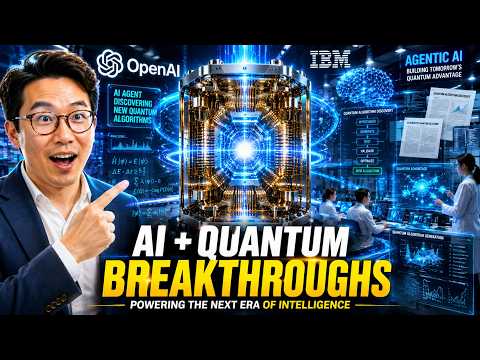
Over the past week, especially, messaging across the ecosystem has sharpened around hybrid quantum–AI workflows. The industry is moving away from vague future promises and toward clearer, near-term value propositions that enterprises can actually evaluate.
For years, the narrative often leaned into extremes. Either quantum computing was portrayed as a distant moonshot or as a looming replacement for classical AI. Neither story held up well under technical scrutiny. Now, the positioning is evolving into something far more credible.
Three changes stand out.
First, there is noticeably less hype about quantum replacing AI. That storyline always struggled because AI and quantum computing solve fundamentally different classes of problems. Machine learning thrives on large-scale statistical pattern recognition running on classical accelerators like GPUs. Quantum computing, by contrast, targets very specific computational structures such as optimization, simulation, and certain linear algebra problems.
The industry appears to be internalizing this distinction.
Second, we are seeing a stronger emphasis on AI-assisted quantum calibration and control. This is where the hybrid story becomes immediately practical. Running a quantum processor is extraordinarily complex. Qubits drift. Noise fluctuates. Calibration parameters shift over time. Maintaining stable operation requires continuous tuning across a high-dimensional control space.
This is precisely the kind of environment where machine learning excels.
AI models are increasingly being used to:
- Optimize qubit calibration routines
- Predict and mitigate noise patterns
- Improve readout discrimination
- Automating pulse tuning and scheduling
- Detect anomalies in quantum hardware behavior
This is not theoretical. It is already happening inside leading labs and commercial systems. And importantly, it delivers measurable operational improvements today.
Third, there is growing interest in quantum-enhanced machine learning pipelines. This is the longer-horizon piece of the hybrid story, but the framing is becoming more disciplined. Instead of broad claims that “quantum will revolutionize AI,” vendors are zeroing in on specific subroutines where quantum methods might provide an advantage.
Examples under active exploration include:
- Kernel methods using quantum feature spaces
- Variational quantum circuits embedded in ML workflows
- Quantum sampling for generative models
- Hybrid optimization loops combining classical and quantum steps
The keyword here is hybrid. Few serious players are positioning quantum machine learning as a wholesale replacement for classical deep learning. Instead, the architecture being explored looks more like an accelerator model, where quantum processors may eventually speed up certain mathematically hard components within larger AI pipelines.
This emerging narrative is far healthier for the market.
Why? Because it reflects technical reality.
We are now seeing a more coherent division of labor:
- AI helps run and stabilize quantum hardware today
- Quantum may accelerate specific AI workloads tomorrow
That sequencing matters enormously for credibility.
In the near term, AI-for-quantum is where most of the measurable value lives. Improving calibration efficiency, reducing error rates, and stabilizing system performance directly impact the usability of quantum hardware. These are tangible wins that hardware teams and customers can observe.
In the medium to long term, quantum-for-AI remains an active research frontier. There is genuine excitement around quantum-enhanced kernels, sampling advantages, and high-dimensional feature mappings. But the industry is increasingly careful to frame these as targeted opportunities rather than sweeping disruption.
This is exactly what market maturation looks like.
Early-stage technologies often pass through a hype phase where narratives outrun engineering reality. Over time, the messaging either collapses under its own weight or evolves into something more precise and defensible.
Right now, the quantum-plus-AI positioning is clearly entering the second phase.
Vendors are converging on hybrid value stories that acknowledge both the strengths and the current limitations of quantum hardware. Instead of promising wholesale transformation, they are identifying credible insertion points where quantum and AI can reinforce each other.
For enterprise buyers, this is a welcome development. Hybrid workflows are easier to pilot, easier to benchmark, and easier to justify than all-or-nothing bets on future quantum supremacy. They also align better with how complex computing systems historically evolve: through layered integration rather than sudden replacement.
For the ecosystem, the implications are equally important. Expect to see more co-design between quantum control stacks and AI optimization layers. Expect tighter integration between classical ML infrastructure and quantum toolchains. And expect messaging to continue shifting toward measurable operational impact.
The quantum story is not getting smaller.
It is getting sharper.
And in this phase of the industry’s evolution, sharper is exactly what the market needs.