There’s a major shift underway in the quantum ecosystem, but unlike the headline-grabbing hardware milestones, this one is unfolding more quietly.
Still, for those watching closely, the signal is unmistakable.
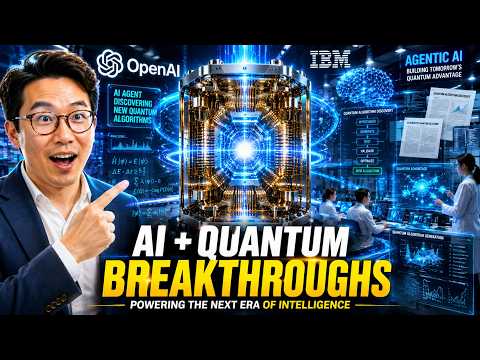
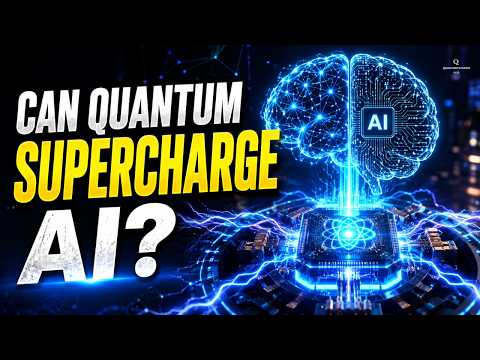
Quantum and AI are no longer parallel stories.
They are beginning to fuse into a single architectural narrative.
And in early 2026, that convergence is accelerating.
For the Impact Quantum community, this matters enormously because the next wave of practical value in the NISQ (Noisy Intermediate-Scale Quantum) era may not come solely from quantum hardware.
It will come from AI acting as a force-multiplier layer.
From Coexistence to Co-Design
For years, quantum and AI were often discussed in the same breath but built in largely separate silos.
Quantum computing promised exponential speedups for certain classes of problems.
AI and machine learning drove pattern recognition, optimization, and automation across classical systems.
Now the boundary between them is starting to dissolve.
We are seeing a clear architectural shift toward hybrid quantum–classical intelligence stacks, where AI is not just a workload running on top of quantum it is actively helping quantum systems function better.
This is a subtle but profound evolution.
Where AI Is Already Reshaping Quantum Systems
Across labs, startups, and major vendors, several high-impact use cases are gaining real traction.
AI for Calibration and Control
Quantum systems are notoriously sensitive. Qubit performance depends on extremely precise calibration across thousands and soon millions of control parameters.
Traditionally, this has required painstaking manual tuning and heuristic-driven feedback loops.
AI is changing that equation.
Machine learning models are increasingly being deployed to:
- automatically tune control pulses
- stabilize drift in real time
- optimize gate parameters
- Reduce calibration cycles
The result is not just incremental improvement it is operational scalability.
As systems grow more complex, manual calibration simply does not scale. AI-driven control is quickly becoming table stakes.
ML-Assisted Error Mitigation
Error mitigation remains a central bottleneck in the NISQ era. While full fault tolerance is still emerging, the industry is aggressively pursuing intermediate techniques that can extract useful signals from noisy hardware.
This is where machine learning is proving especially powerful.
We are now seeing ML models used to:
- predict and suppress noise patterns
- improve readout fidelity
- post-process quantum outputs
- learn device-specific error signatures
In many cases, AI acts as a statistical “noise filter,” helping quantum systems deliver more reliable results without requiring the full overhead of error correction.
For near-term applications, this is hugely important.
It effectively extends the useful life of NISQ hardware.
Hybrid Quantum–Classical Workflows
Perhaps the most commercially relevant development is the rise of hybrid workflows.
Rather than waiting for fully fault-tolerant machines, leading teams are building pipelines where:
- classical AI handles preprocessing
- quantum hardware tackles specialized kernels
- classical systems refine and validate outputs
This looped architecture is becoming the dominant near-term pattern.
Variational algorithms, quantum machine learning experiments, and optimization pipelines are increasingly designed with this hybrid philosophy from day one.
For enterprises, this dramatically lowers the barrier to experimentation.
You don’t need a perfect quantum computer.
You need a well-orchestrated hybrid stack.
Why Investors Are Paying Attention
Capital markets are beginning to notice what practitioners already see.
Investor interest at the intersection of quantum and AI is rising for a simple reason:
It creates near-term monetization pathways.
Pure-play quantum timelines remain long and capital-intensive. But when AI is layered in as an accelerator to improve calibration, boost effective fidelity, and enable hybrid workloads, the commercial story becomes more compelling.
This is especially attractive in the current funding climate, where disciplined capital is prioritizing:
- technical de-risking
- platform leverage
- cross-stack defensibility
Quantum + AI convergence checks all three boxes.
It transforms quantum from a distant moonshot into a progressively improving system.
AI Is the Force Multiplier
For the Impact Quantum audience, the strategic takeaway is clear.
AI is not competing with quantum.
It is enabling it.
In the NISQ era, raw hardware improvements alone will not unlock broad utility fast enough. The winners over the next several years will be the teams that treat AI as an embedded systems layer not an optional add-on.
Watch for companies that are:
- tightly coupling ML with control systems
- embedding AI into calibration pipelines
- designing hybrid workflows from the start
- building data moats around device behavior
Because this is where compounding advantage is forming.
The quantum industry is entering a phase where progress will not come from physics alone.
It will come from intelligent orchestration.
AI is rapidly becoming the software nervous system wrapped around fragile quantum hardware, stabilizing it, optimizing it, and extracting more value from every qubit we already have.
The convergence story is no longer theoretical.
It is operational.
And in 2026, one thing is becoming increasingly clear:
The fastest path to useful quantum may run straight through AI. 🚀