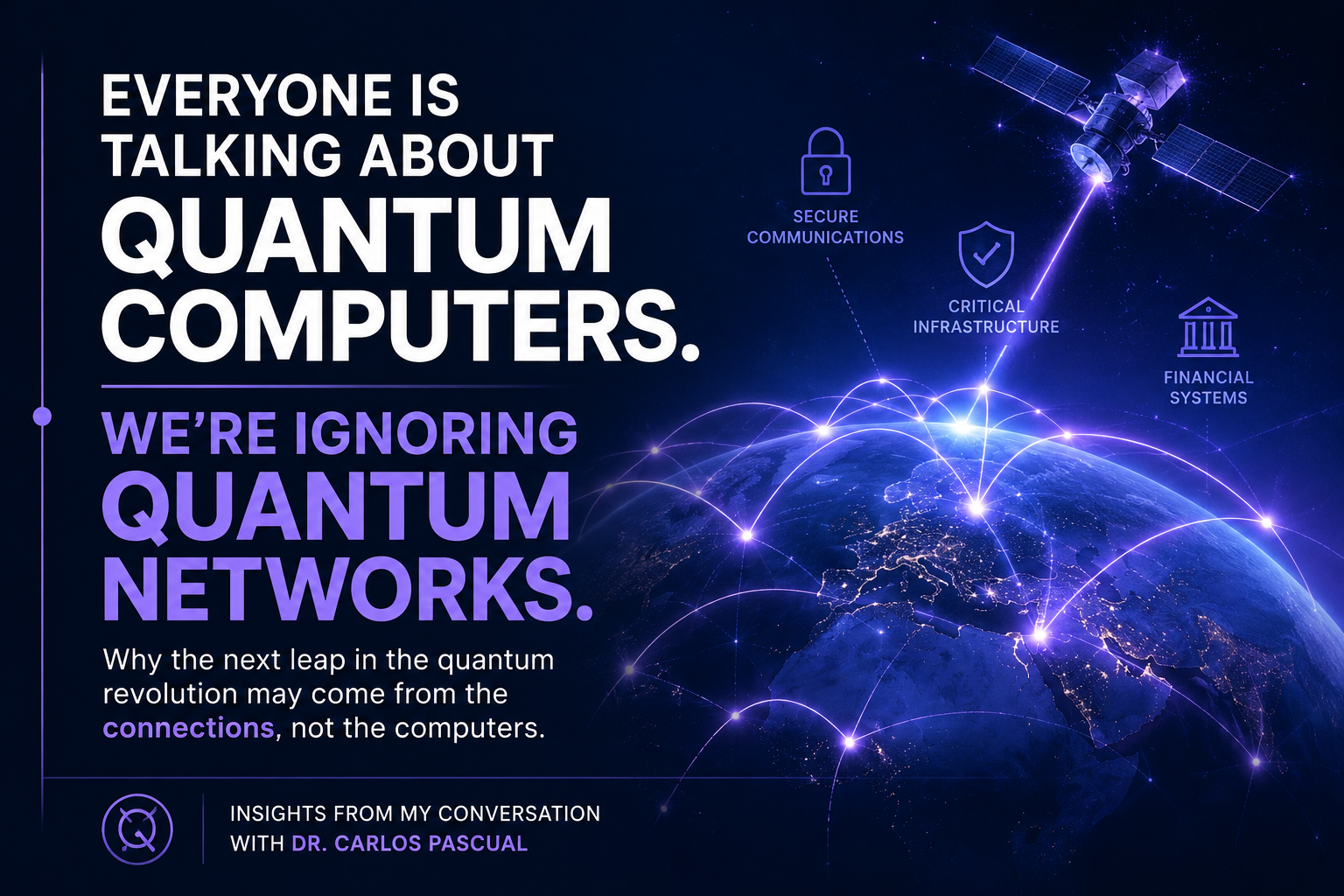
Right now, quantum computers are like brilliant, fragile recluses. Each one, isolated in its own frigid vault, capable of extraordinary calculations but alone.
IBM and Cisco are trying to give these machines a community.
In technical terms, it’s Distributed Quantum Computing. In plain terms, they’re saying: “Let’s let these quantum machines collaborate, not compete.”
That changes everything.
It’s the difference between a few master pianists playing solo and an orchestra performing a symphony. Each part is brilliant—but the network makes it transcendent.
The Real Bottleneck Isn’t Qubits. It’s a Translation.
You know what this reminds me of? Trying to explain your anxiety to someone who’s never experienced it. You know what you’re feeling, but the translation breaks down.
That’s precisely what happens between microwave photons (used by quantum processors) and optical photons (used by fiber-optic cables). They operate in entirely different languages, at wildly different frequencies. You can’t just shout louder; you need an interpreter.
And the interpreter, this MOT (Microwave-to-Optical Transducer), must be nearly perfect. No noise. No lag. No distortion.
Because in the quantum world, noise isn’t static—it’s destruction.
Cisco’s Mission: Inventing the Quantum Router
Let’s pause and honor the sheer audacity of what Cisco is building.
They’re not just upgrading network switches.
They’re rewriting the rules of information flow in a universe where:
- Copying data is forbidden.
- Communication depends on particles being entangled across space.
- Everything has to happen together, within billionths of a second.
They’re essentially asking: “What does a router look like when the laws of physics say you can’t look inside the packet?”
Answer: it looks like entanglement orchestration. It’s choreography. It’s timing. It’s precision bordering on poetry.
Quantum-Centric Supercomputing: The Strategy of Precision
IBM calls it Quantum-Centric Supercomputing, but it might as well be called Precision Strategy.
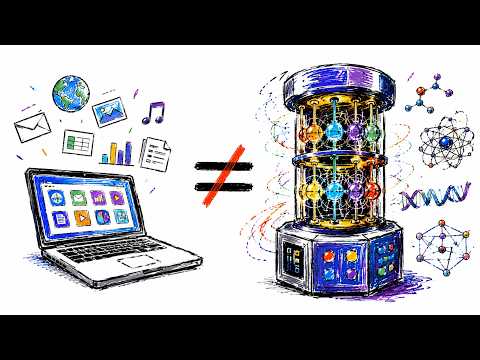
Instead of quantum machines replacing classical ones, the two learn to delegate:
- Classical CPUs handle brute-force, high-volume operations.
- Quantum QPUs tackle subtle, high-dimensional puzzles: molecules, traffic flows, risk trees, supply chains at the edge of chaos.
It’s a deeply neurodivergent system, if you think about it.
Different modes of thinking, tuned to other strengths, working in symphony.
It’s what many of us already practice:
- Use your neurodivergent creativity to map the idea.
- Use your phone calendar (external processor!) to keep it all on schedule.
- Offload what overwhelms, and focus on the one task only your brain can solve.
The Timeline Is Tight—but the Direction Is Set
The IBM–Cisco roadmap is ambitious, maybe even aggressive:
- By ~2030: A working, fault-tolerant, networked quantum cluster.
- By 2040-ish: A global quantum internet.
But here’s the kicker:
Even if the MOT tech delays them…
Even if standards war slow adoption…
Even if competitors catch up…
The mental model has shifted.
We’re no longer imagining bigger quantum boxes. We’re building connected systems.
This is how computing constantly evolves:
- From mainframes to personal computers.
- From personal to cloud.
- From cloud to edge.
- And now… from quantum islands to quantum constellations.
Why This Matters to the Rest of Us
This isn’t just about hardware and bandwidth. It’s about mindset.
We’re moving from solo to collective, from isolated power to interconnected potential.
In the same way, remote work reshaped how companies functioned…
In the same way, ADHD brains learn to co-regulate with tools and community…
In the same way, strategy shifts when you coordinate instead of control…
This is the computing parallel.
And if you’re in tech, research, policy, neurodiversity, or innovation, this is a wake-up bell.
Not because you need to learn quantum physics (unless you’re into that), but because the world’s problem-solving infrastructure is changing.
Tomorrow’s breakthroughs will emerge at the intersections:
- Of machines talking to machines.
- Of minds combining ways of thinking.
- Of data, creativity, intuition, and entanglement.