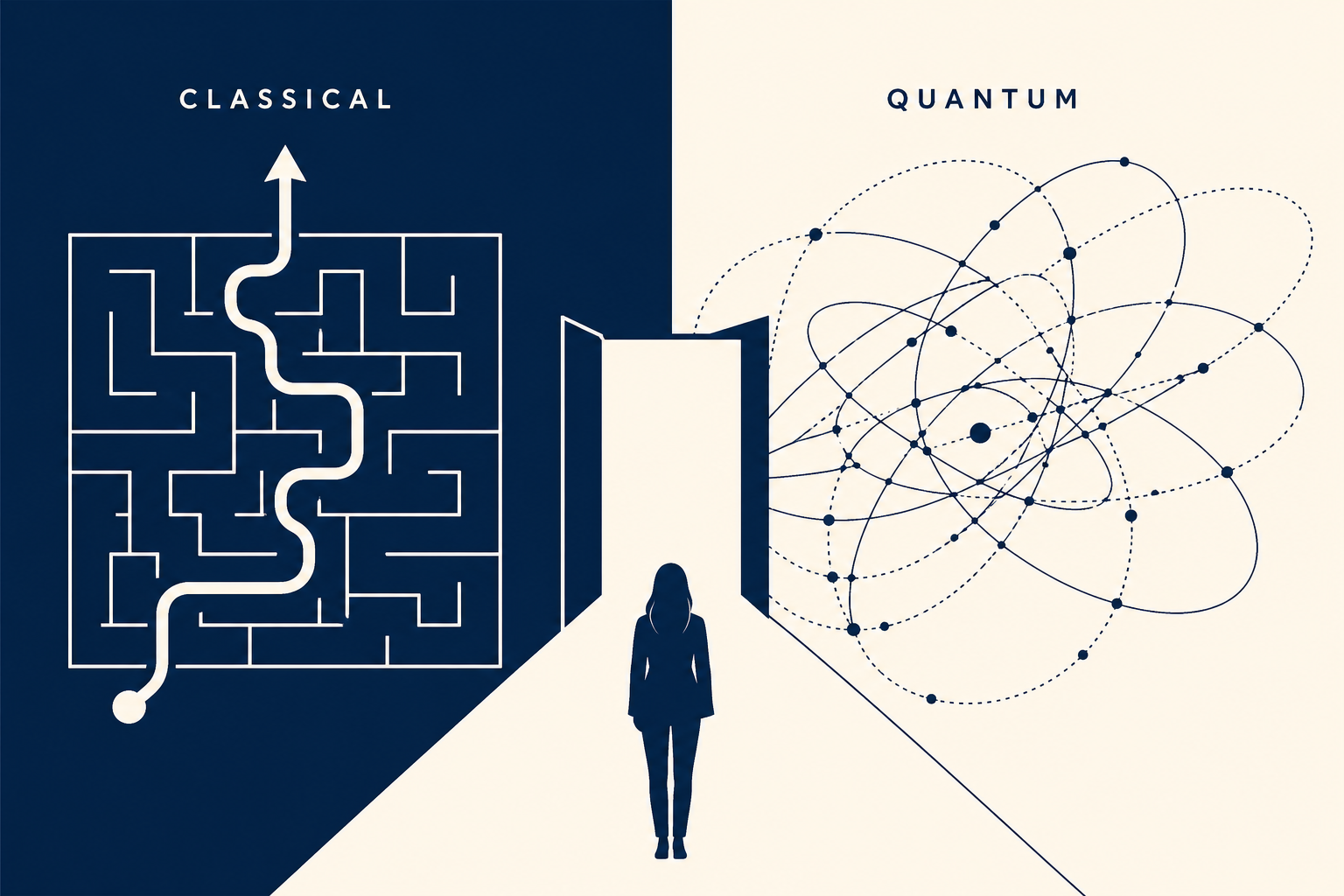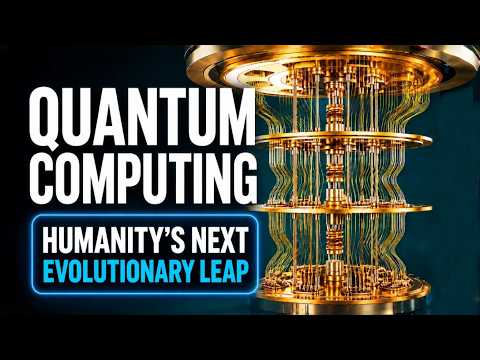
The world of computation, once defined by the rigid zeroes and ones of traditional bits, is undergoing a seismic shift. Enter quantum computing. Imagine a realm where bits, defying singularity, exist simultaneously in states of zero and one, opening vast corridors of possibility that classical computers can only dream of traversing. This isn’t mere technical advancement—it’s a leap into an era where the future is rewritten in the language of qubits and quantum superposition.
Based on content from Transhumanism Hub
In 2019, Google’s quantum stride demonstrated that a calculation benchmark—once thought insurmountable in our lifetime—could be accomplished in 200 seconds by a quantum computer. Contrast this with the millennium-long struggle it would have posed to conventional systems. Quantum computing is not simply about speed; it’s about breaking free from the limits imposed by traditional silicon.
Underneath the glittering optimism lie questions calling to be unraveled. We find ourselves, amid this technological crescendo, standing on the shoulders of the three great eras of computing. From gears and cranks of the analog age to the digital commands of the binary world, we now gaze into the atomic era, where the mechanisms of the universe offer themselves up to be decoded. Computers built not by what’s visible but by leveraging the unseen intricacies of quantum mechanics.
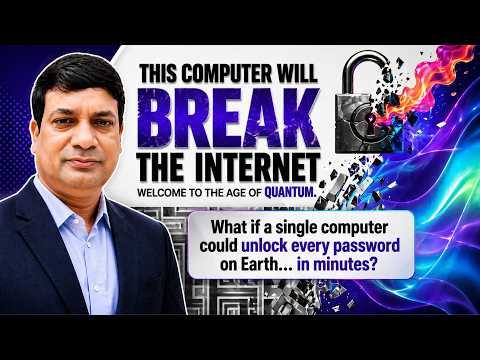
Yet, as technology bounds forward, we encounter a paradox: quantum computing promises both the most unbreakable encryptions and the key to bypassing them. It’s Shor’s Algorithm threatening to dismantle the security of our digital lives, even as quantum key distribution offers an unassailable defense. The very framework of digital security teeters on the brink, with quantum as both lock and locksmith, challenging us to redefine cybersecurity fundamentals.
But the implications stretch far beyond cryptography. Consider the untapped potential in medical therapies, as quantum computing propels us towards revolutionary breakthroughs. In domains like nanomedicine, quantum units can model the unfathomably complex molecular dynamics that traditional simulation merely approximates. Here, aging may not just be slowed—it could be rewritten.
Meanwhile, the brain remains one of the last bastions of human mystery. The prospect of simulating neural activity with quantum-assisted precision moves us from speculation to engineered reality—a bedrock for discussions around mind uploading and digital consciousness. And as artificial intelligence synergizes with quantum computing, we might edge towards a coexistence not merely alongside machines, but within them.
This conjures up thoughts of transhumanism: a philosophy inviting both awe and ambivalence. It isn’t just faster calculations that quantum bears; it’s a vision of humanity expanded not just in capabilities but in essence. We stand on the precipice, where the melding of digital prowess with biological consciousness dares to redefine what it means to be human.
Still, let’s remind ourselves that even amid this expansive horizon, limitations persist. Quantum computers remain expensive, requiring extreme conditions to function correctly. Invisible threats like temperature fluctuations and stray photons lurk to unsettle delicate calculations. These are obstacles, but not impassable walls. With improvements in qubit reliability drawing ever nearer, quantum computing stands poised to be the catalyst for unimaginable breakthroughs.
As we engage with this forthcoming era, let’s foster discourse—acknowledging not only the dreams of futurologists but also the cautions of realists. Perhaps it’s the questions left unanswered today that will define the actions of tomorrow. Can we channel this quantum conundrum into a tool for collective progress? As we wrestle this new frontier into the grasp of our ingenuity, may it illuminate new paths while challenging our understanding of the very universe we navigate.
—