Imagine a world where a new life-saving drug is discovered in days, rather than decades. A world where a global supply chain reroutes itself in seconds during a crisis, or where we can model entire ecosystems at the molecular level. That’s the shimmering horizon of quantum computing, a realm where computation becomes less about ones and zeros and more about the delicate dance of atoms and light.
But while most of the spotlight shines on the qubits and the exotic mathematics behind them, there’s another revolution quietly unfolding at the atomic scale: the materials that make quantum computing possible.
For over fifty years, silicon has been the backbone of our digital civilization. Its semiconducting magic allowed engineers to carve smaller and smaller transistors, powering everything from smartphones to satellites. Yet, as we step into the strange landscape of quantum mechanics, where particles can exist in multiple states simultaneously, silicon begins to reveal its limitations.
Quantum bits, or qubits, are exquisitely sensitive. They must maintain a fragile quantum state without being disturbed by the surrounding world. Unfortunately, silicon is somewhat noisy, containing isotopic impurities and tiny vibrations that can collapse a quantum state in a heartbeat. In a world built for classical physics, building quantum systems is akin to trying to whisper in the midst of a thunderstorm.
So the question becomes: how do we build something stable in a world made of uncertainty?
The Exotic Material Playground
To move beyond silicon, researchers are venturing into a new kind of periodic table, one filled with superconductors, topological insulators, and two-dimensional crystals that stretch the imagination as much as they stretch the rules of physics.
Superconductors:
These are the current champions of the quantum race. When cooled to near absolute zero, superconductors allow electrons to flow through them with zero resistance, no friction, and no loss, resulting in pure flow. IBM and Google have built their quantum processors using superconducting circuits that rely on Josephson junctions, tiny gateways that let paired electrons (called Cooper pairs) move in perfect synchrony. These systems have already demonstrated quantum advantage in controlled environments, showing both speed and scalability.
Topological Insulators and Superconductors:
If superconductors are the athletes, topological materials are the philosophers of the bunch. They’re insulators on the inside but conductors on the surface, protected by deep mathematical symmetries that make them remarkably resistant to local disturbances. A topological qubit doesn’t store information in one place but instead in the entire topology of the material, like a melody encoded across an orchestra rather than a single note. Microsoft’s ongoing pursuit of Majorana-based qubits is one of the boldest quests in this field, aiming to build systems so inherently stable they might someday make quantum error correction almost unnecessary.
2D Materials: Graphene and TMDs:
Then there’s the world of atom-thin wonder materials. Graphene, a single sheet of carbon atoms arranged in a honeycomb lattice, and transition metal dichalcogenides (TMDs) like MoS₂ open up new ways to manipulate an electron’s spin, its tiny built-in magnetic compass. These materials could make quantum devices not only faster but also more practical, potentially operating at higher, “warmer” temperatures. Imagine portable quantum sensors or even quantum-enabled phones; that’s the dream flickering at the edge of research today.
Quantum Architects: Designing Beyond the Chip
What’s fascinating is that these new materials aren’t just replacements for silicon, they’re redefining what a “chip” even means.
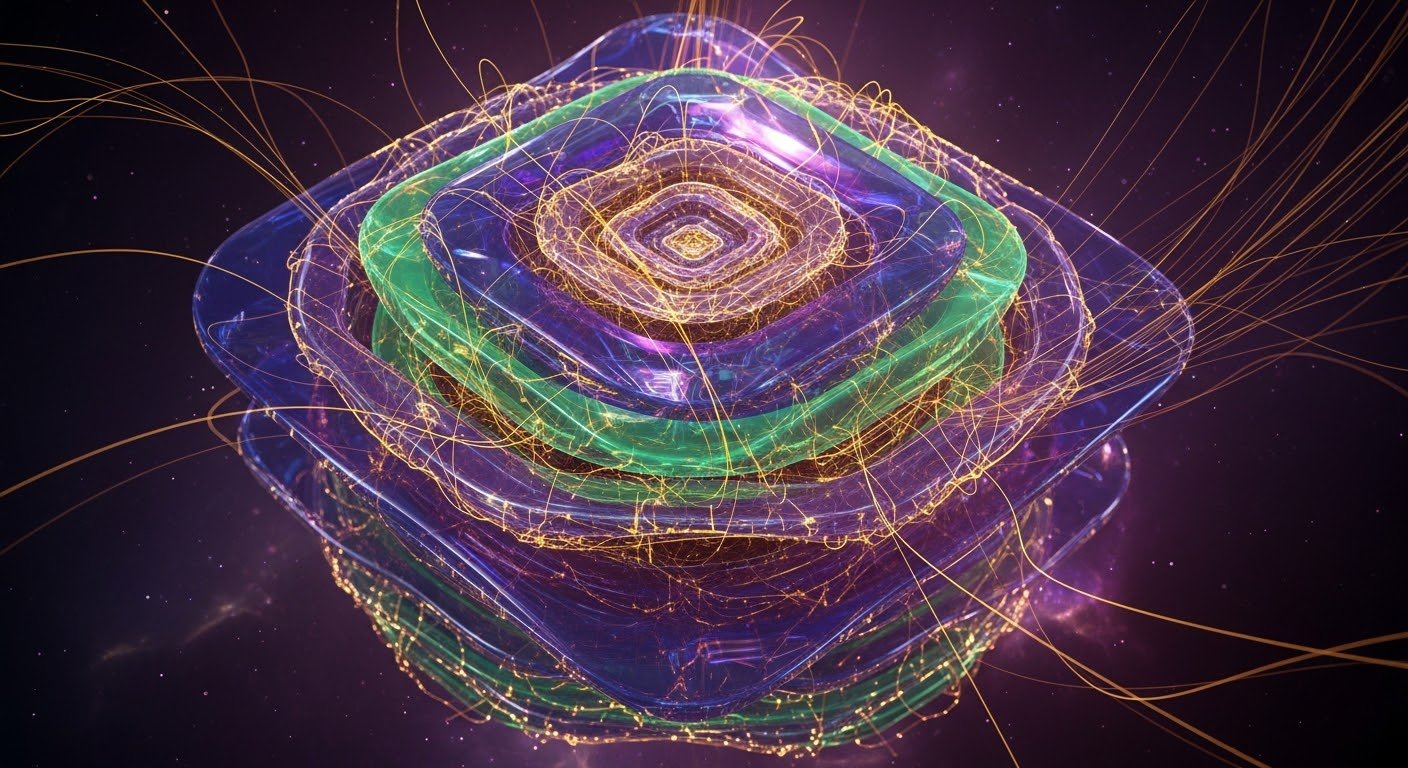
Spin-based qubits crafted from silicon-germanium blends or diamond’s nitrogen-vacancy (NV) centers can connect quantum behavior to our existing CMOS infrastructure, bridging the futuristic with the familiar. Meanwhile, topological systems require heterostructures, intricate stacks of materials like superconductors layered over topological insulators, each layer whispering to the other in perfect atomic alignment.
The craftsmanship involved borders on poetry. Using tools like molecular beam epitaxy, scientists literally “grow” crystals one atom at a time. National labs, such as Oak Ridge and Argonne, are refining this atomic gardening, while companies like D-Wave, IBM, and Intel are experimenting with hybrid quantum–classical systems that blend superconducting qubits with traditional processors. It’s like orchestrating a cosmic symphony where every atom must strike the right note.
The Road Ahead: Breakthroughs and Roadblocks
Progress in the past few years has been astonishing. Researchers have extended the coherence time of silicon-based qubits, proving that even within our old friend silicon, there’s quantum potential waiting to be unlocked. Germanium-silicon hybrids are showing promise for light-based quantum communication, a crucial step toward the development of scalable quantum networks.
Still, challenges loom large. Scaling from a few dozen qubits to millions will require a manufacturing revolution unlike any other. And there’s the energy conundrum: most quantum processors need to operate near absolute zero, which means massive cryogenic systems that aren’t exactly eco-friendly or portable.
Many experts predict that superconducting qubits will dominate in the near term because they’re the most mature. In contrast, spin-based qubits may eventually prevail in the long run due to their compatibility with existing chip fabrication techniques. Topological qubits, though still theoretical, remain the ultimate goal: the dream of a truly fault-tolerant quantum computer that could operate with minimal interference for as long as we need it.
Your Quantum Future: Why It Matters
The quiet materials revolution beneath quantum computing will reshape far more than physics labs. When stable, scalable qubits become reality, they could revolutionize everything from artificial intelligence and climate modeling to global logistics and personalized medicine. But these same breakthroughs will also challenge today’s cryptographic systems, forcing us to rethink digital trust and security from the ground up.
At its heart, this revolution isn’t just about faster computation; it’s about a more profound understanding. Every new quantum material reveals something about how matter itself holds, processes, and transforms information.
Quantum computing reminds us that even the smallest particles can rewrite the rules when they work together in harmony. It’s a poetic reminder that progress often begins not with greater speed, but with deeper connections between atoms, between ideas, and between us.