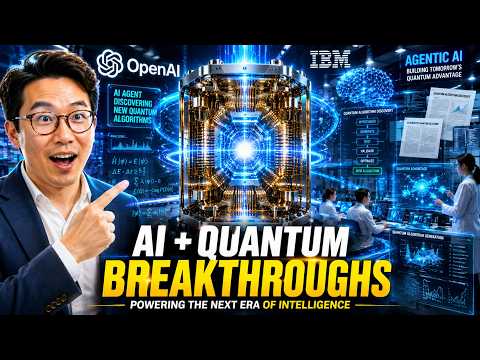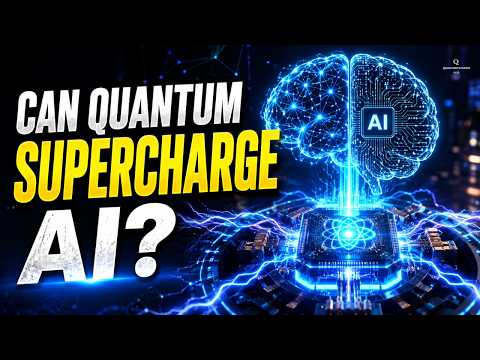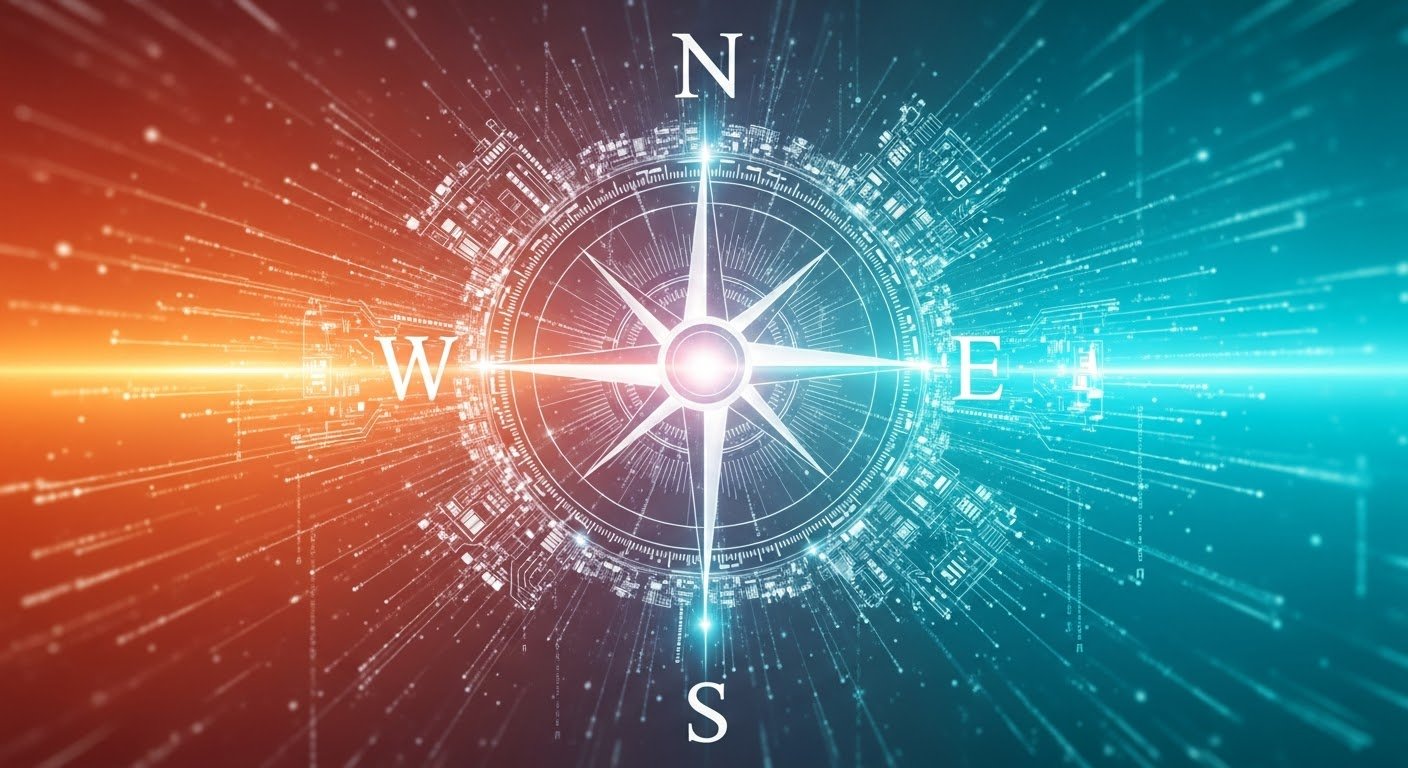
The fusion of quantum computing and artificial intelligence (AI) marks the next major leap in computational evolution—one that doesn’t just scale today’s models, but redefines what intelligence itself can achieve. By harnessing the strange and powerful principles of quantum mechanics, this convergence could solve problems once thought impossible, from molecular simulation to global optimization.
The Limits of Classical AI
Today’s AI, driven by deep learning and large language models, has achieved astonishing feats—writing, designing, diagnosing, and predicting with human-like fluency. Yet, classical computing imposes limits. Training massive neural networks demands enormous power and time, and even the fastest supercomputers explore possibilities one at a time. As models grow, energy use and training costs skyrocket, hitting what experts call the “power wall.”
Quantum’s Paradigm Shift
Quantum computing flips this paradigm. Instead of bits that are 0 or 1, qubits can exist in a superposition of both states simultaneously. Through entanglement, qubits become interconnected, allowing quantum systems to explore an exponential number of possibilities at once. A 100-qubit computer could, in theory, perform as many operations as classical systems with trillions of bits.
This exponential power enables vast parallelism, accelerating optimization, simulation, and learning tasks that classical AI can only approximate.
Quantum-Enhanced Neural Networks
Quantum Neural Networks (QNNs) merge quantum circuits with classical architectures. Using qubits as neurons, QNNs can model complex, nonlinear relationships in data more efficiently. Quantum-enhanced optimization methods may shorten training times from months to minutes. In fields such as drug discovery, genomics, and finance, QNNs can decode patterns hidden deep within high-dimensional data.
Challenges and the Path Forward
Quantum AI is still in its early stages. Hardware instability, qubit errors, and the immense challenge of scaling systems near absolute zero remain formidable obstacles. On the software side, translating classical AI algorithms into quantum form is an active area of research. Yet, nations and industry leaders are racing toward fault-tolerant systems, with practical applications predicted within the next decade.
Ethics and Impact
A world powered by quantum AI could bring unprecedented breakthroughs—but also new risks. It may intensify bias, undermine encryption, and widen economic divides if access remains unequal. Responsible innovation—transparent, explainable, and inclusive—will be key to ensuring quantum intelligence uplifts humanity rather than divides it.
As we stand at the threshold of this quantum age, one question lingers: when intelligence is built on the fabric of reality itself, what new truths about our own consciousness might emerge?
Stay Connected
Follow our journey and be part of the conversation:
🔗 Find us on LinkedIn
📬 Join our mailing list
📺 Subscribe to our YouTube channel