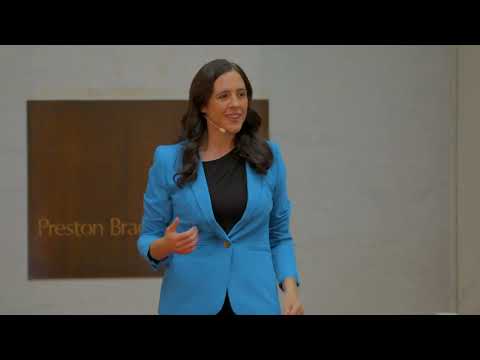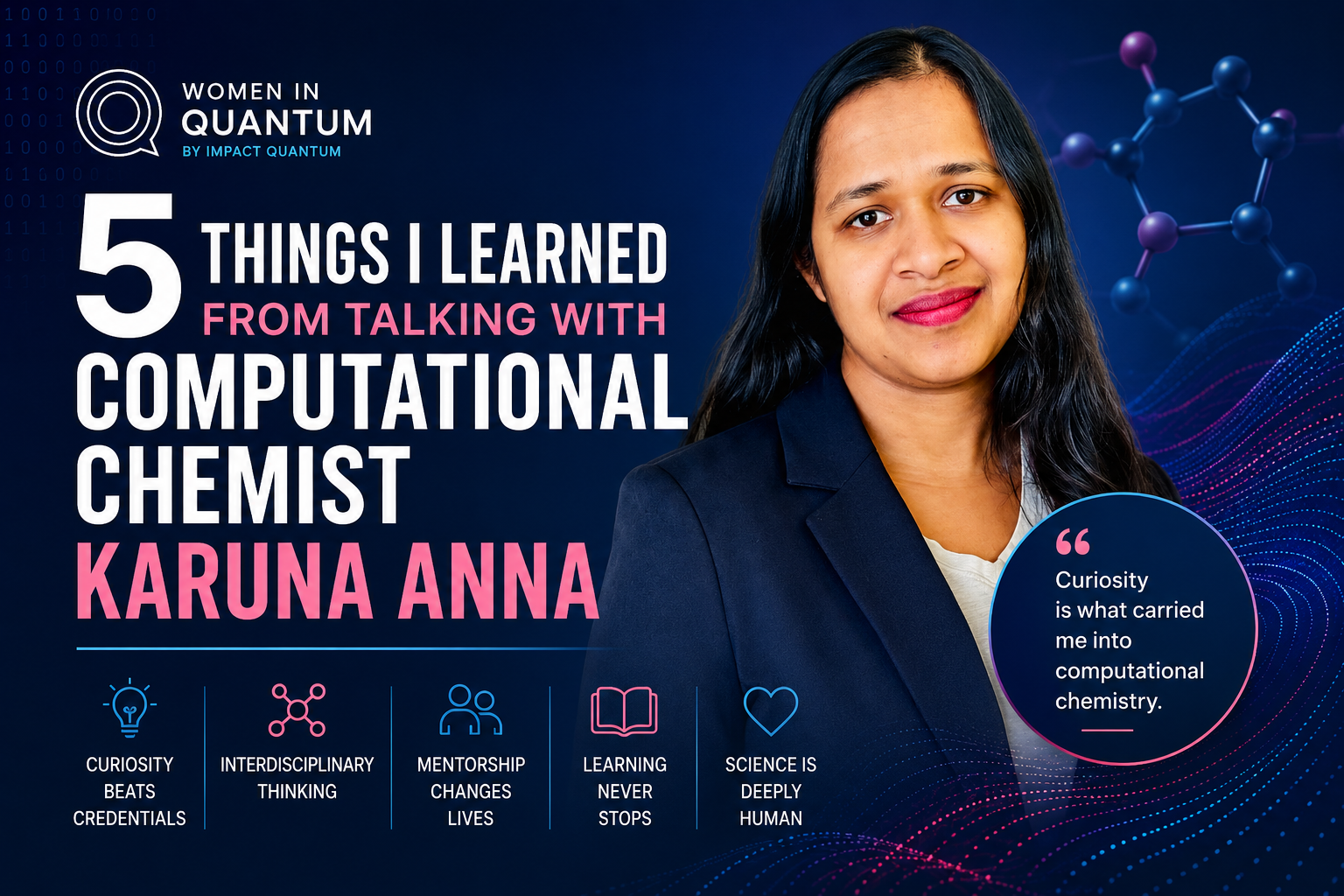
There are some conversations that stay with you long after the recording ends. Not because they contain groundbreaking announcements or bold predictions, but because they quietly change the way you think. That was my experience speaking with computational chemist and machine learning scientist Karuna Anna Sajeevan on the Women in Quantum podcast.
When most people think about quantum computing, they imagine complex mathematics, futuristic hardware, or laboratories filled with equipment that few of us could explain. What often gets overlooked is the human side of the story. Every scientific breakthrough begins with a person who asks a question, follows their curiosity, and keeps learning even when the path isn’t clear.
Karuna’s journey reminded me that the future of quantum isn’t being built solely by people who always knew exactly where they were headed. It’s being built by curious individuals willing to keep asking questions and embrace opportunities as they appear. Here are five lessons that stayed with me after our conversation.
Curiosity Will Take You Further Than Credentials
One of the most memorable moments in our discussion had nothing to do with quantum chemistry. It began with a story about seeds.
Growing up in Kerala, India, Karuna was fascinated by the process of seeds germinating. She would soak them in water and patiently check on them each day, waiting for the first tiny root to emerge. That simple childhood experiment became her first introduction to scientific discovery.
It struck me because curiosity rarely looks extraordinary in the moment. It often appears in small, quiet moments that most people overlook. It’s the child who keeps asking “why,” the student who takes things apart to understand how they work, or the researcher who refuses to stop searching after finding the first answer.
We often celebrate degrees, awards, publications, and job titles. Those accomplishments certainly matter, but they’re usually built on something much deeper. Genuine curiosity is what fuels every meaningful discovery.
The quantum industry needs brilliant minds, but it also needs people who remain endlessly curious. Curiosity is often the first step toward innovation.
Innovation Happens Between Disciplines
Karuna’s educational path wasn’t a straight line. She studied biology, chemistry, microbiology, literature, computational chemistry, and eventually machine learning. Rather than seeing these as unrelated fields, she viewed them as different ways of understanding the same world.
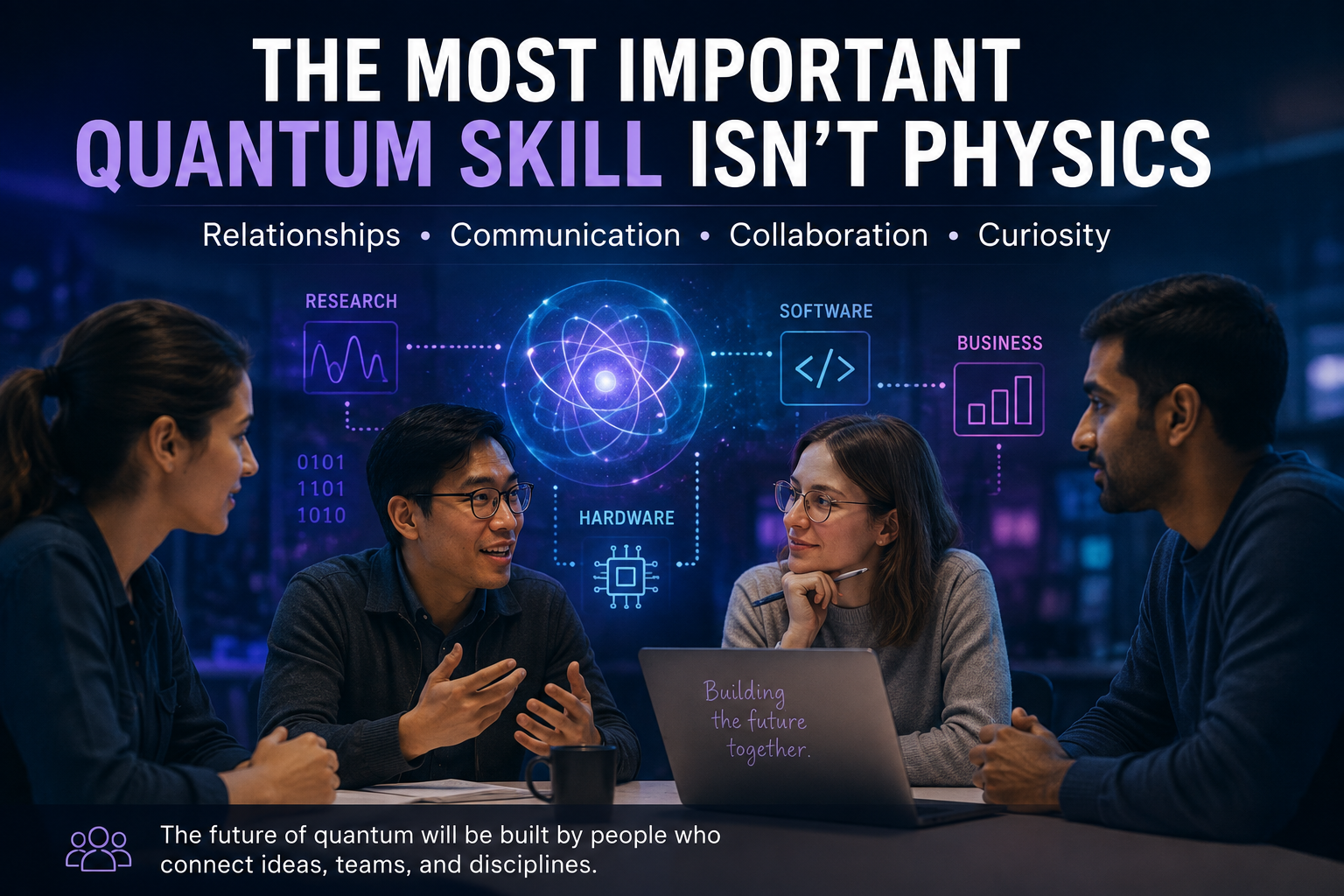
That perspective feels especially important today because quantum computing is, by its very nature, interdisciplinary.
Building practical quantum technologies requires physicists, chemists, mathematicians, software developers, engineers, cybersecurity experts, materials scientists, and, increasingly, people who can communicate across those disciplines. The future won’t be built by isolated experts working alone. It will be built by teams that combine different perspectives and different ways of thinking.
Some of the most valuable people entering the quantum ecosystem may not be those who specialize in only one area. They may be the people who understand enough about several disciplines to help connect them. Innovation often happens where different fields intersect.
One Mentor Can Change an Entire Career
Every successful scientist can usually point to someone who believed in them before they fully believed in themselves.
For Karuna, that person was her PhD supervisor.
At a time when computational chemistry was often viewed as a field better suited to people with exceptionally strong mathematical backgrounds—and often to men—her mentor looked beyond those assumptions. Instead of focusing on what Karuna didn’t yet know, she focused on what she was capable of becoming.
That belief changed the direction of her career.
Mentorship is about much more than sharing technical knowledge. It’s about creating confidence, opening doors, and giving someone permission to grow into opportunities they might otherwise never pursue.
The quantum industry frequently talks about building the next generation of talent. But talent pipelines aren’t created through job postings alone. They’re built through mentorship, encouragement, and people willing to invest in someone else’s potential.
The people shaping the future of quantum may not always be the ones making the headlines. Sometimes they’re the mentors quietly helping others discover what they’re capable of achieving.
Learning Never Really Ends
Many people imagine that scientists eventually reach a point where they know everything they need to know. Karuna’s story illustrates the opposite.
Throughout her career, she has continuously adapted, whether that meant learning mathematics while pursuing computational chemistry or adjusting to entirely new research environments after moving from India to the United States.
She spoke about embracing different cultures, different approaches to collaboration, and different ways of thinking. Rather than seeing change as an obstacle, she viewed it as another opportunity to learn.
That mindset feels more relevant today than ever before.
Artificial intelligence continues to evolve at an incredible pace. Quantum computing is advancing rapidly. New research tools, programming languages, and scientific methods emerge almost daily.
Waiting until you feel completely prepared may mean waiting forever.
The professionals making the greatest impact today aren’t necessarily the people who already know everything. They’re the people who remain comfortable learning throughout their careers. Continuous learning is no longer simply an advantage; it’s becoming essential.
Science Is, Above All Else, Human
Perhaps the biggest lesson I took away from our conversation had nothing to do with chemistry, machine learning, or quantum computing.
It was about people.
Throughout the interview, Karuna returned repeatedly to the importance of collaboration, understanding different cultures, showing grace, and recognizing the humanity behind scientific work.
She also shared her research on developing computational methods to recover critical minerals from electronic waste, work that has important implications for sustainability, energy security, and future technologies.
It’s easy to become fascinated by quantum computers, algorithms, and technical milestones. But behind every paper, every experiment, and every discovery is a person trying to solve a problem that matters.
Better medicines.
Cleaner energy.
Safer communications.
Smarter materials.
More sustainable technologies.
Science isn’t simply about equations and experiments. It’s about improving people’s lives.
Sometimes we become so focused on the technology that we forget the humanity driving it. Conversations like this remind us that the human stories are just as important as the scientific ones.
The Human Side of the Quantum Revolution
One of the things I enjoy most about hosting the Women in Quantum podcast is discovering that there is no single path into this industry. Some people begin with physics. Others with chemistry, engineering, computer science, or mathematics. Others simply begin with curiosity.
Karuna Anna’s journey is a reminder that extraordinary careers often grow from ordinary moments: a child fascinated by a seed, a mentor who offered encouragement, a willingness to learn something difficult, and the courage to keep moving forward even when the destination wasn’t entirely clear.
As the quantum ecosystem continues to evolve, we’ll celebrate breakthroughs in hardware, algorithms, investment, and commercialization. Those milestones deserve attention.
But I hope we continue telling stories like Karuna’s as well.
Because behind every quantum breakthrough is a human story. And sometimes those stories teach us just as much as the science itself.