There are moments in technology when you feel something shifting beneath your feet.
Not loudly. Not all at once. But quietly enough that if you’re paying attention, you start to see patterns emerging.
Lately, that’s exactly how I’ve been feeling about the intersection of quantum computing and artificial intelligence.
At Impact Quantum, we spend a lot of time following signals across the global quantum ecosystem—hardware breakthroughs, national strategies, emerging algorithms, and the early industrial experiments that hint at what might come next. And more and more, those signals keep pointing to the same place:
AI and quantum are beginning to converge.
Recently on the Transform Now podcast, Karina Liner, a principal at Roland Berger’s Advanced Technology Center, joined host Michael Marchuk to talk about exactly this moment. Her framing stuck with me.
We may still be waiting for the famous “million-qubit machine,” but the interaction between these two technologies is already shaping something much bigger.
In her words, it’s a “superpower in the making.”
And honestly, that phrase feels right.
The Physics of the Future
To understand why this convergence matters, we need to step back and look at the foundations.
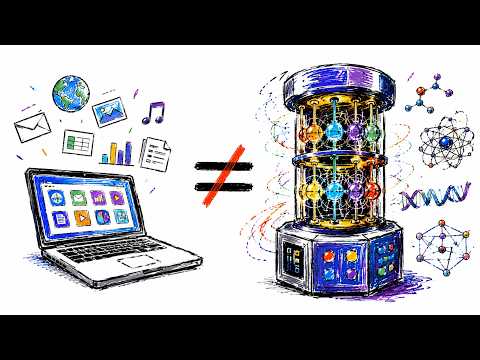
The computers powering today’s AI systems—large language models, recommendation engines, and autonomous systems—are still classical machines. They run on bits, the familiar zeros and ones.
Quantum computers operate very differently.
Instead of bits, they use qubits, which exist in a strange quantum state called superposition. That means a qubit can represent both 0 and 1 simultaneously until it’s measured.
For a visual learner like me, I think of it like this:
Classical computers move through possibilities one path at a time.
Quantum systems explore many paths at once.
That difference changes everything.
The uncertainty of quantum mechanics isn’t a flaw—it’s the very property that allows quantum systems to search complex landscapes in ways classical machines simply can’t. When you combine that probabilistic exploration with AI’s ability to recognize patterns, you start to see why researchers are so excited.
It’s not just about faster computing.
It’s about a fundamentally different way of solving problems.
The AI Hallucination Question
Of course, every new capability raises new questions.
One of the biggest conversations happening around AI today is the issue of hallucinations—those moments when models generate answers that sound convincing but aren’t actually true.
So a natural concern emerges:
If quantum computing introduces more uncertainty into calculations, could it worsen hallucinations?
Liner’s answer was surprisingly reassuring.
The two issues come from completely different sources.
AI hallucinations arise from how models are trained—they are optimized to generate the most statistically likely response, not necessarily the most accurate one. Quantum computing, on the other hand, changes how calculations are performed at the physical level.
In fact, quantum techniques may help improve the signal.
One example is quantum denoising, a method researchers are exploring to filter noise from complex data streams. In fields such as medical imaging or satellite navigation, clearer signals can lead to more reliable interpretations.
In other words, quantum might not amplify AI’s mistakes.
It might actually help clean them up.
The Efficiency Question No One Can Ignore
There’s another dimension of this conversation that I find particularly important: energy.
AI infrastructure is expanding at an extraordinary pace, and with that growth comes a massive appetite for power. Data centers around the world are already feeling the strain.
This is where quantum hardware starts to look especially interesting.
Liner pointed to emerging work on photonic quantum chips, which manipulate light rather than electrical signals. When researchers compare some of these experimental systems to today’s best-in-class AI hardware like NVIDIA’s H100 GPUs the difference in operations per watt becomes striking.
The leap in efficiency isn’t incremental.
It’s potentially orders of magnitude.
If those numbers continue to hold as the technology matures, quantum hardware could become an essential component in scaling future AI systems—not just because it’s powerful, but because it’s sustainable.
And in a world where compute demand keeps climbing, that matters.
Are We Leaving the “Quantum Winter”?
For years, critics have discussed the possibility of a quantum winter, a slowdown in momentum if hardware progress stalls.
To be fair, many predictions made around 2020 assumed we would reach certain milestones by 2026 that haven’t quite materialized. Liner described this as a kind of linear forecasting bias—expecting progress to follow a straight line when technological breakthroughs rarely do.
But she believes we’re approaching a different kind of inflection point.
Not necessarily the moment when quantum computers replace classical machines, but the moment when quantum algorithms begin to create measurable value.
Three in particular are drawing attention right now:
Quantum Generative Learning
This approach improves how models sample from probability distributions, potentially revealing patterns that classical architectures struggle to detect.
Quantum Denoising
By filtering noise more effectively, researchers can improve signal accuracy in complex systems.
Quantum Linear Solvers
These algorithms may accelerate calculations in large-scale correlation problems, important for fields such as logistics optimization and autonomous systems.
In other words, the shift isn’t just about building bigger machines.
It’s about finding where quantum computation actually helps.
The Security Clock Is Ticking
Not all of the implications are purely technological.
Some are geopolitical.
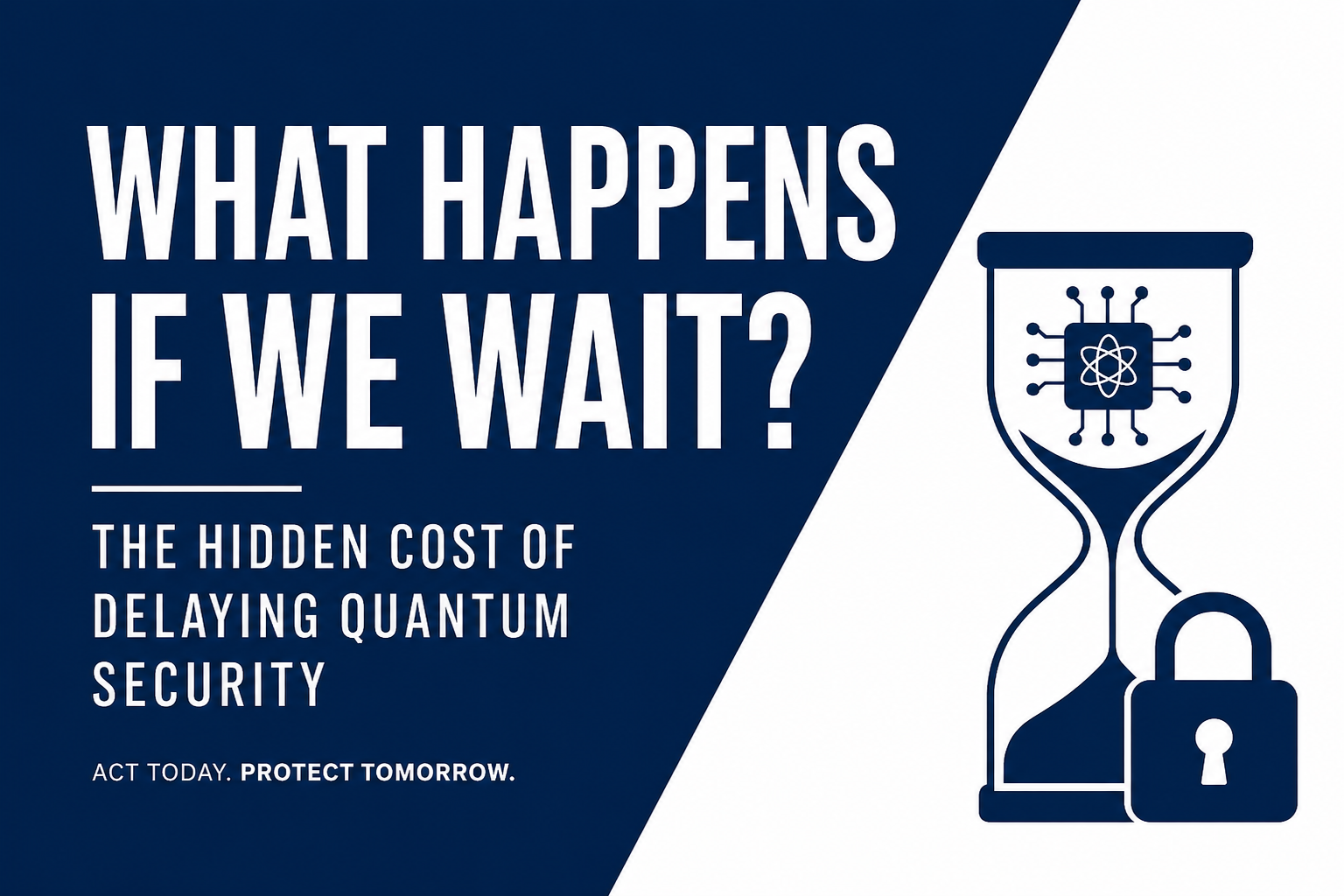
One of the most widely discussed concerns in quantum security is something known as “harvest now, decrypt later.”
The idea is simple but unsettling.
An adversary could collect encrypted data today, bank records, medical archives, and government communications, and store it until quantum computers become powerful enough to break the encryption protecting them.
When that day arrives, everything harvested in advance becomes readable.
That’s why many governments and security experts are pushing organizations to begin migrating toward post-quantum cryptography now, rather than waiting for the hardware to arrive.
For industries like finance, insurance, and healthcare, this isn’t a theoretical risk.
It’s a strategic one.
Where the Quantum Touch Will Appear First
So when will organizations begin to feel the impact?
The timeline varies by industry.
In pharmaceutical research, accurately simulating a single enzyme may require around a million qubits—a milestone that likely sits in the 2030s. But companies are already defining their quantum simulation strategies.
In finance, large banks in the United States and Europe are experimenting with quantum approaches to portfolio optimization and arbitrage.
In manufacturing, quantum algorithms may eventually deepen the kinds of workflow optimizations AI already provides, particularly in industries facing an aging technical workforce.
The pattern is becoming clear.
Wherever AI is already helping organizations analyze complexity, quantum computing may eventually amplify those capabilities.
Two Ways of Thinking About the World
What I found most compelling in Liner’s comments was the way she described the intellectual partnership between these two technologies.
AI thinks in vectors, weights, and numerical relationships.
Quantum computing operates in probability landscapes.
They approach problems from entirely different angles.
But together, they may help us see patterns that neither technology could uncover alone.
The Superpower in the Making
From my perspective, watching this space evolve feels a bit like standing at the edge of a new scientific frontier.
AI has already transformed how we process information.
Quantum computing is redefining how computation itself works.
When those two forces begin to reinforce one another, we aren’t just building better tools.
We’re reshaping the foundations of how problems are solved.
At Impact Quantum, we’ll continue to follow this convergence closely.
Because if the signals we’re seeing today are any indication, the next decade of innovation won’t be defined by AI alone or quantum alone.
It will be defined by what happens when the two finally learn to work together.
And when that moment arrives, the real question won’t be whether the superpower exists.
It will be whoever knows how to use it.