Picture standing at the edge of a new digital dawn. The horizon shimmers with promise—quantum computing is ready to revolutionize everything from medicine to artificial intelligence. But beneath that brilliance hums a quieter, more unsettling note: a countdown to what cybersecurity experts call “Q-Day.”
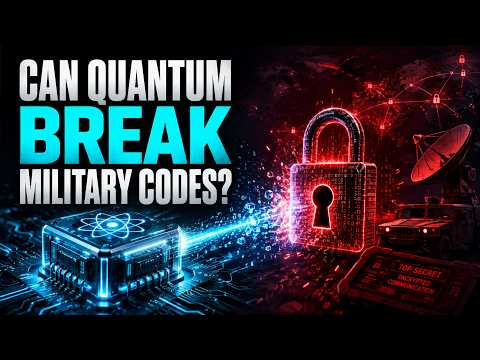
That’s the moment when a quantum computer becomes powerful enough to crack the encryption protecting our global digital infrastructure. Bank accounts, medical records, defense systems—the invisible scaffolding of our connected world. In 2030, that scaffolding may suddenly be fragile.
Quantum computing is not some far-off sci-fi fantasy anymore; it’s a race already underway. And in that race, the clock is ticking.
The Quantum Wake-Up Call
Why does a technology that doesn’t quite exist yet threaten us today? The answer is a deceptively elegant piece of math called Shor’s Algorithm. It can efficiently solve the two problems that make current encryption strong: factoring large numbers and finding discrete logarithms.
That’s a big deal because algorithms like RSA and ECC—which secure everything from e-commerce to military communications—depend on those problems being nearly impossible to solve. For a quantum computer, however, they could be trivial. What would take a classical supercomputer billions of years might take a cryptographically relevant quantum machine just hours.
The fallout from such a breakthrough could be global chaos: financial theft, blackouts, exposure of health data, even compromised national defense systems. It’s not a “what if” scenario anymore; it’s a “when” scenario.
Quantum’s Double-Edged Sword
Quantum computing, like any profound innovation, has both creative and destructive aspects. On one edge, it promises new cures, more intelligent AI, and breakthroughs in climate modeling. On the other, it sharpens into a tool capable of cutting straight through the cryptographic armor that secures modern life.
And here’s the chilling twist—cyber adversaries aren’t waiting for Q-Day to act. They’re already harvesting encrypted data now in a strategy called “harvest now, decrypt later.” Sensitive information stolen today, such as trade secrets, government communications, or patient histories, could be quietly stockpiled, waiting for the day when a quantum computer makes it legible.
In short, the future’s security breach has already begun.
The New Defenses: Post-Quantum Cryptography
Enter Post-Quantum Cryptography (PQC)—the emerging generation of algorithms built to resist both classical and quantum attacks. These cryptographic systems rely on new kinds of mathematical problems, lattice-based, code-based, and hash-based, that even Shor’s Algorithm can’t easily solve.
The U.S. National Institute of Standards and Technology (NIST) has already chosen the first official standards:
- CRYSTALS-Kyber for key exchange
- CRYSTALS-Dilithium for digital signatures
These aren’t just theoretical; they’re blueprints for how to rebuild the foundations of trust in a post-quantum world.
But adopting them is far from simple. Critical systems, from banking mainframes to power grid controls, weren’t designed for easy cryptographic swaps. Many will need to run classical and quantum-safe algorithms in parallel during a hybrid transition, balancing today’s security with tomorrow’s resilience.
For highly sensitive sectors, Quantum Key Distribution (QKD) offers an added layer—a hardware-based system that uses the laws of physics to create unhackable keys. QKD isn’t cheap or easily scaled, but for defense or diplomatic networks, it’s already proving invaluable.
The Playbook for 2030
Preparing for the quantum age isn’t about fear—it’s about foresight. Here’s what forward-thinking organizations are doing right now:
- Inventory Cryptographic Assets. Map every place where encryption lives—servers, APIs, IoT devices. You can’t defend what you can’t see.
- Adopt Crypto-Agility. Build systems flexible enough to upgrade algorithms as standards evolve.
- Test Hybrid PQC Solutions. Layer new quantum-safe algorithms on top of existing infrastructure.
- Invest in Workforce Readiness. Train engineers, analysts, and leaders to understand the quantum threat and respond strategically.
- Collaborate Internationally. Quantum risk doesn’t respect borders; global standards must move faster than global adversaries.
Securing Tomorrow, Today
The story of quantum cybersecurity is not just about machines—it’s about trust, collaboration, and courage. We’re standing at a threshold similar to the early internet era: uncertain, full of risk, and rich with possibility.
If we act now—standardizing PQC, investing in R&D, and cultivating a quantum-aware workforce—we can enter the quantum era not as victims of disruption, but as architects of resilience.
The truth is simple: the security of 2030 is being written in the choices we make today. The next great digital revolution is already humming beneath our fingertips. The question is, will we be ready when the future decrypts us?