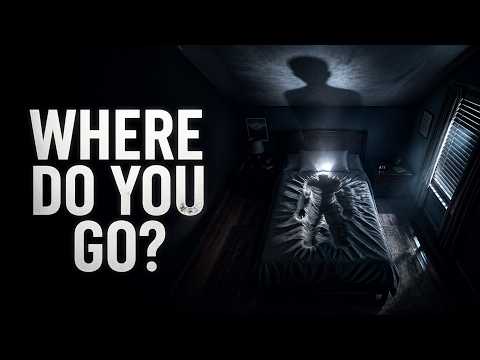
Every single night, you perform a curious vanishing act. Not metaphorically nor poetically, but clinically. The part of you that reads these words, with your intricate web of opinions, dreams, plans, and fears—this constructed entity of continuity—ceases to exist. For a stretch that could carve itself into an hour, there lies an absence. No awareness, no sense of self. And then, with the gentle insistence of dawn, you return. Whole, yet with no memory of having been gone.
Neuroscience, indeed, provides us the word for this: unconsciousness. However, the term does scant justice to this profound departure. For during the depths of deep sleep, this unconsciousness is unlike a mere distraction or sedation. Key regions in your brain, those responsible for the tapestry of self-narrative, go quiet. The default mode network, the architect of your continuous story, switches off. It is in this silence that arises the critical question that still holds science in suspense: What happens to consciousness when we sleep?
Based on content from Quantum Aether → Quantum Transmission
As this question lingers, the glymphatic system offers a telling narrative. Discovered by Maiken Nedergaard and her team at the University of Rochester, this system is a cleansing sentinel of the brain, expanding its channels in sleep to flush out metabolic waste. It whispers an unnerving truth: for the mind’s architecture to preserve its function, it demands your absence. Imagine the implications—your essence of mind requires your withdrawal for its upkeep.
This is but one thread in the intricate tapestry. As sleep deepens, the brain’s theater of activity does not merely dim; it transforms entirely. From the rhythmic hum of theta waves in light sleep to the sweeping character of delta waves in deep, slow-wave sleep—these signal a striking reduction in coordinated brain activity. Giulio Tononi’s Integrated Information Theory stands at this intersection, suggesting that consciousness thrives on integrated information. In deep sleep, this integration plummets, suggesting a suspension of consciousness itself.
And yet, you return each morning, with a desired sense of continuity, an assumption that you are the same individual who surrendered to the sweet embrace of sleep. This begs a curious question—how does continuity persevere through apparent discontinuity? While memory serves as an anchor, reconstructing identity upon waking, the return itself remains an enigma.
Renowned philosopher David Chalmers draws a line between the easy and hard problems of consciousness. The easy ones—how the brain processes and integrates sensory data—though complex, are approached with scientific diligence. The hard problem? Why any of this activity is accompanied by subjective experience. Why is there anything it feels like to be you? If awareness was tethered solely to neural activity, deep sleep should erase you each night, offering only echoes to a reborn self at dawn. Yet, the lived experience challenges this replacement notion.
This conundrum has inspired some researchers to chart less-trodden paths. Stuart Hameroff and physicist Roger Penrose postulate consciousness might not be locked in brain circuits like heat from friction. Perhaps, it is something the brain attunes to, not unlike a receiving station awakening to a signal. Even Carl Jung, through psychological inquiry, found experience transcended the boundaries of waking thought, blurring the margins between personal and universal awareness.
The same question resonates through the philosophical and spiritual passages of Tibetan dream yoga, a practice advocating lucidity in the sleep state. This tradition reveals a kind of enduring awareness when typical consciousness relinquishes its hold. What remains, they suggest, is an awareness that transcends ego, without personal narrative—an essence both subtle and profound.
Neuroscience, philosophy, and ancient traditions all journey across these shared landscapes, each adding their verse to the unsolved melody of consciousness and sleep. These perspectives gently knot the disparate threads of our understanding, while the core question remains artfully open. Each night you traverse this gap, with closed eyes, unguarded, as science delicately charts its course to enlightenment.
Tomorrow, you’ll awaken whole, carrying the continuity you’ve always known. But beneath this tangible day-to-day, lies the mysterious absence—a reminder of the silent journey you embarked upon, beyond the veil of sleep. What crosses that chasm? Is absence the accurate word? As you cross this gap, the persistent question of existence accompanies every night’s quiet exploration.
—