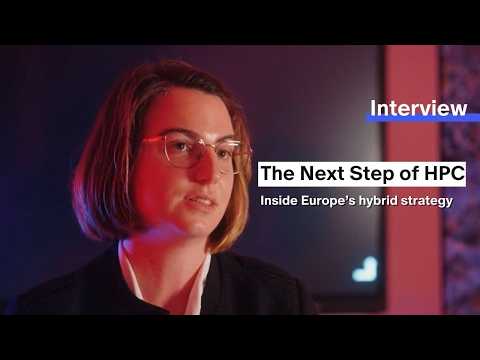
In the quiet corridors where high-performance computing (HPC) meets the ethereal dance of quantum mechanics, a new horizon emerges. This was no whimsical stride into the unknown for Europe, but a carefully plotted course—staking its future on the entwined potential of HPC and quantum computing. It begs the question, what happens when quantum processors are woven into the fabric of traditional computing environments? It is in this intersection that we find Lucy, a photonic quantum computer that stands as a beacon of educational advancement and computational prowess.
Based on content from Quandela
Sabine, Chief Quantum Projects Officer at GENCI, steps into this narrative to unravel the impetus behind Europe’s early and strategic choice. She emphasizes that integrating quantum processors into the HPC landscape wasn’t merely a choice; it was a calculated ambition, driven by the belief that this hybrid approach could redefine computational limits. At the core of this initiative is the France Hybrid HPC Quantum Initiative (HQI), a testament to France’s dedication to this transformative frontier.
Lucy, co-developed by Quandela, sidesteps the typical constraints of its predecessors. It doesn’t just aim to be powerful; it aspires to be an enabler—offering the research community tools to harness and test hybrid workloads that marry conventional HPC with the avant-garde of quantum processing units. Through the Quandela Cloud, a digital gateway, researchers are granted a preliminary canvas, allowing them to prepare their exploratory work before it finds its reality on the Lucy system. This isn’t just a research infrastructure; it is an educational launchpad, empowering today’s learners to shape the algorithms of tomorrow.
So why exactly does Lucy matter in the grand tapestry of computational evolution? For Jensen, who leads the QPU acquisition part of the French national quantum strategy, the potential of quantum processing units (QPUs) to accelerate HPC workloads is evident. This venture isn’t just about new hardware; it’s about reimagining applications across scales of complexity. With partners spread thin across Europe—from institutions in Germany to the Polytechnical University of Bucharest—this multi-national collaboration infuses the project with diverse perspectives, enriching the pursuit of new algorithms that could define the next era of computing.
Yet, amidst the discourse on technological riffs and promises, an inquiry lingers: how do we ensure this leap benefits all? While the integration of quantum computing within HPC environments elucidates numerical advantages, it must simultaneously strive for inclusivity. The goal shouldn’t solely be advancement, but a shared journey—a communal ascent rooted not just in power, but in equitable access to evolving knowledge.
Europe’s commitment is not just to unlock vast computational speeds but to democratize the exploration of possibilities. In this way, Lucy not only serves researchers today but seeds the understanding necessary for the scientists of the future to traverse this novel terrain. As Sabine reflects, the real challenge is nurturing the right algorithms—an endeavor requiring rigorous intellectual commitment intertwined with a creative flourish.
The conversation isn’t over. Each advancement beckons a sequence of contemplations, an evolving narrative as we ponder where these connections might lead. For the reader: as quantum and classical computing continue this synchronous journey, what ripple effects on society should we prepare for, and how might we shape them?
For those interested in diving deeper into Quandela’s developments, or observing the interplay of these innovations firsthand, Quandela provides these resources:
Attocube CEO on the Next Stage of Quantum Computing
Discover Quandela’s photonic quantum computing solutions
#QuantumComputing #HPC #PhotonicQuantumComputing #QuantumHPC #GENCI #Quandela #Lucy #QuantumAlgorithms
—