
Inside labs where quantum computing advancements are measured and prized, a quiet breakthrough has rippled outward from Stanford. It isn’t about how qubits—those versatile building blocks of quantum machines—fall into fragile disarray at the slightest distraction. For years, physicists have been digging into the mechanics of qubits, their superposition, and their entanglement, charting a course to tame these tantalizing pockets of potential. Yet, what sits more obscurely at the heart of our quantum quest is a less celebrated, but pivotal barrier: the efficient readout of qubits en masse.
Based on content from Quantum Pulse
Imagine, if you will, weaving a tale using countless threads. Classical computing untangles this task using bits—either zeroes or ones—to stitch together the vivid contrivances of spreadsheets, genomes, or even weather models. It’s a binary magic trick that has carried humanity through digital revolutions and beyond. Yet, the complexity of some problems explode in ways that even the most tamed strings of binary sequences can’t keep up, unraveling impossibilities like simulating molecular interactions or decrypting secure global communications. This is where quantum computing steps in, wielding qubits capable of inhabiting infinite states within a symmetry of superposition.
The urgency at Stanford has been about methodically illuminating a different kind of darkness. Past attempts harnessed into squeezing qubit potential have often struggled with how to glean answers from them, quickly and reliably. You must extract the output from legions of qubits after computations—more akin to listening to a myriad of whispers with an ear tuned individually to each voice.
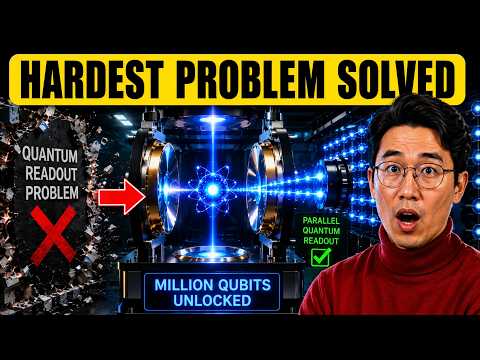
Stanford’s revelation sprang from the imaginative minds of physicists John Simon and Adam Shaw. Their peer-reviewed contribution, published in Nature at the dawn of 2026, doesn’t rely on layers of esoteric micro-photonics. Instead, they positioned each qubit atom in its own optical cavity—a bespoke “house of mirrors,” if you will—using a meticulous architecture of microlenses to trap and classify emitted photons. It’s like crafting bespoke echo chambers where every qubit’s soft address is captured clearly, offering the precision that parallelism demands.
The leap, modest in rhetoric but ambitious in implication, is that this method allows simultaneous readout en masse. A paradigm shift indeed for quantum systems as that single-mic device walks into a room of thousands, capturing each concurrent murmur, and distills them into coherent data. The architects of this method made two prototypes, initially a demonstration with 40 cavities and then ambitiously scaled up to 500, laying groundwork for the conceivable fulfillment of million-qubit processors.
However, this breakthrough must be seen in the context of broader development efforts worldwide. Alternative approaches aim to reduce cavities to nanoscale constructs or explore other photon capture methodologies. Still, what seems beautifully poignant in Stanford’s approach is how counterintuitively large-scale simplicity resolves what once seemed an intrinsic quantum bottleneck.
Yet, as with every significant scientific stride, the implications are manifold, complex, and merit discussion beyond excitement alone. This path deflects attention from optimizing individual readouts into orchestrating a collective crescendo of parallelism. In essence, they’ve written a new script for the roadmap of scalable quantum hardware, one that commands attention as more than just a scientific curiosity. Because the real magic of quantum computing isn’t how it evolves technology for technology’s sake, but how it unfolds the fabric of possibilities that classical computers leave untouched.
As we reflect on this Stanford breakthrough, it nudges open important dialogues about innovation, investment, and applications beyond computational frontiers. Quantum computers, when truly unleashed, promise to shape industries from medicine to security, and the ideas germinated in physics labs will resonate far beyond their walls.
What remains to ponder amidst the quiet genius of Stanford’s achievement is this: How will we bridge the ever-widening chasm between quantum potential and practical impact? How will optical advancements translate into daily reality? These are the questions drifting on the other side of this breakthrough. Questions that don’t just linger in theory but invite us to reconsider the boundaries of computation and, possibly, human problem-solving.
—







Leave a Reply