I recently had the pleasure of interviewing James Davies, a quantum technology recruiter working at the intersection of deep science and real-world hiring. Our conversation ranged far beyond job titles and into something much bigger: how quantum computing is quietly shifting from an academic pursuit into a full-fledged industry, one that no longer hires physicists alone.
For years, quantum computing has been framed as an exclusive domain, a world reserved for PhDs, physicists, and people fluent in equations most of us haven’t seen since university (if ever). That perception is finally breaking.
What’s emerging instead is something far more familiar and far more accessible.
Quantum is no longer just a research discipline. It’s becoming an industry. And industries don’t scale on scientists alone.
This shift was especially clear in a recent conversation on Impact Quantum with James Davies, a recruiter working directly inside the quantum ecosystem. His perspective reflects a broader inflection point: quantum technology is moving from laboratory curiosity to commercial reality, and that transition is reshaping who gets hired.
From Research Projects to Real Businesses
Early quantum teams were small, academic, and tightly focused. Growth was organic. Spinouts are hired from within universities or research institutes. Everyone knew everyone else.
That model doesn’t hold once funding, customers, and deadlines come into play.
As Davies put it:
“I realised… we’re kind of at a bit of an inflection point where companies are spinning out at a rate and growing at a rate where perhaps they’re not able to grow organically like they may have done historically.”
That inflection point is the signal marketers and operators should pay attention to.
Once companies move beyond proof of concept, they need structure. They need messaging. They need customer education. They need hiring pipelines that extend beyond academic networks. In short, they need the same commercial capabilities any deep-tech company requires to survive.
Why Quantum Companies Are Hiring Beyond Physics
The quantum sector is now confronting challenges that have nothing to do with qubits and everything to do with scale.
Teams need to:
- Explain complex technology to non-technical buyers
- Navigate enterprise procurement and compliance
- Position themselves in crowded funding environments
- Build trust with industries that don’t yet understand quantum’s value
That work doesn’t fall neatly into a physics job description.
As Davies observed during the discussion:
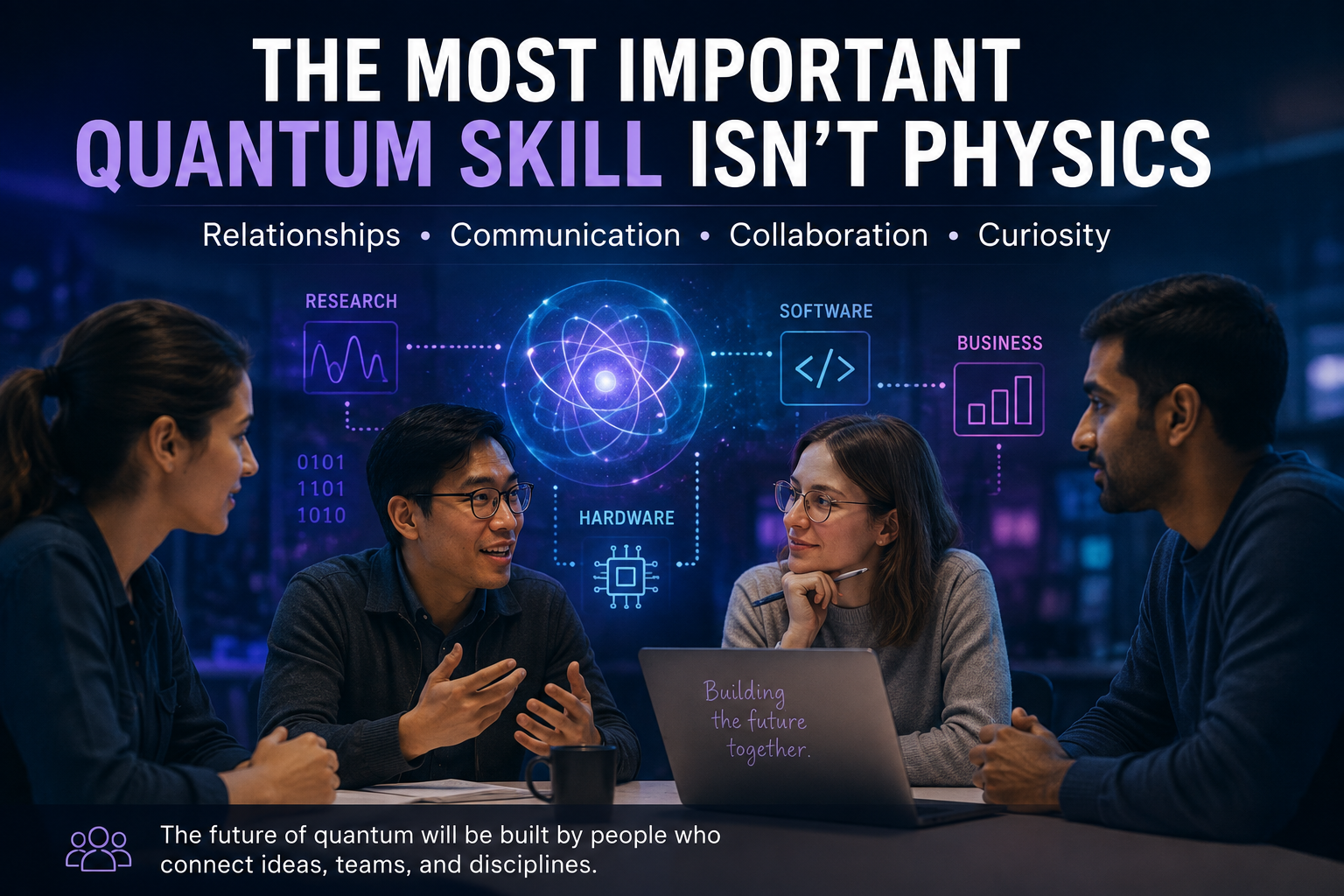
“It’s not just going to be about quantum physicists. You’re going to need someone to sell the solutions, you’re going to need someone to market them, and you’re going to need recruiters.”
This is a familiar moment for anyone who has worked in AI, cloud, cybersecurity, or semiconductors. The technology has matured enough that business leaders lean in, and suddenly the bottleneck isn’t science; it’s execution.
The Rise of Quantum Consultants
One of the fastest-growing roles in the ecosystem isn’t technical at all: quantum consulting.
Enterprises are increasingly aware that quantum could pose both opportunities and risks, especially in areas such as cryptography, materials science, logistics, and finance. What they lack is clarity.
They don’t know which modality matters. They don’t know when adoption makes sense. And they don’t know how to evaluate vendors making bold claims.
Davies highlighted this shift clearly:
“There is a real niche there… Companies have the money, and they want to implement this, but they don’t perhaps understand which of the technologies or modalities is going to work best for them.”
This creates space for professionals who can translate between worlds, people who understand enough quantum to be credible and enough business to be useful. It’s a role already familiar in other emerging tech sectors, now firmly arriving in quantum.
What Non-Technical Professionals Need to Understand
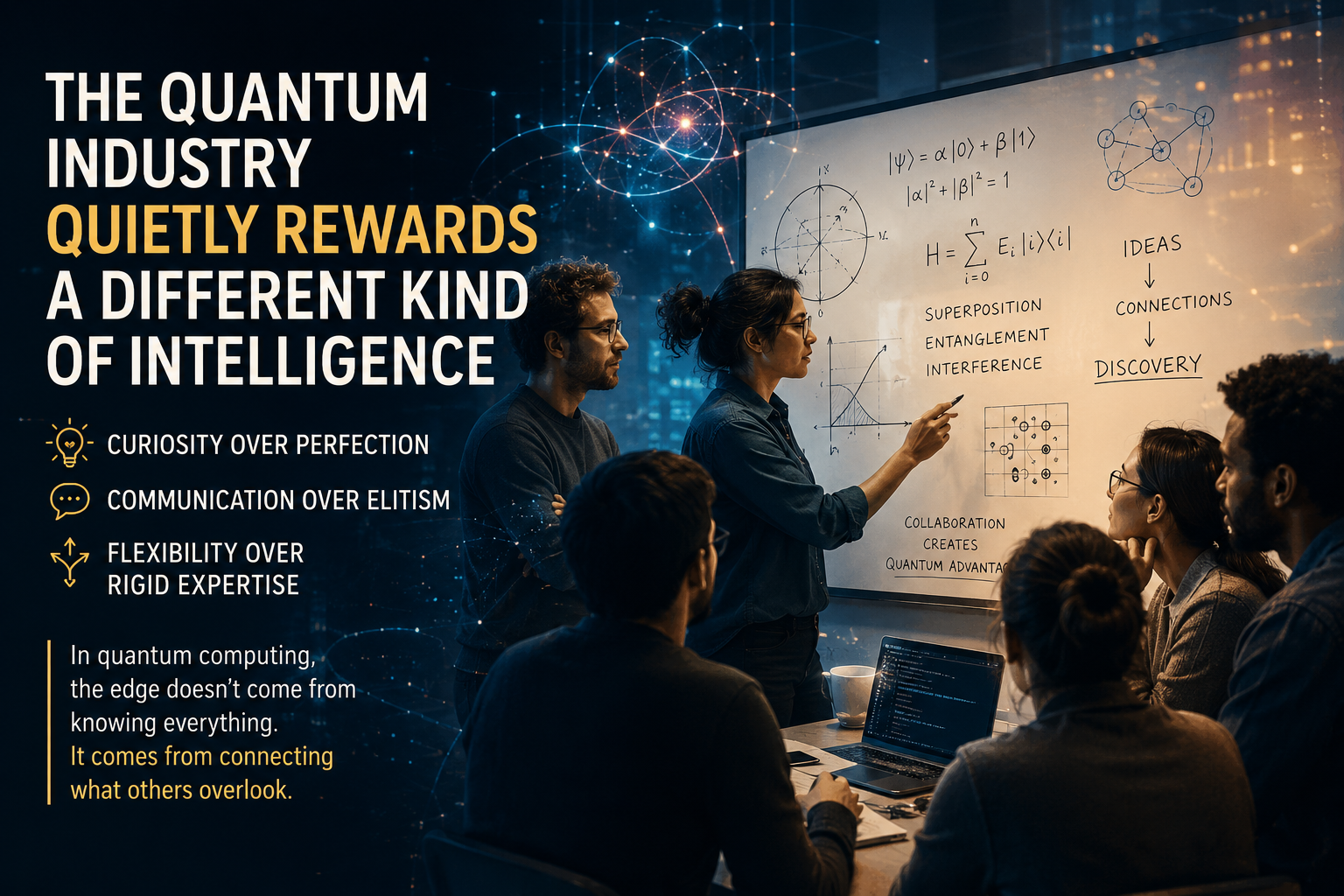
You don’t need to become a physicist to work in quantum. But you do need to become quantum-literate.
For marketers, operators, recruiters, and product leaders, that means understanding:
- The difference between computing, sensing, and communications
- Why timelines matter more than hype
- Where quantum solves real problems and where it doesn’t (yet)
- How governments, defense, and regulation shape adoption
It also means appreciating how early this industry still is.
Davies noted something rare in tech: quantum companies openly discuss scaling challenges with one another, even competitors. That level of collaboration signals how formative the space remains, but it won’t last forever.
As funding increases and commercialization accelerates, expectations will shift. Teams will need professionals who can build repeatable processes, consistent narratives, and credible go-to-market strategies.
A Career Ecosystem Is Forming
The most important takeaway is this: quantum is no longer a closed club.
It is becoming an ecosystem with room for:
- Recruiters who understand scarce talent markets
- Marketers who can simplify without dumbing down
- Product managers who bridge science and user needs
- Sales leaders who can sell futures responsibly
- Consultants who guide adoption without overselling
This is exactly what happened with AI and those who entered early, without technical pedigrees, helped shape how the industry evolved.
Quantum is now at that same threshold.