Germany isn’t being described as entering the quantum realm.
It’s positioning itself through it.
Not loudly. Not with the kind of hype that usually surrounds emerging tech.
But with something more deliberate—almost methodical.
And that tone matters, especially for the Impact Quantum audience.
Because what’s unfolding here isn’t just a story about quantum computing.
It’s a story about how nations decide what they want to become next.
The Quiet Rebuild of Technological Identity
For decades, Germany has been synonymous with precision.
Engineering. Manufacturing. Systems that work exactly as expected.
There’s a kind of comfort in that identity—everything has structure, sequence, predictability. Classical, in a way.
But quantum doesn’t fit neatly into that world.
It resists certainty. It behaves probabilistically. It introduces outcomes that can’t always be traced back through a clean, linear chain.
And yet, Germany is leaning in.
Not by abandoning its roots—but by extending them.
What the video reveals is a layered investment strategy: research institutions, startups, industrial partnerships, and government funding all moving in parallel. Not as isolated efforts, but as a coordinated ecosystem.
It’s not just about building quantum computers.
It’s about building capacity.
Infrastructure Before Breakthroughs
There’s a subtle but important distinction here.
Many conversations around quantum focus on milestones—qubit counts, error correction, and “quantum advantage.” The visible markers.
Germany’s approach, as presented, feels different.
It’s quieter. Foundational.
Investment in photonics. Ion traps. Superconducting systems. Multiple modalities are being explored at once, not because one has already won, but because no one knows which path will stabilize first.
It’s a kind of intellectual humility built into strategy.
And if you’ve spent time in emerging tech, you recognize how rare that is.
The Ecosystem Effect
What stands out most isn’t any single company or breakthrough.
It’s the way everything connects.
Universities feeding into startups. Startups partnering with established industrial players. Government initiatives creating continuity instead of fragmentation.
This is where quantum starts to feel less like a technology and more like a network.
And maybe that’s the deeper shift.
Quantum doesn’t just challenge how we compute—it challenges how we collaborate.
Because no single organization can carry the full weight of this field. Not yet.
The complexity is too high. The unknowns are too present.
So what emerges instead is something more distributed. More interdependent.
A system that mirrors the very principles on which quantum is built.
Industrialization Before Domination
There’s also a restraint in the narrative that’s easy to miss.
This isn’t framed as a race to dominate.
It’s framed as a long-term positioning toward industrialization.
Which changes the conversation entirely.
Instead of asking, Who will win quantum?
The more interesting question becomes: Who will be ready when it works?
Germany seems to be answering that question early.
By building supply chains. By investing in talent. By ensuring that when quantum moves from experimental to operational, the surrounding infrastructure is already in place.
It’s less about being first.
More about being prepared.
The Human Layer Beneath the Strategy
And underneath all of this—if you listen closely—there’s something more human.
A recognition that quantum isn’t just a technical leap.
It’s a cognitive one.
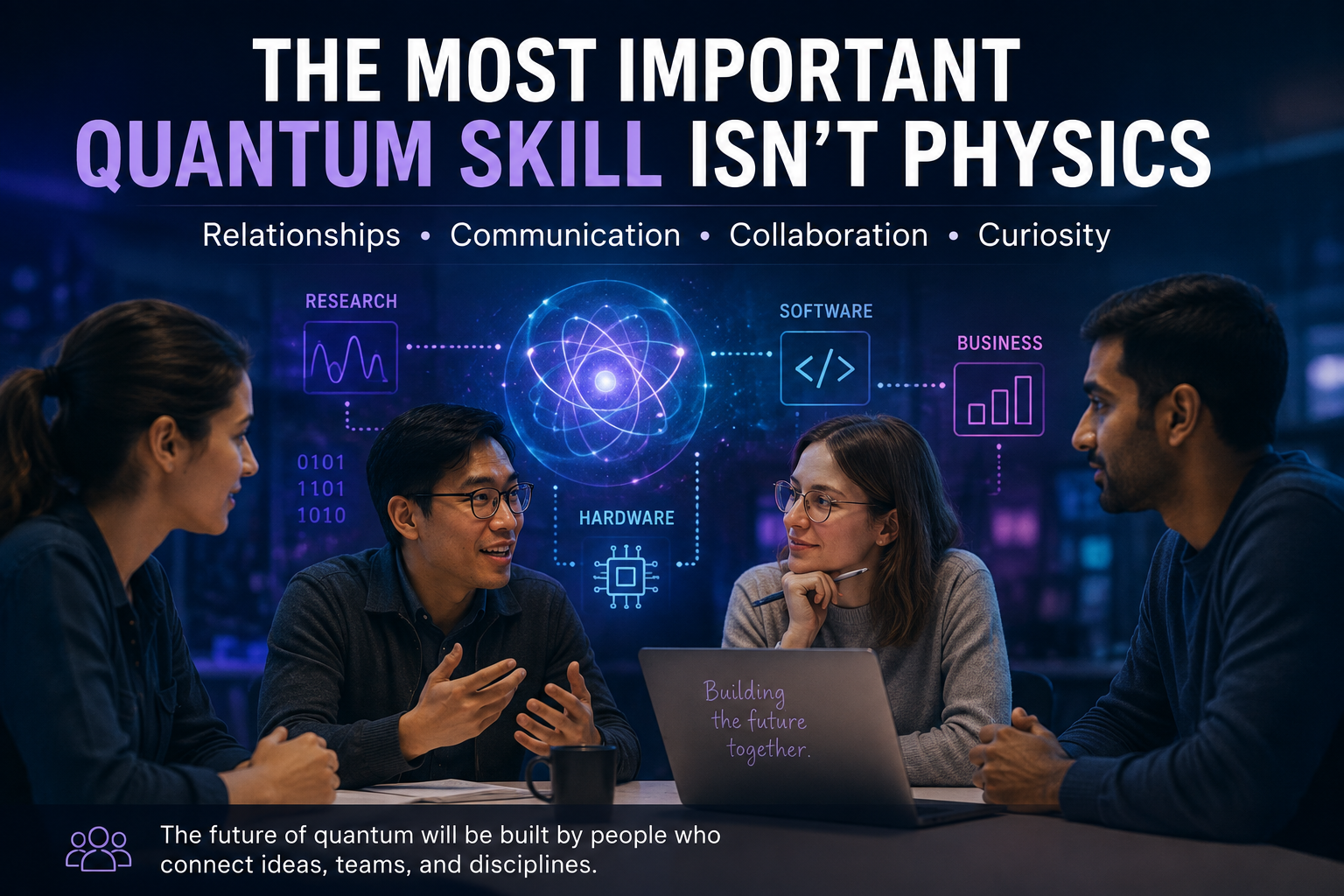
Because the people entering this space aren’t always coming from traditional physics backgrounds anymore. They’re engineers, strategists, communicators—people who can hold ambiguity long enough to make it useful.
The video hints at this shift without fully naming it.
But you can feel it.
The industry is expanding outward, not inward.
And that changes who gets to belong.
Hype, Held at a Distance
What’s almost refreshing is what the video doesn’t do.
It doesn’t promise immediacy.
There’s no suggestion that quantum will replace classical systems overnight. No illusion that breakthroughs are just around the corner waiting to be deployed.
Instead, there’s an acknowledgment of where we are.
Still early. Still noisy. Still navigating instability at the hardware level.
And yet… moving forward anyway.
That tension—between limitation and progress—is where the real story lives.
A Different Kind of Momentum
If you step back, the momentum here doesn’t feel explosive.
It feels cumulative.
Layered investments. Gradual capability building. Strategic patience.
And that kind of momentum is harder to see in real time.
It doesn’t spike.
It compounds.
What This Means for the Impact Quantum Audience
If you’re watching this from the outside—especially as someone not deeply technical—it’s easy to assume this is happening somewhere else. In labs. In governments. In companies you’re not part of.
But that’s not entirely true.
Because what’s being built here isn’t just technology.
It’s context.
And context is where opportunity lives.
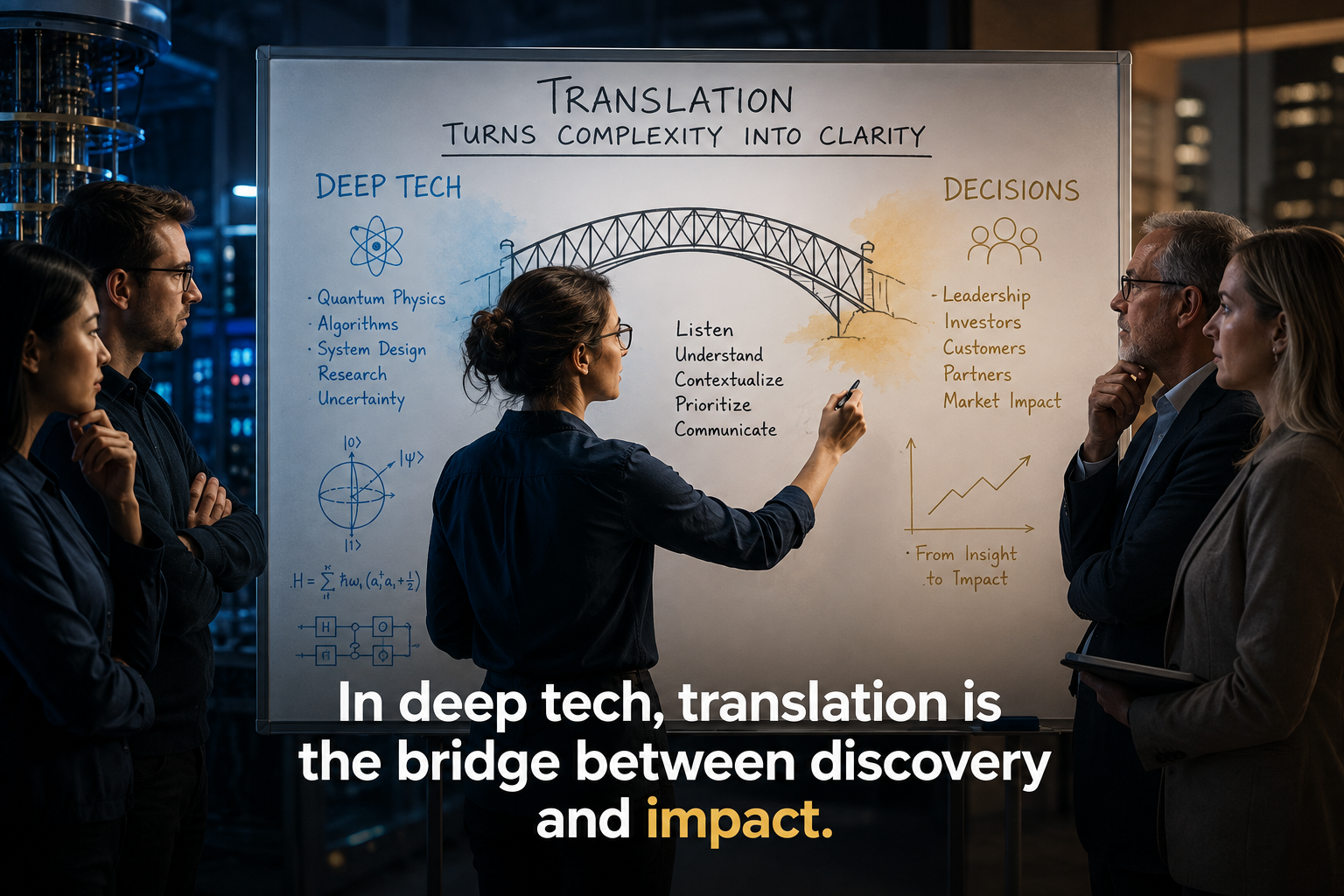
There’s a growing need for people who can interpret what this means for industries, for markets, for decision-making. People who can translate between the technical layer and the strategic one.
Not by simplifying—but by connecting.
The Shape of What Comes Next
There’s a line you don’t hear directly in the video, but it lingers underneath it:
The future of quantum won’t be decided by a single breakthrough.
It will be shaped by the systems we build around it.
Germany seems to understand that.
And in doing so, it offers something that feels almost more valuable than a headline-grabbing advancement:
A model for how to move forward when the path isn’t fully visible yet.
Not by forcing clarity.
But by building enough structure, you’re already standing inside it when clarity comes.