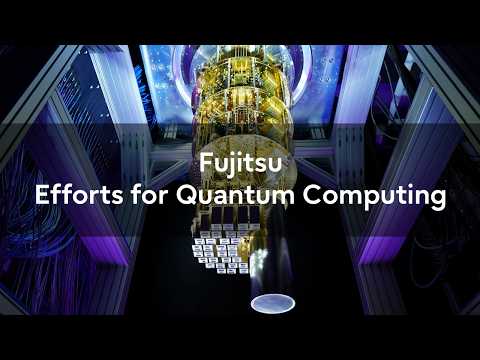
Fujitsu’s Quantum Computing Vision: Pioneering the Future of Advanced Computation
In the ever-evolving landscape of technology, quantum computing is a beacon of potential, promising to revolutionize the way we approach complex computations. As traditional computer technology begins to brush against the ceiling set by Moore’s law, Fujitsu steps forward with ambitious research and development aimed at transcending these limits through quantum computing.
Based on content from Fujitsu Research
The company’s expansive exploration covers every layer of the quantum technology stack. By fast-tracking the practical application of quantum computers, Fujitsu intends to harness their power for computations that have so far been out of reach — think cutting-edge quantum chemistry and the intricate modeling of complex systems. This leap could be crucial in addressing some of the planet’s most urgent societal and industrial challenges.
Today’s computing power, derived from miniaturizing semiconductors, is nearing its limits. Yet, the demands of current societal challenges require far more computational muscle, which even our most advanced supercomputers struggle to provide. Here, quantum computing emerges as a game-changer.
Unlike classical computers that use bits (either a 0 or a 1), quantum computers operate with cubits. A cubit can exist in a superposition of states, representing both 0 and 1 simultaneously, exponentially increasing the information density and potential processing power. To illustrate, a duo of cubits offers a four-fold increase in computational capability compared to classical bits, a flat-out staggering contrast when scaled up to 30 cubits, which can process a billion times more information.
The potentially vast computational capacity of quantum computers leverages their wavelike properties to solve problems via wave interference, a feat unimaginable for classical computers. Executing this, Fujitsu focuses chiefly on the superconducting and diamond spin methods, notably collaborating with RECN and Delft University of Technology, respectively.
However, the road to fully functional quantum computing is fraught with challenges, particularly the inevitability of errors. Quantum computation, akin to a symphony, requires precision in its interactions within the quantum circuit. As interactions expand, so too does the margin for error. This demands innovative solutions — and Fujitsu is exploring them.
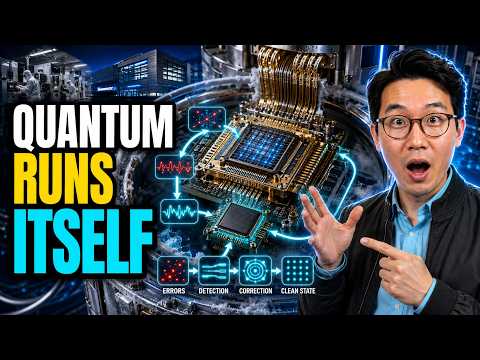
One promising solution is a hybrid model where quantum and classical computers work in tandem. This approach promises to deliver early benefits of quantum computing by combining the strengths of both platforms. Furthermore, concepts such as error correction, wherein multiple cubits collaborate to rectify mistakes, could eventually allow quantum computers to operate independently over longer calculations, though this is still on the distant horizon.
Recognizing the volatility and rapid shift of the quantum computing landscape, Fujitsu is committed to remaining responsive and versatile. Their strategic partnerships and technological innovations aim to usher in an era where quantum computers transform digital landscapes, driving profound digital transformation across industries worldwide.
With the amalgamation of hardware advancements, software platforms, and meticulous algorithm development, Fujitsu is determined to expand the practical applications of quantum computing, heralding a new dawn for computation and its role in shaping our future.