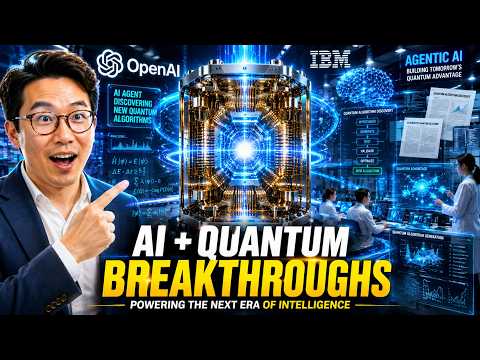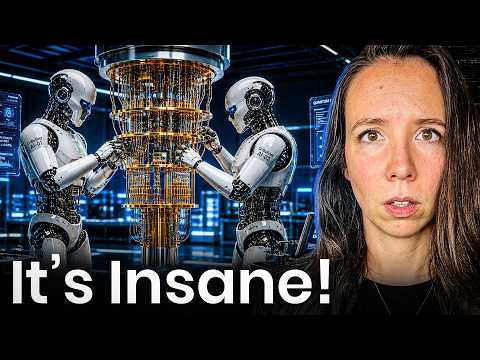
The headlines were startling, yet they didn’t capture the magnitude of what occurred in April 2026: AI has begun crafting the foundations of quantum computers that, in turn, will catalyze the next phase of AI evolution. A simple sentence from TIME magazine opened the door to a landscape reshaped by quantum and AI convergence — a future few anticipated this soon.
Here’s the crux: a quote from Dolav Bluvstein, a quantum computing researcher who stated, “There is no question that we used AI to accelerate this development.” This brief admission underscored a pivotal shift: AI’s role in quantum computer design. With Google reportedly concerned, and industry legends like Chad Rigetti making significant financial moves, we are witnessing a feedback loop between AI and quantum technologies that’s just been switched on.
Based on content from Julia McCoy
Rewriting the Timeline: The April 2026 Events Changed Everything
In early April, a collaboration between Caltech, a startup called Oatomic, and Google introduced breakthroughs that dramatically reduced the quantum computing requirements to crack modern encryption. The instrumental element here? AI. Meanwhile, on April 14, NVIDIA quietly released Ising, a set of open-source AI models focused on enhancing quantum processors. These models not only run error correction faster and more accurately than traditional methods but they do so for free, a move that slipped past most headlines.
At the same time, Rigetti Technologies, helmed by quantum pioneer Chad Rigetti, secured $139 million with the goal of developing quantum-accelerated AI servers. This trifecta signals a robust, multi-directional leap in how AI and quantum computing interact. AI enhances quantum capabilities, while enhanced quantum technologies accelerate AI efficiencies, creating a recursive loop of advancement that reshapes predictions and timelines.
The Underestimated Convergence: Why It Matters More Than Ever
There’s a depth often overlooked in discussions about AI and quantum convergence. While AI didn’t autonomously design a quantum computer, it played an integral role by accelerating problem-solving processes. Much like early jet engines requiring pilots, AI assists researchers in navigating complex solution spaces that drastically reduce human effort.
This model of advancement points to an emerging norm where AI-native simulations and digital twins become foundational in serious quantum computing endeavors. The entire engineering stack is now inherently AI-driven, signaling that predictions prior to mid-2025 are effectively obsolete.
Getting Prepared: Strategies for Navigating Rapid Technological Change
If you’re wondering how to position yourself amid this unfolding drama, consider these strategies:
- Investing: Recognize the stocks likely to thrive in this accelerating loop, from Nvidia’s stronghold on AI hardware to IBM and IonQ’s presence in quantum technology.
- Business Positioning: For industries dependent on large-scale data processing and optimization, early integration of quantum solutions is key to retaining a competitive edge.
- Building Literacy: The savviest move might be to deepen your understanding of these technologies. As the convergence reshapes problem-solving paradigms, gaining fluency will place you ahead of the curve.
This new phase is more than a technological shift — it’s a seismic opportunity to be a first mover. Whether it’s subscribing to educational resources or investing strategically, the time to act is now. As the stories unfold over the next 18 months, those who take the leap now will lead in the coming decade’s tech landscape.
Stay informed, stay strategic. The quantum future is here, and AI is at its helm.