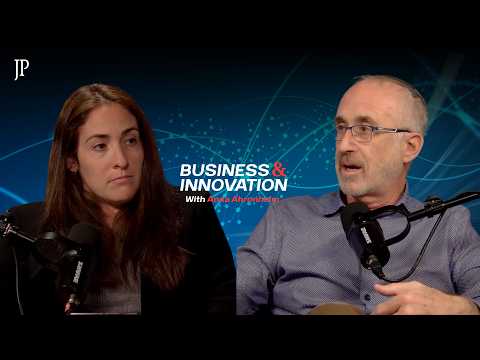
In the serene, whispering hum of innovation across the world, fintech leader Ely Razin steps into the light with his quietly transformative insights. Like an old friend met by chance in a bustling market, his words have a way of carving clarity from the noise, inviting us to ponder the swift currents of technology reshaping our world. In a recent conversation with The Jerusalem Post, Razin, seasoned by the crucible of startup creation and strategic investment, shares a vision brimming with possibility and challenge—a vision where AI and quantum computing stand poised to revolutionize industries in ways we can scarcely anticipate.
Based on content from The Jerusalem Post
Razin delineates the distinction between the cold environments of data centers and the nimble, often warmer confines of edge technology. As he speaks, you can almost see the expansive yet targeted pulse of power illuminating a cavernous data center, isolated and seemingly infinite. In contrast, at the edge, AI integrates with the world in tactile ways. These ‘edges’ include cameras, cars, and robots—devices inhabiting and interacting with spaces defined by their constraints as much as their energy needs. In this delicate dance, AI must conserve power and minimize heat, bringing clever, compact design into sharp focus. Here, AI is not locked in the ether but tangible, maneuvering through factories and possibly even tracking wild boars—a metaphor that hints at both potential application and unexpected complexity.
On the question of AI’s onerous power demands, Razin argues that the landscape may bifurcate into realms dominated by nations with vast resources and those pursuing technological sovereignty. Sovereign AI initiatives echo this sentiment, with countries like South Korea and Israel seeking to harness and localize AI to retain control over sensitive data and maintain national security. In discussing Israel’s unique position, Razin draws us into the symbiotic relationship between sophisticated design capabilities and the necessity for regional manufacturing, illuminating how a country’s innovation hubs can metamorphose into critical economic shields.
Yet, this transition is fraught with hurdles. Companies grapple with data scarcity and privacy risks, particularly in regulated industries. Razin navigates this minefield with pragmatic optimism, discussing the burgeoning industry of synthetic data—crafted to compensate for nonexistent datasets. The synthesis of reality-based data with these manufactured analogs forms a key node in the evolving AI ecosystem. The balance between exquisite data models and AI’s application-mediated hallucinations is thin, a line every organization must tread with care.
With every new innovation comes a reckoning with oversight. Even amid technological enthusiasm, the ghosts of regulation and liability loom large. Unspoken yet palpable, the tapestry of legal and ethical implications colors the emergence of AI: data stored securely yet accessible, models that learn without exposure to sensitive material, and the complex dance of innovation emboldened by nuanced governance. Each choice creates waves, rippling across a global landscape intent on capturing the elusive promise of quantum computing and edge AI.
Perhaps the conversation surrounding AI’s future sparks more questions than answers. As nations race to develop their capacities, one wonders: Who benefits? And what will be the consequences for those unable to keep pace in this unfolding theater? Razin’s insights return us to a theme: that of equilibrium. Between power and autonomy, chaos and order, AI and humanity, there lies the potential for commerce and creativity—ecosystems where edges define new centers, turning idle corners into the heart of progress.
As the tendrils of AI technology wove through the conversation with The Jerusalem Post, our understanding of the technology becomes as much about the spaces it occupies as the potential it holds. We are left, as always, with a gentle urging toward introspection, a challenge to envision the implications of a world more confronted with its complexities rather than less. The earth beneath us is woven into the code that propels us forward; the path is both written and unwritten, awaiting the footfalls of those daring enough to dream.
—