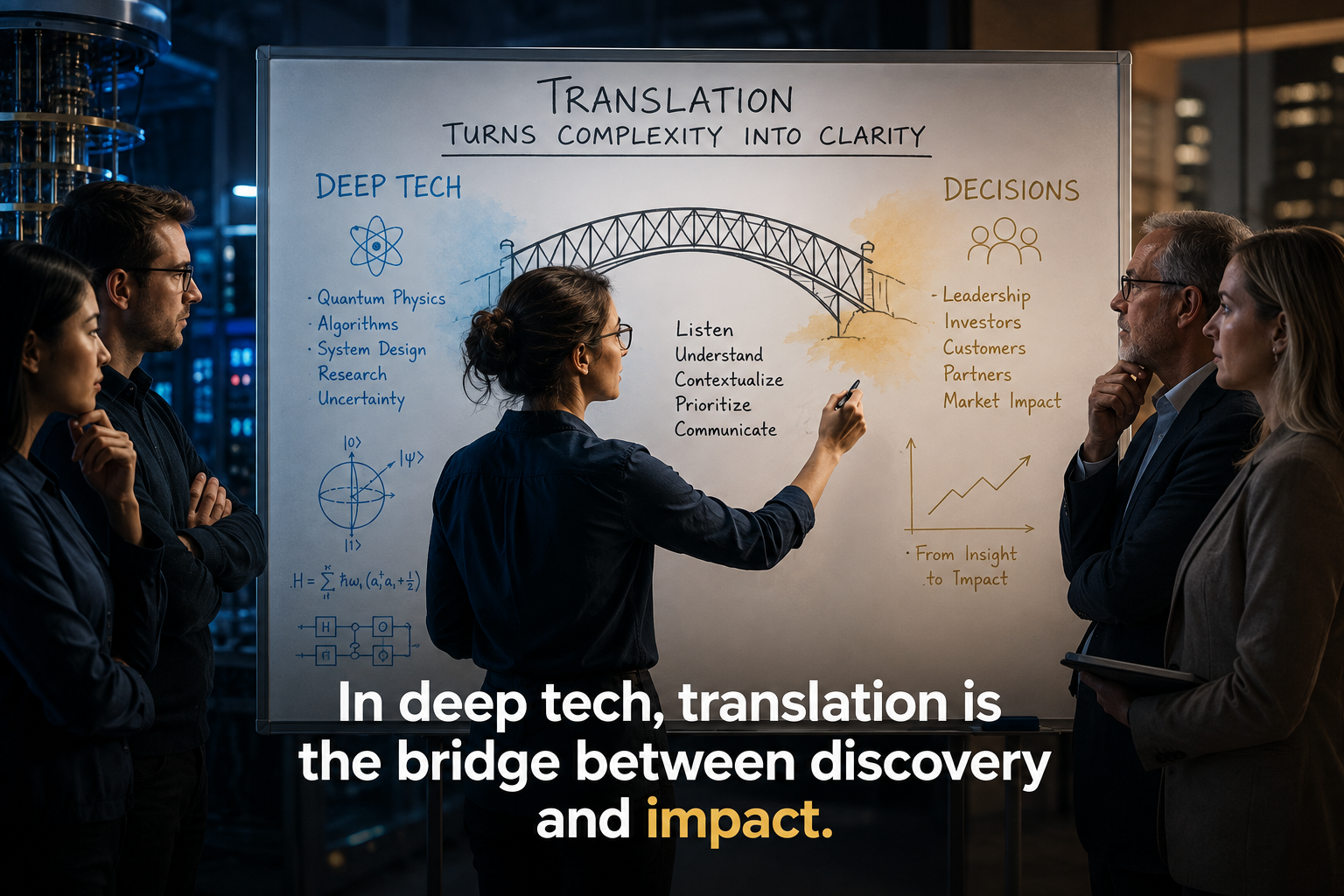
Quantum phenomena like superposition and entanglement don’t just defy classical physics; they defy human intuition. To navigate this abstract landscape, researchers aren’t merely relying on data; they are using conceptual visualization as a cognitive toolkit. The first five episodes of the Women in Quantum podcast prove that in the high-stakes world of quantum computing, the most powerful bridge from theory to reality is the courage to see what isn’t there yet.
In these conversations, creativity isn’t a flashy add-on; it is a disciplined, anticipatory practice. It translates curious questions into tangible research directions and experimental designs. This narrative celebrates that spirit, anchoring it in the journeys of five remarkable leaders who show that, in the quantum sector, intuitive leapfrogging may outpace traditional markers like rote study—and that this is not merely permissible but essential.
Navigating the Abstract
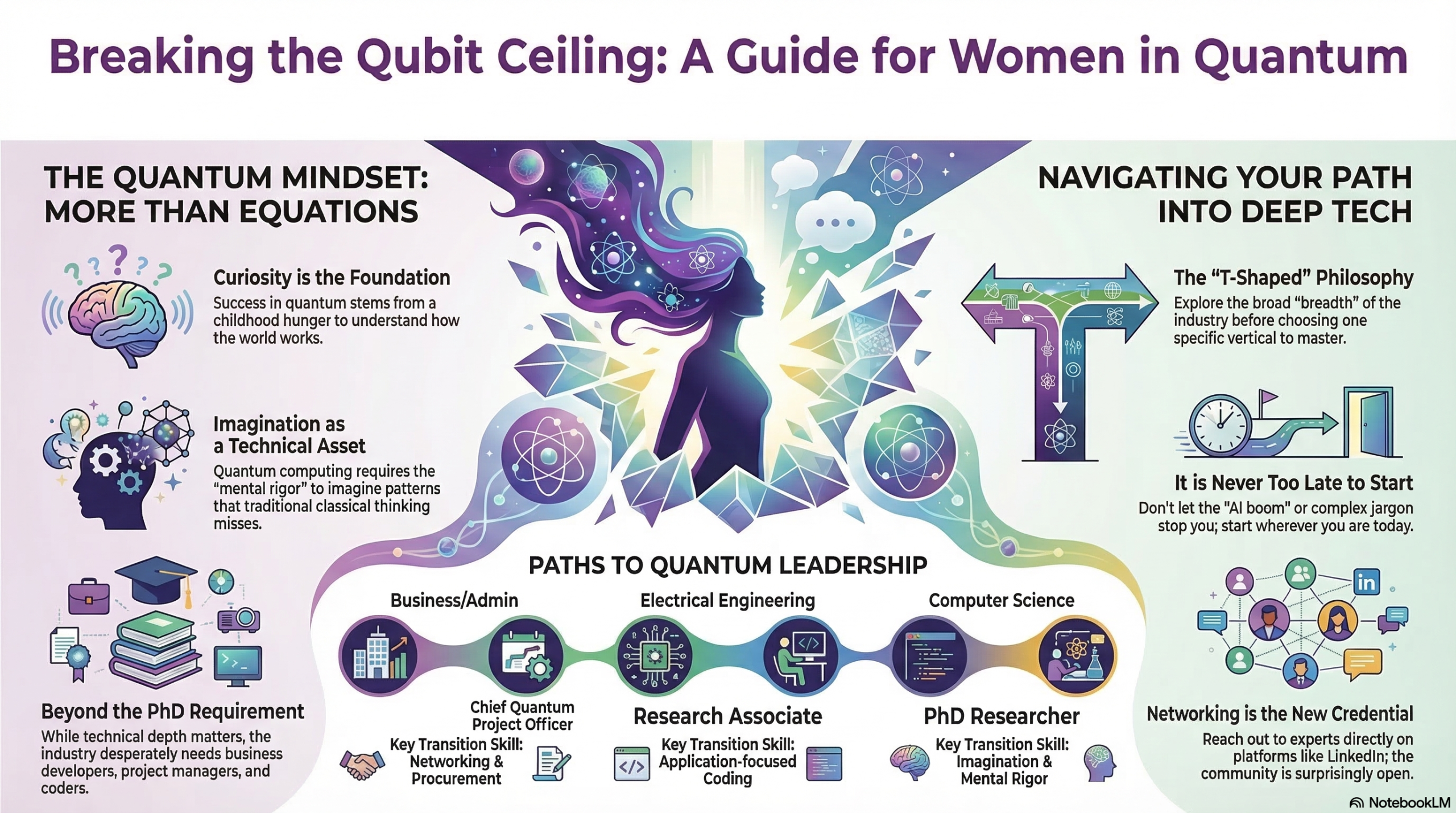
Harshitta Gandhi embodies a bold claim: the ability to perceive the world through a different lens is a core prerequisite for entering quantum science. In a domain where counterintuitive rules upend classical logic, “imagining the unimaginable” becomes a professional necessity. The episodes underscore that entering this field isn’t about memorizing a checklist of equations; it’s about cultivating a mental posture that allows researchers to anticipate surprises and map routes through an abstract landscape where the usual road signs no longer apply.
The Discipline of “Quantum Magic”
One of the most resonant threads is the concept of “Quantum Magic.” While quantum circuits often resist intuitive explanation, the guests describe this behavior as a disciplined form of magic one born from a highly developed sense of possibility.
A quantum circuit computes by exploring a space far larger than that available to classical systems. Navigating this requires more than daydreaming; it is a mapping process. By visualizing how a system harnesses superposition to parallelize computation, researchers can guide experiment design and interpret noisy results. This shift toward nonclassical logic is a practical skill that frames the questions, pushing the field toward scalable, real-world utility.
Dreaming in Pictures
Anna Beata Kalisz Hedegaard describes her relationship with technology through a creative lens, noting that she “dreams in pictures” when exploring quantum possibilities. This phrase captures an essential epistemic stance: to innovate in this space, one often must visualize outcomes before the hardware to support them exists.
Whether it is the teleportation of data or the modeling of consciousness, “dreaming in pictures” acts as a bridge. It allows teams to align on ambitious targets and communicate complex ideas to stakeholders, maintaining a clear sense of direction even when current instruments are limiting.
The Artistic Amplifier
The episodes also illuminate how transferable artistic skills can amplify scientific insight. Gandhi notes that experiences in theater and music cultivate perceptual patterns that help researchers detect subtle correlations in data.
Art trains attention and storytelling qualities that facilitate hypothesis generation and the translation of abstract findings into narratives for policy and funding. This mindset shift isn’t a distraction from rigor; it is an amplifier of it. When researchers frame problems artistically, they uncover relationships that purely analytical approaches often overlook.
Reclaiming Childhood Fearlessness
A striking throughline is the call to return to a “fearless 6-year-old” state where a problem feels unconquered rather than insurmountable. This curiosity enables researchers to approach the field’s notorious mystique with audacious questions.
This fearlessness is not reckless; it is an exploratory stance that sees the unknown as a playground. In practice, this means proposing unconventional architectures and iterating rapidly in the lab. The result is a culture that values brave experimentation, where the fear of being wrong is tempered by a shared commitment to progress.
A Schema for the Future
At its core, the first five episodes of Women in Quantum offer more than inspiration; they provide a blueprint for the industry. To move toward real-world deployment, we must embrace a multidisciplinary approach that values imaginative capacity alongside traditional credentials.
- For Leadership: Hiring programs should recognize creative problem-solving and storytelling as indicators of high-level quantum leadership.
- For Academia: Cross-disciplinary collaboration between technologists and artists can accelerate idea generation and improve public understanding.
- For the Next Generation: By reframing quantum science as an adventurous, inclusive pursuit, we can attract a diverse talent pipeline ready to author the next chapter of computing.
I’m also continually inspired by the broader community helping make this field more visible. Leaders like Sabine Mehr, who has done so much to support and elevate women working across the quantum ecosystem, remind us that building new technology is also about building new networks of support and collaboration.
I’ve also been inspired by conversations with innovators like Devika Mehra, whose work highlights how interdisciplinary thinking, from physics to engineering to entrepreneurship, is shaping the next phase of quantum technologies. Voices like hers remind us that the future of quantum will be built not just in labs but through collaboration across industries, cultures, and perspectives.
The journey is just beginning, and continues to illuminate the human side of the “qubit.” The broader community stands to gain a more nuanced understanding of how courage and collaboration can accelerate the transition from quantum curiosities to everyday technologies.