
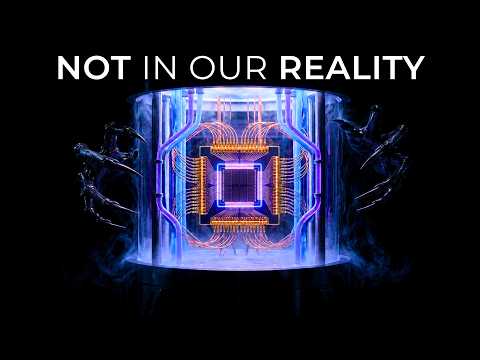
In a select few corners of this planet, shrouded and shielded from the messiness of everyday existence, there are machines so finely tuned they require isolation from every possible interference to perform their enigmatic calculations. These machines operate in environments colder than the cosmic microwave background—a temperature so low that it seems almost unimaginable, yet utterly necessary for their operation. And why does their temperature matter so much? Because, in the realm of quantum computing, even the slightest glance from reality can undo the very calculations they attempt to perform.
Quantum computers, at their essence, challenge our understanding of computation by making it a question not just of information, but of place and process. With traditional computers, we trace their operations to tangible components—a silicon chip, a processor, heat dissipating into the case. But with quantum computers, what anchors their truths, what makes their prodigious leaps in computation possible, is hidden away, almost ephemeral.
Based on content from Interstellar Dreams
The Chilling Architecture of Quantum Computation
One might picture a quantum computer as gold-laden machinery, appearing similar to a chandelier engineered for the cosmic scale. This image, while iconic, obscures more humble truths. The visible structure is, for the most part, a sophisticated refrigerator. Beneath its metallic sparkle, the actual computer—a minuscule silicon chip—resides at its base, drawing comparisons to a delicate snowflake that ceases to exist if awoken by sunlight.
These chips, designed with care, house artificial atoms meticulously crafted from superconducting metals. In these quivering elemental states, the laws of traditional physics pause, and quantum laws dominate, bringing us into a realm where particles can exist in multiple states simultaneously, a principle known as superposition. Yet, this precarious balance is easily disrupted, demanding the chip’s cloistered solitude at chilling temperatures read in millikelvin.
The Suspended Calculation and the Multiverse
Yet the question remains, when a quantum computer reaches inside its secretive depths to solve an intricate problem, where does the solving truly take place? For machines like Google’s Willow processor, which reportedly completed a computation that would daunt traditional computers for a span far outstripping the universe’s lived history, speculation abounds. Some suggest that such a feat can only be managed by tapping into the near-limitless resources of parallel universes—a reflection of the multiverse theory laid out by David Deutsch.
While Deutsch’s ideas have stirred both enmity and curiosity within the scientific community, they have sparked discussions that delve deeper than many feel comfortable exploring. Deutsch poetically frames his argument not as proof of a multiverse, but rather a probing question: if all known particles in our visible universe cannot embody the volume of information handled by quantum computations, where does it occur? This inquiry branches off into countless possibilities, including the notion that our perception of reality is but one slice of a broader cosmic pie.
The Fragile Dance with Decoherence
Central to this journey into quantum computation and the multiverse is the issue of decoherence—a kind of unconscious betrayal. In simple terms, decoherence is the process through which quantum systems lose their magical properties due to environmental interference. Like a secret whispered in a crowded room, the delicate information within the quantum system disperses into the surroundings, rendering quantum computation void. Ensuring that a quantum computer stays free from such distractions is why its environment needs to be nothing short of pristine.
So perhaps, as you sip that warm cup of tea or contemplate the everyday warmth around you, it’s worth pondering the paradoxes stretching across the other side of our universe. These cold machines, silent yet perhaps tumultuous with the echoes of parallel worlds, offer us the promise of understanding and the peril of confronting questions we might never answer. And perhaps the perpetual quest for where—and indeed how—quantum computers “think” will take us beyond the bounds of our current scientific narrative.
As these experimental revelations unfold, it’s prudent to question not just where the computations happen, but what this means for us, poised on the delicate balance of understanding and mystification. Perhaps, dear reader, the path to mastering the boundless computations of quantum computers is as much about redefining our notions of where work gets done as it is about understanding the multiverse itself. How we approach these mysteries might just redefine our cosmic journey, imprinting a footprint in the sands of quantum mechanics for generations of curious minds to follow.
—












Leave a Reply