In a world where theoretical possibilities often outpace practical realities, the intersection of quantum field theory (QFT) and artificial intelligence (AI) is more than just a promising frontier—it’s an ongoing, quiet revolution. This delicate dance between the abstract complexities of quantum mechanics and the precision-driven capabilities of quantum computing is reshaping our understanding of the fundamental forces that govern the universe.
Dr. Ross Jenkinson, a theoretical physicist at the University of Manchester, joins us in conversation to untangle the historical and future impact of quantum revolutions. These revolutions have elegantly altered the landscape of particle physics yet leave lingering questions, none more pressing than reconciling the incongruity of gravity within the quantum framework.
Based on content from The Royal Institution
The term “quantum” has become a prefix to various scientific disciplines—rightly or wrongly—but its historical roots trace back to a notion as simple as its Latin origin: quantus, meaning “how much.” Quantum physics acknowledges a universe composed of fundamental building blocks, discrete and sometimes counter-intuitive, dictating behaviors that classical physics cannot explain.
The Twin Quantum Revolutions
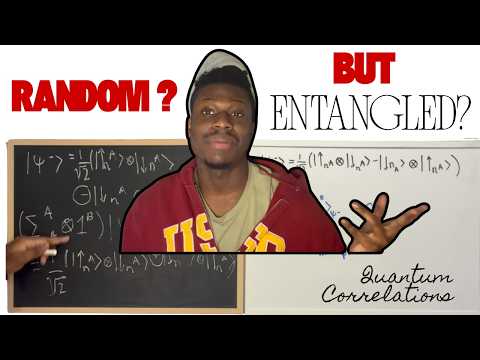
The first quantum revolution, dating back to the early 20th century, was a time of understanding. It was during this era that the eccentricities of atoms and molecules were demystified, laying the groundwork for the electronic technologies we depend on daily. This era gave rise to concepts like superposition and entanglement: phenomena that are as philosophically profound as they are scientifically pivotal, where systems can hold multiple states simultaneously and exhibit correlations at a distance.
Transitioning to the second quantum revolution, we find ourselves in an age of control. Researchers like Jenkinson are exploring how we might command quantum systems, allowing us to delve into quantum computing and cryptography, areas that demand a mastery over the unruly quantum bits, or qubits.
The Quantum Field Theory Paradigm Shift
With the advent of quantum field theory, a pivotal shift transformed particle physics. It addressed limitations within quantum mechanics—chiefly its inability to account for particles appearing and vanishing, as seen in nuclear decay, and its incongruence with relativity’s laws. QFT introduced the elegant concept of fields as fundamental objects, akin to the ambient temperature varying in a room. These fields allow particles to emerge as ripples, intimately tying quantum processes to relativistic principles.
Enduring Challenges: Gravity’s Elusive Embrace
Despite its successes, QFT falters at incorporating gravity. General relativity, despite its robustness at astronomical scales, clashes mathematically with the quantum field framework, leaving physicists grappling with paradoxes in realms where both theories should harmonize, like the interiors of black holes.
Here, the pursuit of a theory of quantum gravity becomes essential. Jenkinson’s work illuminates an unconventional approach: harnessing quantum computing to simulate gravitational interactions from a bottom-up perspective. This shift allows researchers to observe interactions firsthand rather than reconciling disparate equations. Via such simulations, insights into the elusive nature of gravity and quantum interplay may finally materialize.
The AI and Quantum Computing Confluence
AI steps into this quantum narrative as both a method and an adjunct, offering tools to manage large data sets or tease out patterns too intricate for conventional computation. In Jenkinson’s research, it provides a guiding hand, optimizing simulations and expediting problem-solving with precision.
Practically speaking, the theoretical framework materializes as quantum algorithms, defined in the ambiguous dance of mathematics, waiting to be translated from the abstract to tangible qubit operations. While Jenkinson remains on the theoretical edge, the physical instantiation of quantum computers—intricate machines requiring exacting conditions to maintain coherence—carry out these simulations, tangible echoes of our theoretical aspirations.
Looking Forward: The Promise and Reality
As the landscape of theoretical physics evolves with each computed qubit and AI-assisted insight, the potential for breakthroughs in our understanding of gravity’s quantum narrative becomes increasingly tangible. Yet, as Jenkinson reminds us, these advances demand patience and persistence.
Looking ahead, one must ponder: How will these quiet revolutions reshape our foundational understandings, not just within the atom’s domain, but in the broader tapestry of the cosmos? As theoretical frameworks gain traction in laboratories, they remind us—perhaps more profoundly than definitively—of the vastness of what is yet to be known.
For those intrigued by the mysteries woven into the quantum fabric of existence, the journey is far from over. It promises not just advancements in technology and theory, but also new vistas of philosophical and scientific contemplation.
Want to delve deeper? Dive into the full discussion with Dr. Jenkinson and tune in to the Royal Institution’s Science Podcast where this month’s episode unpacks the intersection of quantum futurism and technological innovation.
—