When people hear “quantum artificial intelligence,” the imagination tends to run wild. Images of autonomous superweapons, instant code breaking, and futuristic military dominance come to mind. It sounds dramatic. It sounds cinematic. It sounds like something that arrives fully formed and immediately changes everything.
But the real story unfolding right now is far more grounded. And in many ways, far more interesting.
Quantum AI is unlikely to debut as a weapon system rolling across a battlefield. Instead, its earliest impact will show up in planning rooms, simulation labs, logistics networks, and strategic modeling systems. It will influence how decisions are made well before any deployment.
That shift matters.
The Quiet Reality of Quantum AI Today
Quantum artificial intelligence is not a replacement for classical AI. It is not a sentient system. It is not a military general powered by qubits.
What is actually emerging is a hybrid model. Classical computers still handle the majority of processing, data ingestion, and machine learning training. Quantum processors are strategically deployed to address highly complex mathematical subproblems that classical systems struggle to solve efficiently.
Think of it as an accelerator inside a broader architecture.
The value comes from optimization, pattern search, and combinatorial exploration. These are the kinds of problems that become increasingly complex as variables increase. And military planning is full of exactly those kinds of challenges.
So the revolution is not about replacing humans. It is about augmenting decision support systems.
Where Quantum AI Shows Up First
The most immediate applications are not glamorous. They are operational. They are structural. And they are deeply strategic.
Multi-agent coordination
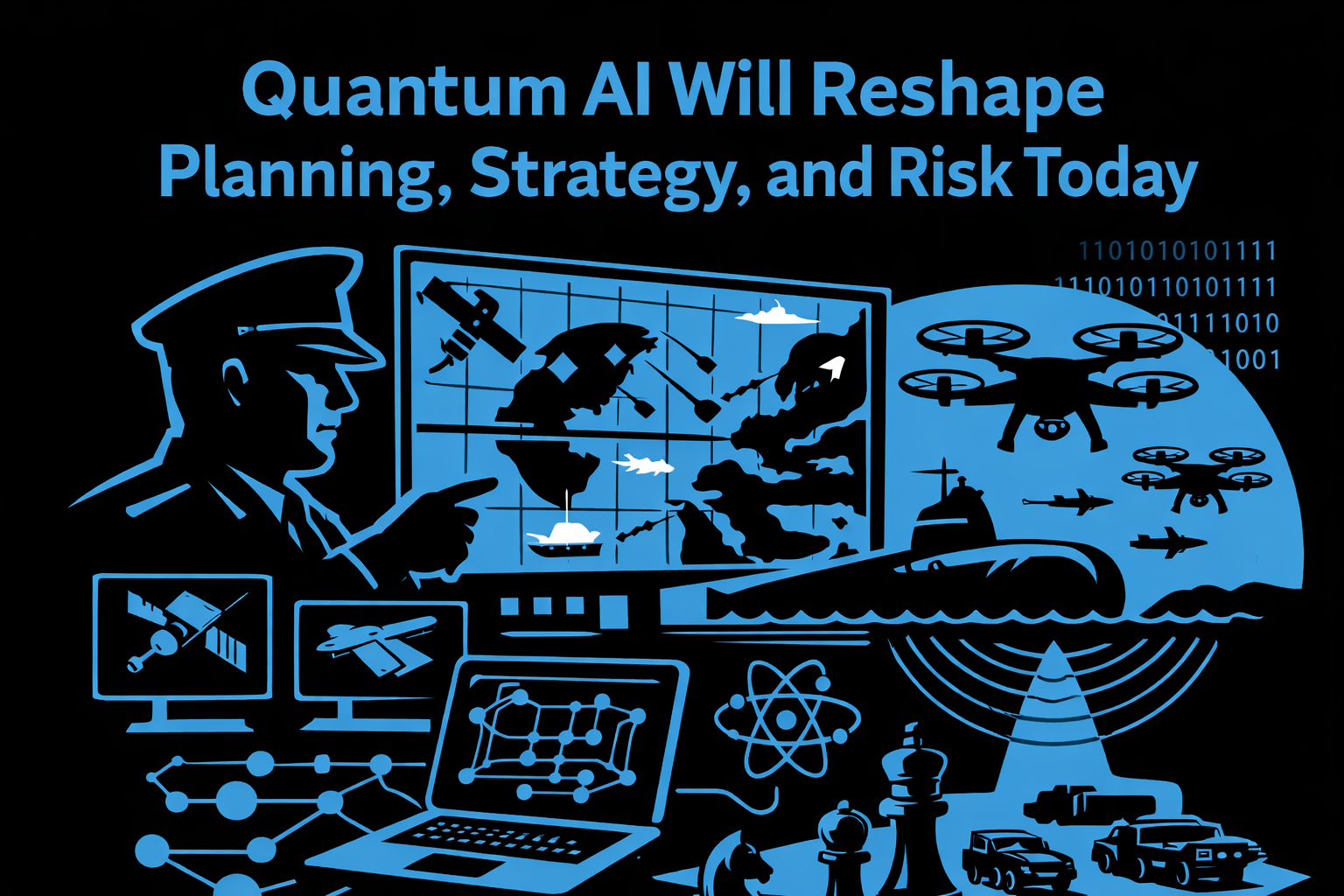
Imagine coordinating large fleets of autonomous drones. Each drone must respond to environmental inputs, other drones, obstacles, and mission objectives. The number of possible combinations of movement and response grows exponentially as the fleet scales.
Quantum-assisted optimization may help explore coordination strategies more efficiently than classical methods alone. It does not mean swarms suddenly become sentient. It means planners can evaluate more possibilities in less time.
Advanced simulation modeling
Military organizations rely heavily on simulation. They model terrain, weather, logistics, adversary behavior, supply chain constraints, communication latency, and more. Each added variable multiplies the computational burden.
Quantum-enhanced simulation could accelerate the evaluation of alternative scenarios. Instead of testing a limited subset of possibilities, planners might evaluate broader strategic branches. That translates to better preparedness and deeper insight before decisions are made.
Logistics and supply chains
If you want to understand the complexity of modern militaries, look at logistics. Moving equipment, fuel, medical supplies, and personnel across dynamic environments is an enormous optimization challenge.
Quantum-assisted systems could help reroute resources during disruptions, optimize delivery timing, and manage trade-offs between speed and resilience. In a world where supply chain fragility is already a global issue, this is significant.
Data classification and intelligence analysis
Military systems ingest massive volumes of satellite imagery, acoustic signals, radar scans, and communication metadata. Identifying meaningful patterns within that noise is computationally expensive.
Quantum techniques may support certain classification tasks or accelerate training in specific contexts. This does not replace analysts. It enhances the tools they use to interpret vast data streams.
Underwater localization and complex sensing
Acoustic modeling in underwater environments is notoriously difficult due to variable conditions and signal distortion. Quantum-assisted algorithms could potentially improve modeling precision in such specialized environments.
Again, this is not about spectacle. It is about marginal improvements in computational efficiency that compound into strategic advantage.
Why This Shift Is Important
The narrative around quantum technology often centers on future codebreaking or cryptographic disruption. That is an important discussion. But what is happening in parallel is equally consequential.
Quantum AI may influence how military leaders evaluate risk, justify strategy, and explore alternatives.
If decision support systems can model more scenarios faster, leaders gain a wider lens before acting. That does not remove human judgment. It enhances it. In high-stakes environments, enhanced modeling capacity can shift the strategic posture well before a conflict escalates.
This is not just a U.S. story either. Governments globally are investing in quantum sensing, secure communications, and hybrid computing infrastructure. The race is not simply about weapons. It is about who can model complexity more effectively.
That changes how nations think about preparedness, deterrence, and technological sovereignty.
Tempering the Hype
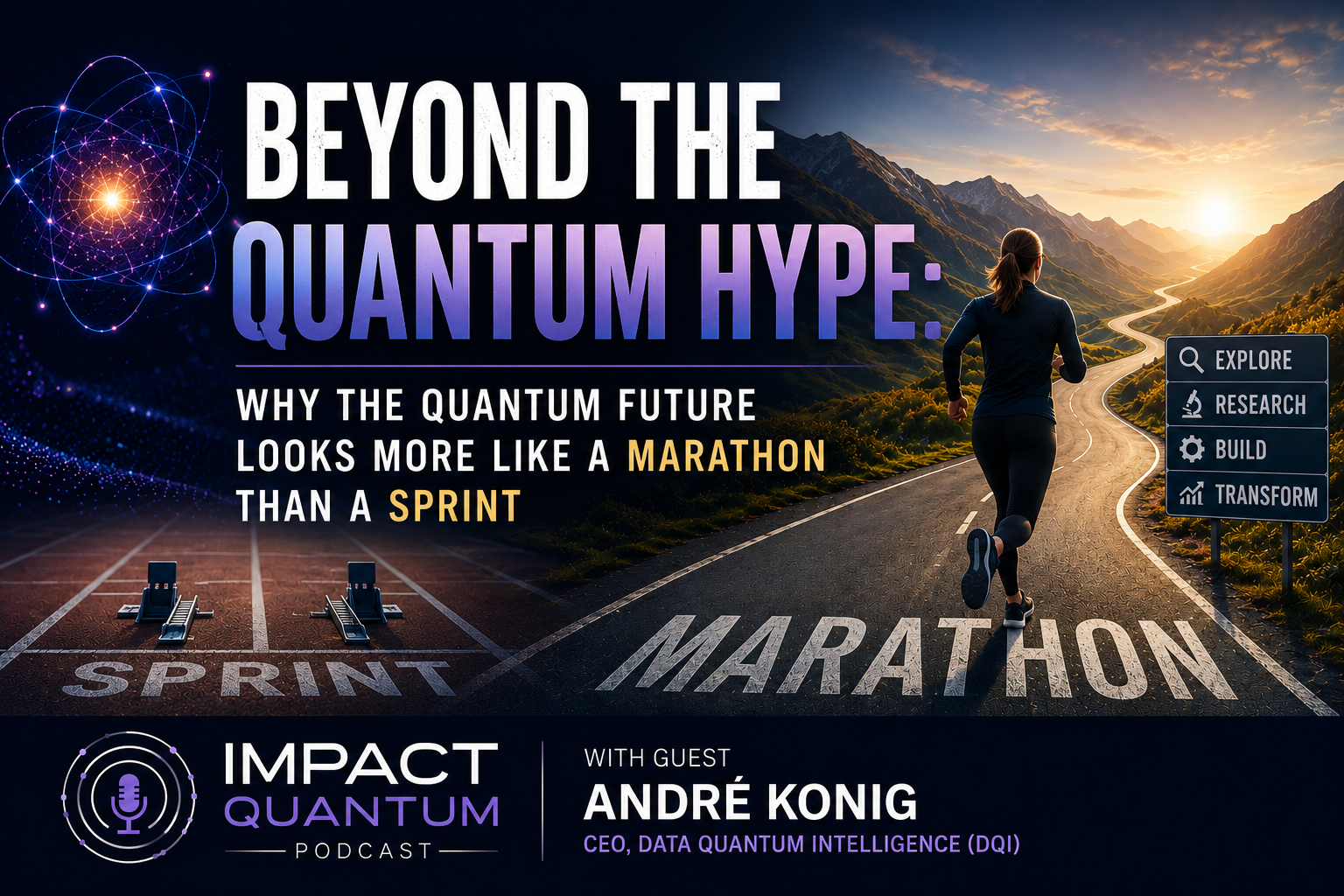
It is important to be clear. We are not in an era of fully mature quantum advantage across military systems. Hardware limitations, error rates, and scaling challenges remain significant. Many proposed use cases are still exploratory or theoretical.
But strategic technology adoption often begins before perfection.
Hybrid models allow incremental deployment. Even small efficiency gains in optimization or simulation can justify pilot programs. As quantum hardware improves, those gains may expand.
This is how technological shifts actually occur. Not overnight. Not in one dramatic leap. But through integration into existing architectures.
The Bigger Picture
For founders, policymakers, technologists, and investors, the takeaway is not that quantum AI is about to decide wars autonomously.
The takeaway is that quantum computing is entering operational infrastructure.
It is influencing how complexity is managed. It is becoming part of planning systems. It is embedded into strategic frameworks.
And once a technology begins to shape how decisions are modeled and justified, its impact extends beyond the lab.
Quantum AI is not arriving as a battlefield spectacle. It is arriving as a planning advantage.
The most profound transformations in technology rarely announce themselves with fireworks. They embed quietly, strengthen systems incrementally, and alter competitive dynamics over time.
That is what is happening here.
Understanding that distinction is essential to separating hype from signal.
And right now, the signal is clear.