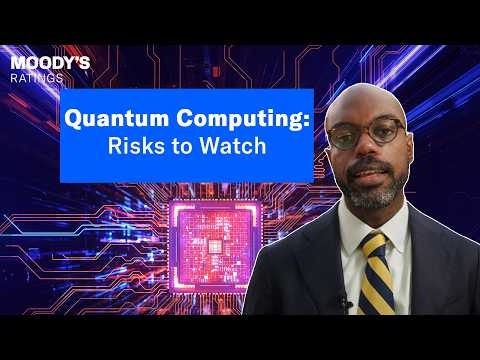
The future doesn’t creep forward anymore—it accelerates. What once unfolded over decades now reshapes itself in months. The integrated circuit transformed industries; the quantum computer could transform civilization. And as this new architecture of intelligence begins to take form, one truth rises above the hum of progress: we can’t build quantum intelligence without building quantum ethics.
The Quantum Leap and the Ethical Whiplash
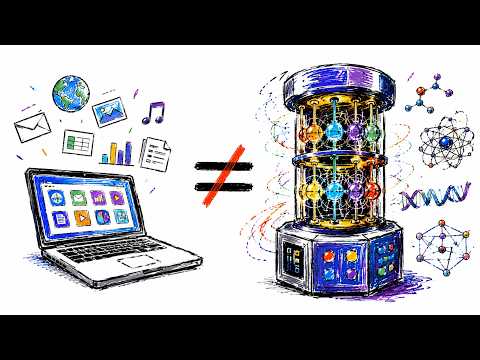
Quantum computing draws its strength from the strangeness of physics—superposition, entanglement, and the idea that something can be both here and there, on and off, all at once. Where a classical computer walks a single road, a quantum machine explores a thousand paths at once. Problems that would take today’s most powerful supercomputers thousands of years could be solved in seconds.
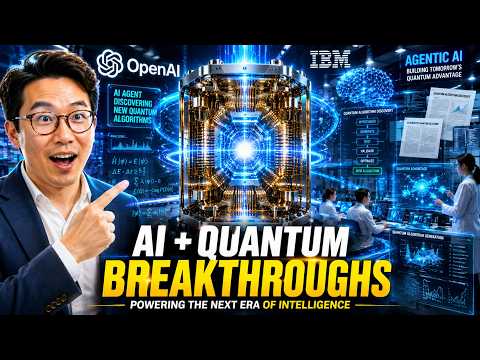
Pair that power with artificial intelligence, and the potential is breathtaking. Imagine AI models that can simulate entire ecosystems, design lifesaving drugs in real time, or model global economies down to the slightest ripple. Yet that same power could magnify today’s most dangerous flaws: bias, opacity, and surveillance. The ability to solve complex problems more quickly also means the ability to amplify harm more rapidly. Ethical blind spots that already challenge us at the AI level could expand into quantum-scale distortions and biases that replicate invisibly across billions of decisions in the blink of an eye.
Why Today’s Ethical Frameworks Fall Short
Our current approach to AI ethics is based on three pillars: fairness, accountability, and transparency. Even now, those pillars wobble. Bias creeps in through data, accountability blurs through complexity, and “black box” models already resist explanation.
Now imagine that box powered by quantum mechanics.
Quantum systems don’t deal in certainty; they deal in probability. An algorithm’s “decision” might depend on entangled variables that even its creators can’t untangle. The very notion of explainability could dissolve inside a quantum algorithm. We move from “hard to interpret” to “impossible to trace.” And when we can’t explain how decisions are made, we can’t ensure they’re just.
Quantum-Specific Ethical Challenges
1 | Opacity beyond comprehension
In a quantum model, decisions emerge from vast webs of probability. When a loan system or hiring algorithm runs on quantum logic, asking why it chose a particular outcome could be like asking a tide why it turns. Without interpretability, democratic oversight becomes nearly impossible.
2 | Surveillance at quantum speed
Quantum AI can analyze streams of global data in real-time, predicting human behavior or political trends with surgical precision. The line between insight and manipulation blurs fast when prediction becomes power.
3 | Quantum vulnerability
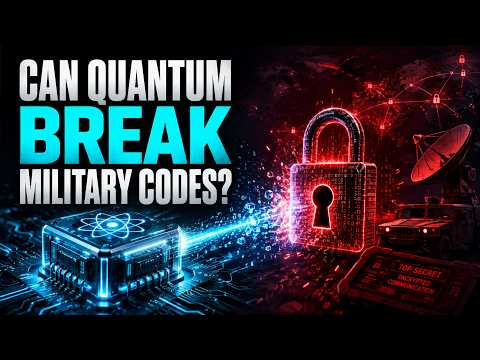
Before we even get there, we face a quieter crisis: our current encryption methods RSA, ECC won’t survive the quantum leap. Once they break, decades of archived data could become readable overnight. Protecting privacy in a post-quantum world isn’t theoretical. It’s urgent.
Designing Ethics into Quantum Intelligence
We can’t slow innovation, but we can steer it in a positive direction. The path forward begins not with regulation alone, but with design.
- Ethics-by-Design – Embedding fairness, interpretability, and human oversight into quantum systems from the start.
- Quantum-Specific Auditing – Developing mathematical tools to detect bias in probabilistic systems where outcomes are inherently uncertain.
- Human Veto Loops – Ensuring that human judgment remains a failsafe within quantum decision systems.
- Global Collaboration – Bringing physicists, ethicists, policymakers, and social scientists into one shared design room.
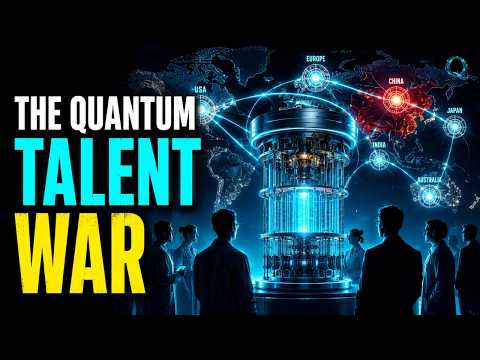
Governance cannot be limited to national borders. Quantum computing is already a transnational race—between corporations, countries, and ideologies. Without coordinated ethics, we risk a quantum arms race in which the first to achieve an advantage might also be the least accountable. We need global standards as robust as those of nuclear and climate accords: shared safety protocols, certification systems, and transparency regarding capabilities.
Building Quantum Literacy
Technology evolves at the speed of imagination; ethics must develop at the speed of understanding. That means everyone involved needs to be quantum literate.
- Researchers need training not just in quantum mechanics, but in the moral architecture of technology.
- Policymakers must create agile frameworks that can adapt to scientific discoveries.
- Citizens deserve a voice in how quantum technologies shape privacy, labor, and equity.
The quantum revolution isn’t just about power—it’s about participation. Ethical fluency is the new literacy of the quantum age.
A Future Worthy of Its Power
Quantum computing could help us model the climate with unprecedented accuracy, predict pandemics before they begin, or accelerate breakthroughs in clean energy. But potential alone isn’t a promise. The future will not be shaped by what quantum systems can do, but by what we choose to let them do.
The first fault-tolerant quantum computers may arrive within the decade if we wait until after they’re deployed to debate ethics, we’ve already lost the window for wisdom. Moral readiness must develop in tandem with technical readiness.
If we embed ethical reflection into every layer of this new intelligence—from its code to its culture—we can ensure the quantum leap becomes an act of elevation, not domination. Because in the end, precision isn’t just a technical metric.
In the quantum era, ethics itself is the finest form of precision.