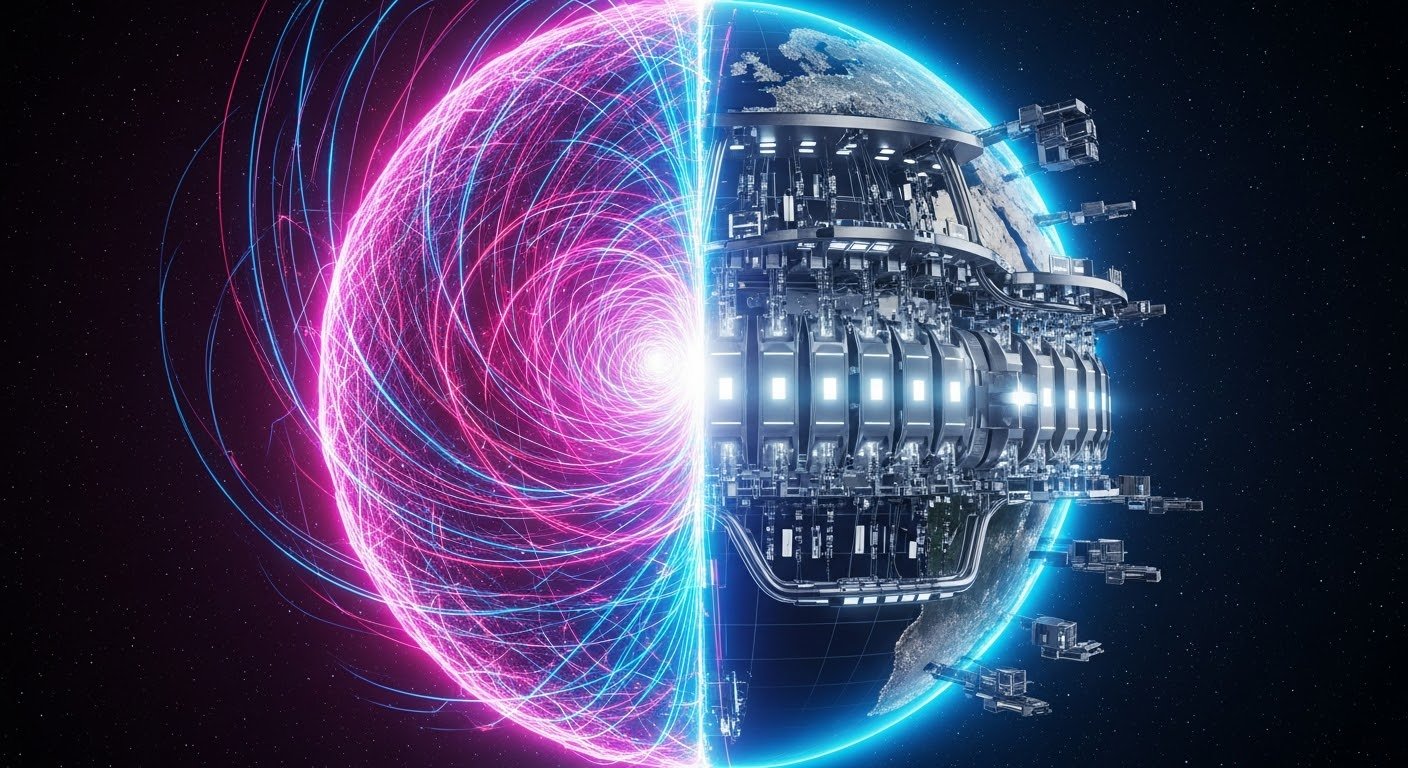
While headlines are busy chasing the drama of artificial intelligence, including chatbots, boardroom showdowns, and viral demos, another revolution hums quietly in the background. It doesn’t trend on social media or fuel sci-fi fears. It lives in the cold hum of dilution refrigerators, in the vacuum-sealed chambers of quantum labs where atoms dance at temperatures near absolute zero.
This is the geopolitics of the quantum age, a silent arms race unfolding in plain sight. And though it lacks the spectacle of rockets or drones, its implications could redraw the global map of power just as profoundly as nuclear energy did in the 20th century.
The Quantum Dawn
Quantum technology isn’t simply about faster computers. It’s about a new kind of power, rooted in the strange poetry of subatomic physics. Superposition. Entanglement. Coherence. Words that sound like spells but are, in truth, the next vocabulary of dominance.
These principles underpin three great pillars of the quantum revolution:
Quantum Computing – Machines that can solve problems so complex that classical computers would need the lifetime of the universe even to attempt them.
Quantum Communication (QKD) – Systems offering encryption so secure that eavesdropping isn’t just hard, it’s physically impossible.
Quantum Sensing – Devices sensitive enough to detect a passing submarine, a hidden tunnel, or the subtle pull of gravity from miles away.
Together, they mark a paradigm shift, a technological metamorphosis that could redefine how nations defend, communicate, and compete.
The Global Quantum Divide
The race for quantum supremacy isn’t hypothetical. It’s happening right now, in government budgets and corporate labs, in patent filings and satellite launches.
| Nation or Bloc | Core Strategy | Approx. Investment |
|---|---|---|
| China | State-led megaprojects focused on defense, sovereignty, and QKD networks | $15B+ |
| United States | Private-sector innovation (IBM, Google, IonQ) with strong defense backing | $5B federal + private capital |
| European Union | Collaborative “Quantum Flagship” emphasizing sovereignty and ethical innovation | $10B collective |
| Emerging Leaders (Canada, Australia, UK) | Specializing in niche hardware and materials | $1B+ programs |
China currently leads in quantum communication, deploying quantum key distribution (QKD) networks and launching quantum satellites, such as Micius. It’s a strategy that promises unhackable communication, a dream for intelligence agencies and a nightmare for their rivals.
The U.S., meanwhile, bets on its entrepreneurial engine. The National Quantum Initiative Act and defense partnerships with IBM, Google, and a constellation of startups, such as Rigetti, are designed to spark what experts call quantum advantage, the point at which quantum machines outperform classical ones on real-world problems.
Europe takes yet another path. Its Quantum Flagship program is an experiment in collective sovereignty, an attempt to lead not through confrontation, but through coordination. Its scientists are guided by ethics as much as engineering, seeking an inclusive model for innovation.
The New Rules of Power
Behind every nation’s quantum push lies a potent mix of motivations: economic dominance, scientific prestige, and strategic deterrence. The first nation to achieve quantum maturity could gain leverage across every dimension of modern power, from finance to defense to the flow of global information.
As Dr. Christopher Monroe, co-founder of IonQ, once said, “Quantum is not a faster computer. It’s a different computer.” And in geopolitics, “different” often means decisive.
Quantum Warfare: The Invisible Frontline
The most chilling scenario experts discuss is something they call Q-Day, the day a large-scale quantum computer can crack today’s encryption.
Using algorithms like Shor’s, such a machine could break RSA encryption in seconds. Every bank transfer, government secret, and private message protected by classical cryptography would become instantly readable.
To counter that, nations are racing to implement Post-Quantum Cryptography (PQC), algorithms designed to resist quantum attacks. But transitioning global infrastructure takes time, and the quantum clock is ticking.
Meanwhile, the flip side of this threat, Quantum Key Distribution (QKD), offers the closest thing to digital invincibility. Any attempt to intercept a quantum-encrypted message automatically alters its quantum state, revealing the intrusion.
China already operates the world’s largest QKD network, connecting Beijing to Shanghai and even extending into orbit. In an era where trust is currency, whoever controls quantum-secure channels controls the narrative of truth itself.
The New Eye in the Sky
If computing and communication are the long game, quantum sensing is the immediate disruptor.
Imagine radar so sensitive it can detect stealth aircraft once thought invisible. Or submarines navigating without GPS, guided instead by quantum clocks that measure time with atomic precision. Or underground tunnels and mineral deposits mapped through subtle magnetic ripples in the Earth’s crust.
These aren’t distant dreams; they’re in prototype today. And when fused with AI, quantum sensors could enable machines that perceive reality faster and more accurately than humans can comprehend.
The line between intelligence and surveillance, between awareness and omniscience, is becoming increasingly blurred.
The Economic Battlefield
Beyond defense, quantum computing promises to unleash an economic tidal wave. Entire industries—pharma, materials science, and finance could be reinvented.
Quantum simulations may one day design new drugs atom by atom, optimize global logistics networks, or solve climate models that baffle today’s supercomputers.
A nation that achieves quantum advantage first won’t just lead industries; it will define them. It will command data pipelines, decrypt competitors’ secrets, and accelerate innovation faster than others can react.
In this sense, the race for quantum talent has become a new form of soft power. Scientists, engineers, and algorithm designers are now as strategically valuable as aircraft carriers. Universities are the new battlegrounds of influence.
Cooperation, Containment, or Conflict?
Quantum technology poses a paradox: it thrives on open collaboration yet breeds intense secrecy.
Export controls on cryogenic systems and quantum chips are already tightening. Alliances are being redrawn. Nations must choose between sharing discoveries for collective safety or hoarding them for competitive gain.
Three futures are possible:
- A New Cold War Dynamic: Quantum blocs form, one led by the U.S. and allies, the other by China and Russia.
- The Arms Control Dilemma: Because quantum capabilities are hard to verify, treaties falter and mistrust deepens.
- Strategic Collaboration: Shared standards for post-quantum cryptography and ethical governance prevent catastrophic misuse.
Which path the world takes will depend not on who wins the race, but on how they choose to use the power once they arrive.
The Quantum Age Is Already Here
The quantum dawn isn’t coming; it’s already glowing on the horizon.
Every satellite launched, every encryption debate, and every calibrated qubit is a move in a planetary chess game. What’s unfolding isn’t just technological progress; it’s a redefinition of trust, secrecy, and sovereignty.
The question isn’t whether quantum power will reshape the world. It’s who will define the rules of the quantum age and who will be left decoding them.