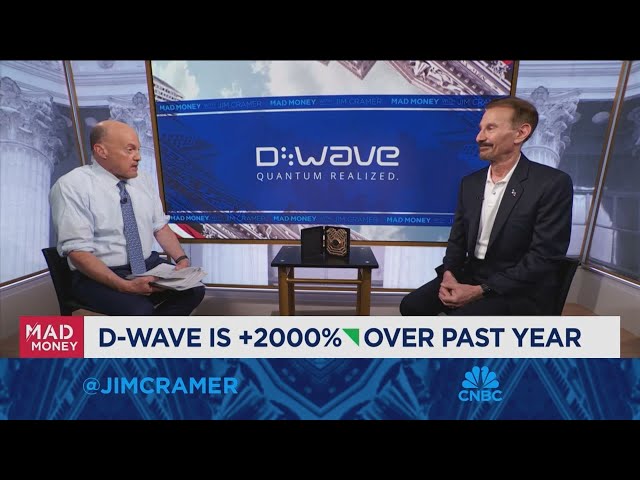
In the ever-evolving landscape of technology and investment, staying abreast of industry trends can sometimes feel like trying to ride a bicycle uphill during a storm. Take, for example, the rollercoaster that is the quantum computing sector. Just the other day, I delved into the peculiar case of D-Wave, a company that’s seen a nearly 2,000% increase in its stock over the past year. Now that’s the kind of statistic that stirs up a speculative frenzy, isn’t it?
But beyond the drama of stock market fluctuations, D-Wave presents a fascinating episode in the story of quantum computing—a field still very much in its infancy yet seemingly poised to reshape the world. D-Wave, interestingly, isn’t just experimenting in the lab; they’re claiming the mantle of the first commercial quantum computing company. This isn’t just about building futuristic gadgets; it’s about solving real-world, hard-nut-to-crack business optimization problems. From workforce scheduling and manufacturing optimization to protein folding, they are demonstrating quantum’s potential in tangible, current applications.
This video is from CNBC Television.
Consider an example: optimizing loyalty rewards programs for a giant like Mastercard isn’t child’s play. It requires a sophisticated understanding of offering the right incentives to the right customers to maximize engagement—a perfect candidate for quantum computing’s prowess. And Mastercard isn’t alone; other large firms are lining up, applying D-Wave’s capabilities to issues as critical as energy grid optimization.
This brings to mind the quantum leap in efficiency these technologies could usher in. For the skeptics pondering on the commercial viability of quantum computing due to its nascent stage and significant financial losses, it’s crucial to look at the boiler room rather than just the shiny gadgets. D-Wave’s quantum systems, while still early in their commercial journey, promise a future where substantial revenue and more advanced applications could become the norm. Imagine the impact on industries and services that hinge on complex calculations and optimization—it’s not mere speculation to see them turning to quantum computing solutions increasingly over time.
There’s also the environmental angle to consider. Remarkably, despite the potential for quantum computing to eviscerate Bitcoin’s current method of transactions, it also suggests a significant reduction in energy use—a thousandfold less power. With global energy strains, adopting more efficient technologies could not only reshape finance but also significantly undercut energy demands.
However, skepticism remains healthy. The eye-popping valuation of D-Wave, juxtaposed against its relatively modest $1.3 million in bookings, raises eyebrows. Is the valuation premature, or are we witnessing the threshold of something genuinely revolutionary? This skepticism was echoed in my recent conversation about the cutting-edge advances at D-Wave, which provided a firsthand insight into why some investors are gambling big on what might seem like an underdog technology today.
It’s clear that to understand whether tech like D-Wave’s quantum computing can deliver on its promises, one must deeply dive into both its numerical successes and its strategic alignments with heavyweight industries. Only by peering at the fine details can we discern whether we are riding on the crest of a genuine tech evolution or if we are merely being swept up by hopeful speculation.
As I ponder these developments, I can’t help but be drawn to the tantalizing potential of quantum computing. Whether it’s refining the stability of energy grids or optimizing complex corporate processes, the stakes are incredibly high. And while the road ahead is uncertain, fraught with technical and financial challenges, the journey promises to be nothing short of exhilarating.
So, as you navigate your way through the tech landscapes and investment prospects, keep a keen eye on the horizon—because in this world, change is the only certainty.