Most people assume there’s only one way into quantum.
You study physics.
You get a PhD.
You spend years in academia.
Then—maybe—you enter the industry.
That story is clean. Linear. Predictable.
It’s also incomplete.
In reality, the people shaping the future of quantum aren’t all coming from physics labs. They’re coming from supply chains, cybersecurity, operations, venture building, and everything in between.
And that’s exactly what makes this moment so interesting.
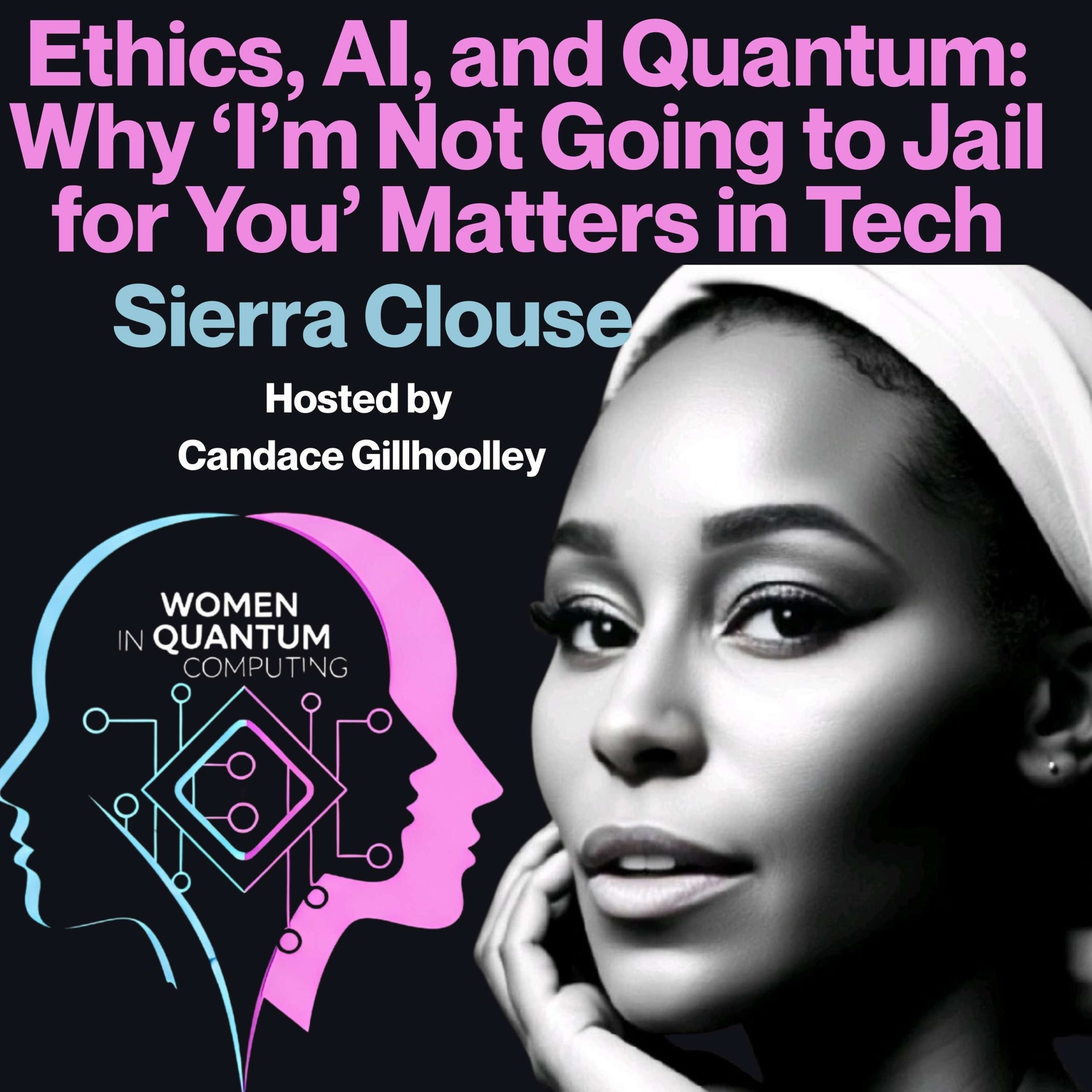
In the latest episode of Women in Quantum, Sierra Clouse, Managing Partner at Barclo Venture Studios, shares a journey that challenges one of the biggest misconceptions in the industry: that you need a traditional technical background to belong here.
You don’t.
The Myth of the “Quantum Physicist Only” Career
Quantum computing has a branding problem.
For years, it’s been positioned as something abstract, academic, and inaccessible—reserved for a small group of highly specialized experts. That perception has created an invisible barrier for everyone else.
But as Sierra explains, the reality is much broader:
“It’s less that I stumbled into science and more that I developed an acute awareness that everything comes from something.”
That mindset, understanding systems, asking how things work, and tracing outcomes back to their origins, isn’t limited to physics. It’s a way of thinking.
And it shows up everywhere.
From logistics to finance to software to infrastructure, the same foundational question applies:
How does this system work, and how can it be improved?
Quantum isn’t replacing that thinking. It’s amplifying it.
The Rise of Nonlinear Careers
If there’s one consistent theme across modern careers, it’s this: they’re no longer linear.
Sierra’s path reflects what many professionals already know but rarely articulate:
Supply chain → IT → recruiting → project management → cybersecurity → blockchain → quantum venture building
At first glance, it looks like a series of pivots.
In reality, it’s a progression of capabilities.
Each step builds a deeper understanding of systems, risk, operations, and technology adoption—skills that are directly transferable into emerging fields like quantum.
And that’s not unusual anymore.
As Candace notes during the conversation:
“The first positions I had didn’t even exist.”
That’s the world we’re operating in now.
Roles are being created in real time. Entire categories are emerging faster than traditional education systems can keep up. The idea of a “fixed career path” is being replaced by something more fluid: a portfolio of experiences that evolves with the market.
Quantum sits right at the center of that shift.
Systems Thinking as the Real Entry Point
If there’s a single skill that connects these nonlinear journeys, it’s systems thinking.
Not just understanding individual components but seeing how they connect, interact, and scale.
Sierra’s early experience in supply chain and logistics is a perfect example. Long before “data-driven decision-making” became a buzzword, she was working with:
- dashboards
- optimization models
- risk management frameworks
- operational workflows
All of which are foundational to how modern technology ecosystems function.
That perspective becomes incredibly valuable in quantum.
Because quantum isn’t just about building better computers, it’s about integrating those systems into the real world.
How do they connect to existing infrastructure?
How do they deliver value?
How do they move from research to application?
These aren’t purely scientific questions. They’re operational, strategic, and deeply interdisciplinary.
And they require people who can bridge domains, not just specialize within one.
Why This Moment Favors Generalists
For decades, specialization was the safest path.
Pick a lane. Go deep. Stay there.
But emerging technologies—especially quantum are changing that equation.
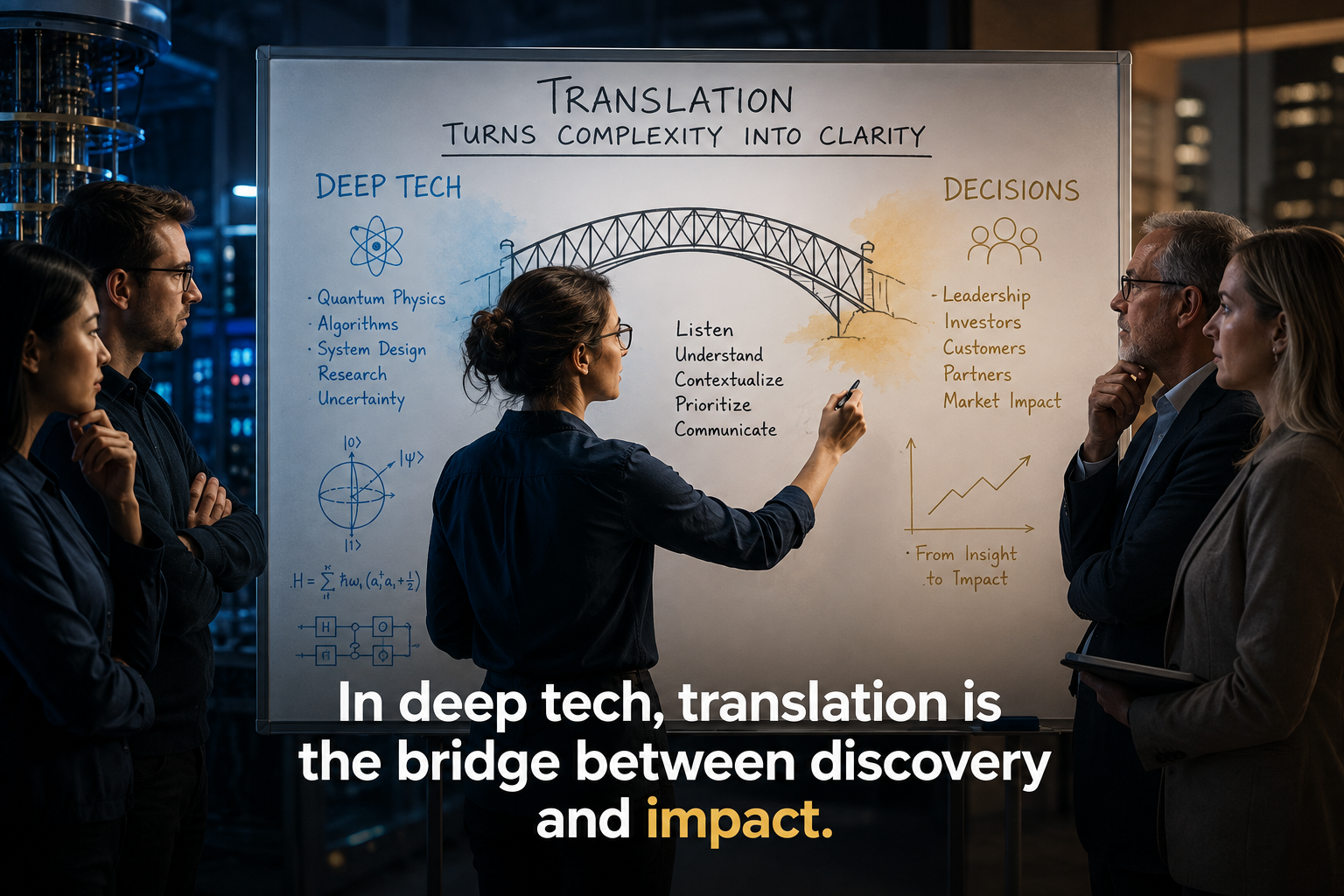
The biggest challenges today aren’t just technical. They’re translational.
How do you take something complex and make it usable?
How do you align research with market needs?
How do you build ecosystems, not just products?
That’s where generalists thrive.
People who can connect dots across disciplines.
People who can move between technical and business conversations.
People who understand both the “why” and the “how.”
As Sierra puts it:
“You have to be adaptable. You can’t not be adaptable.”
Adaptability isn’t a soft skill anymore. It’s a survival skill.
And in quantum, it’s becoming a competitive advantage.
What This Means for the Next Generation
If you’re early in your career or considering a shift into quantum, this is the part that matters most.
You don’t need a perfect background.
You don’t need a linear path.
And you don’t need to check every technical box before you start exploring.
What you need is curiosity.
A willingness to learn.
And the ability to think across systems.
The next generation of quantum builders won’t all look the same. They won’t come from the same schools, the same disciplines, or the same career tracks.
They’ll come from everywhere.
Because the problems quantum aims to solve are optimization, security, materials science, sensing, and touch every industry.
And solving those problems requires more than just one type of expertise.
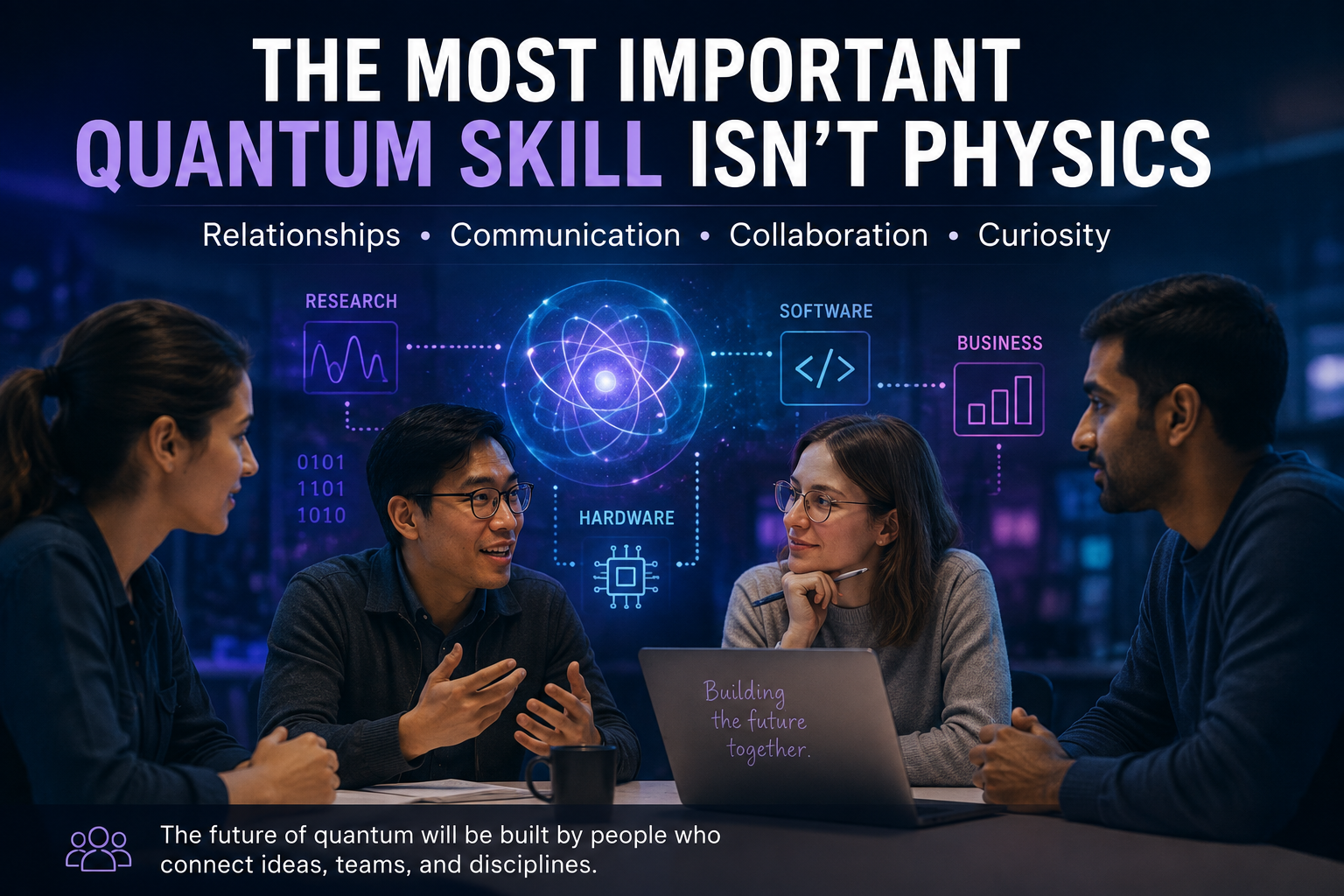
It requires collaboration.
The Bigger Shift
What’s happening in quantum right now is part of a larger transformation across deep tech.
We’re moving from isolated innovation to integrated systems.
From specialization to collaboration.
From linear careers to dynamic, evolving ones.
And that shift opens the door for more people to participate.
Not by lowering the bar but by redefining what qualifies someone to step in.
Why This Episode Matters
This conversation with Sierra Clouse isn’t just about one person’s journey.
It’s about a pattern that’s becoming impossible to ignore.
The future of quantum won’t be built by a single type of thinker.
It will be built by people who can navigate complexity, adapt quickly, and connect ideas across domains.
If you’ve ever felt like your background doesn’t “fit” into quantum…
That might actually be your advantage.
Listen here: https://player.captivate.fm/episode/aa19388e-5b49-4909-b383-faae070b4db3/