The Invisible Thread Weaving the Universe
Imagine two particles, light-years apart, yet moving in perfect, eerie synchrony. Change one, and the other responds—instantly. No signal, no delay, just a cosmic dance that defies logic as we know it.
Welcome to quantum entanglement: a phenomenon so strange, even Einstein called it “spooky action at a distance.” And if you’ve ever felt like this is territory only navigable with a physics degree and a blackboard full of symbols, you’re not alone. But let’s zoom out. Quantum entanglement isn’t just a bizarre corner of theoretical science—it’s a quiet architect shaping the edges of our future.
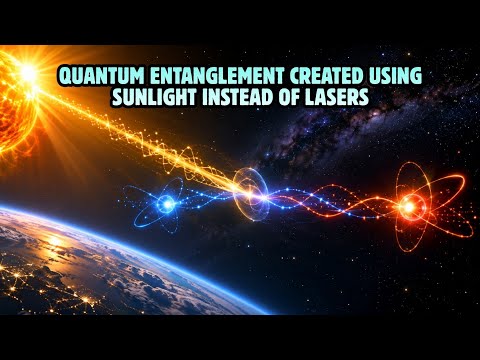
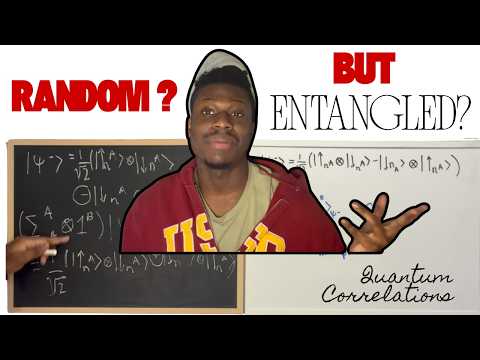
So what exactly makes it spooky? In the quantum realm, reality is slippery. Particles—like photons and electrons—don’t exist in one definite state until someone looks. Until then, they hover in a superposition, a shimmering cloud of maybes. Now, entangle two of these particles, and their fates become linked in a way that doesn’t make intuitive sense. Measure one, and the other’s state becomes instantly known—even if it’s on the opposite side of the galaxy.
Think of it like tossing two magical coins. While they’re in the air, each could be heads or tails. But the moment one lands—bam!—the other, wherever it is, lands in the opposite state. This is what spooked Einstein. No message traveled between them. No cause and effect. A silent connection that seems to transcend space and time.
And it’s not just weird science—it’s becoming the engine behind some of the most powerful tech on the horizon.
Take quantum computing. Entanglement is what gives quantum computers their edge. It lets qubits work together in parallel universes of possibility—tackling problems that classical computers couldn’t solve in a million years. Then there’s quantum communication, specifically quantum key distribution (QKD). With entangled particles, encryption becomes not only secure but also unbreakable. If anyone tries to intercept the quantum key, the entanglement collapses, instantly alerting both parties—no guessing, no backdoors.
Now imagine a quantum internet—an entire global network stitched together with entangled particles, enabling quantum devices to share information securely, instantly, and beyond the reach of hackers. That’s not sci-fi. That’s under construction in labs around the world right now.
Here’s why this matters: entanglement challenges our assumptions about how the universe operates. It invites us to consider that connection doesn’t require proximity. That communication doesn’t always need a channel. That maybe, just maybe, there’s a deeper order quietly threading through the chaos.
Understanding quantum entanglement isn’t about memorizing equations. It’s about recognizing that we’re on the edge of a shift—not just in physics, but in how we think about security, computation, and even reality itself. The spooky stuff? It’s not so spooky once you start to see it as the invisible architecture holding everything together.
Stay Connected
Follow our journey and be part of the conversation:
🔗 Find us on LinkedIn
📬 Join our mailing list
📺 Subscribe to our YouTube channel