There’s a certain type of tech video that immediately loses me.
You know the kind. Dramatic music. Buzzwords flying everywhere. Someone in a black turtleneck is promising to “revolutionize humanity” while standing in front of glowing blue graphics that look like they were pulled from a sci-fi movie nobody actually watched.
So when I sat down to watch this latest quantum computing video featuring Yuval Boger, I expected more of the same.
Instead, I found myself thinking about something much simpler:
Most of us have no idea how weird reality actually is.
And honestly, that might be the biggest barrier to understanding quantum computing in the first place.
The conversation around quantum tech tends to swing between two extremes. Either people treat it like magic that will solve every problem on Earth, or they dismiss it entirely because it sounds too complicated to matter. But the truth is probably somewhere in the middle — and that’s what made this video interesting to me.
It grounded the conversation.
Not in hype. Not in fear. In curiosity.
That’s important because quantum computing isn’t really about making a “better laptop.” It’s about building machines that behave more like the natural world itself.
And that idea still kind of blows my mind.
Classical computers — the ones we use every day — are based on bits. Ones and zeros. On or off. Very rigid. Very predictable. That system has powered basically every modern technological advancement we’ve seen over the last several decades.
But nature doesn’t always behave in neat little binary categories.
At the quantum level, particles can exist in multiple states at once. They can become entangled with one another across space. Outcomes behave more like probabilities than certainties. The deeper scientists look, the more reality starts sounding less like a machine and more like organized chaos somehow holding itself together.
Quantum computers are designed to work inside that strange framework rather than fight against it.
And I think that’s why this field captures people’s imagination so intensely. It forces us to confront the possibility that the universe itself operates in ways we still barely understand.
That’s humbling.
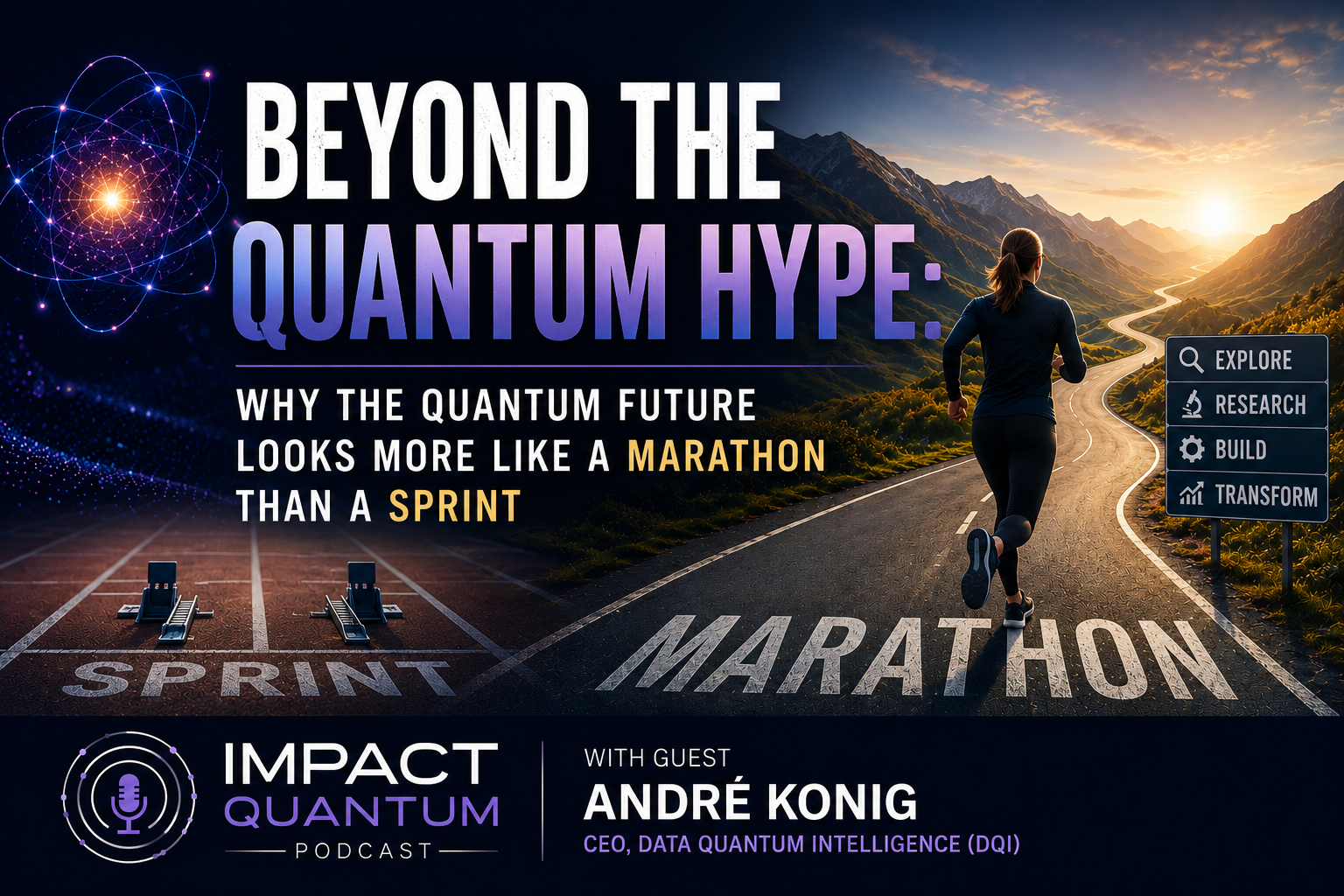
One thing I appreciated in this video was the reminder that quantum computing is still extremely early. I feel like tech culture has trained people to expect instant breakthroughs. Every company wants to announce the “future” before they’ve even finished building the present.
But quantum technology is difficult in ways most people don’t realize.
Qubits — the quantum equivalent of bits — are incredibly fragile. Tiny environmental disturbances can throw calculations off completely. Temperature changes, vibrations, electromagnetic noise… almost anything can interfere with the system.
In other words, we’re trying to build computers that rely on particles behaving in ways humans can barely observe without accidentally disrupting them.
That’s not just engineering. That’s patience bordering on obsession.
And yet researchers keep pushing forward because the potential upside is enormous.
If quantum systems become stable and scalable, they could transform fields that classical computers struggle with today. Drug discovery is one of the biggest examples people mention, and for good reason. Simulating molecular interactions accurately is unbelievably complex using current systems. Quantum computers could potentially model chemistry at a level we’ve never been able to before.
That matters.
Not in a vague “technology is cool” kind of way, but in a deeply practical way. Faster medical breakthroughs. Better materials. Cleaner energy systems. More efficient optimization problems. These are real-world possibilities, not just theoretical flexes for Silicon Valley investors.
And honestly, I think that’s where conversations about AI and quantum computing need to mature.
We spend so much time talking about whether technology will replace humans that we rarely stop to ask how technology could actually help humans solve problems we currently can’t handle alone.
That’s the more interesting conversation to me.
At the same time, I also think it’s healthy to stay skeptical of grand predictions.
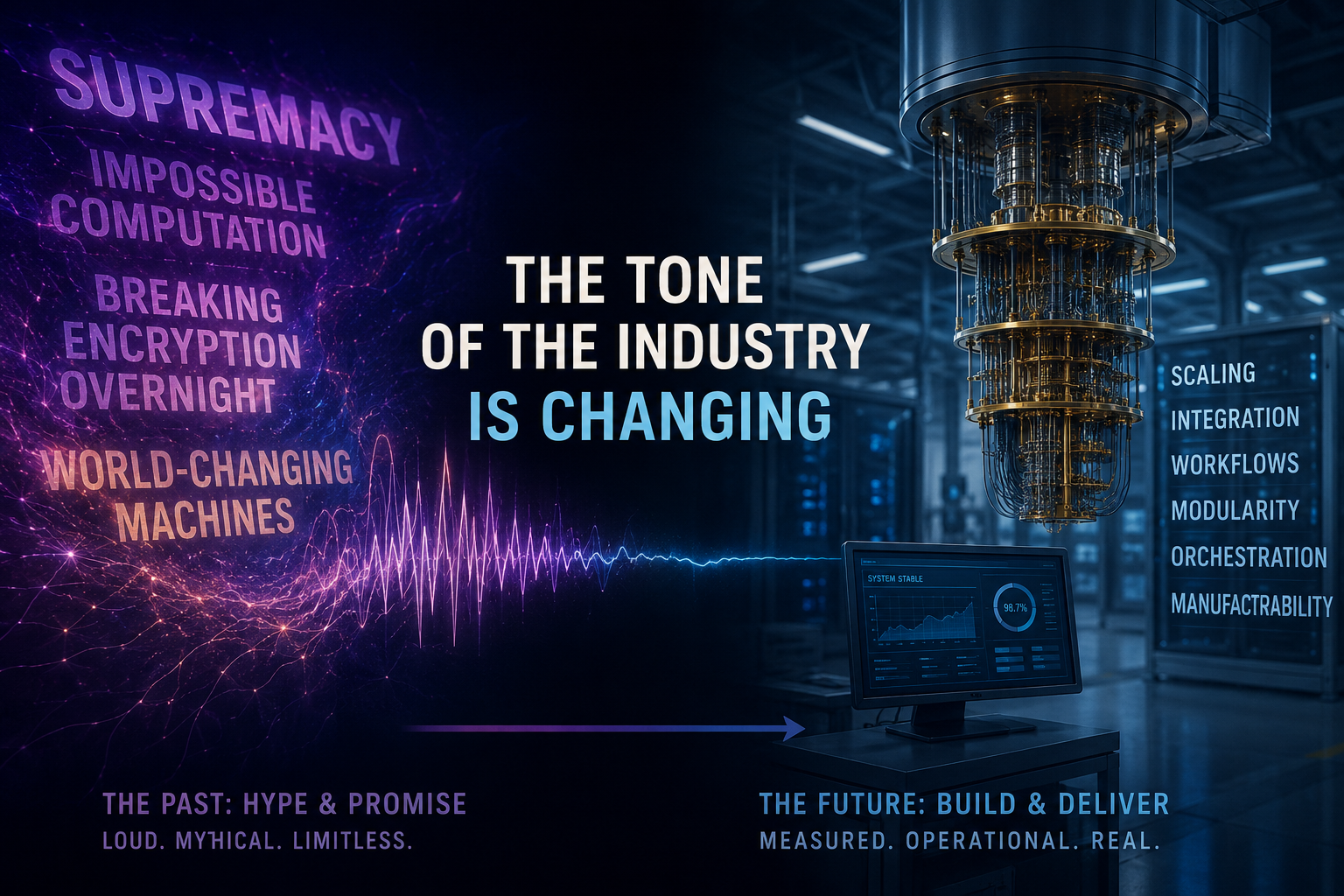
The tech industry has a habit of treating timelines like suggestions instead of reality. Quantum computing has been “five years away” for what feels like twenty years now. There’s still a huge gap between research breakthroughs and practical everyday applications.
But skepticism and excitement can exist together.
That’s probably the healthiest way to approach emerging technology in general.
You can recognize the legitimate challenges while still appreciating the ambition behind the work.
And speaking of appreciation — longtime viewers of Impact Quantum will probably recognize Yuval immediately because we actually had the chance to speak with him back in Season 3. That conversation stood out to me because he has a way of explaining quantum technology without turning it into performance art.
That’s rarer than it should be in tech.
Some people explain complex ideas by trying to sound smarter than the audience. Others explain them by making people feel included in the discovery process. Yuval falls into the second category, and I think that’s part of why his perspective resonates.
Because at its core, quantum computing isn’t just about processing power.
It’s about understanding nature more honestly.
The more scientists study quantum mechanics, the more obvious it becomes that reality doesn’t conform to human intuition. We evolved to survive at the human scale — not the subatomic scale. Our brains like certainty. Cause and effect. Clear answers.
Quantum mechanics offers almost none of those things.
And yet it works.
That’s the part that keeps sticking with me.
The universe doesn’t care whether something feels intuitive to us. Nature operates according to its own rules, and quantum computing is essentially humanity attempting to learn that language instead of forcing reality into simpler categories.
There’s something deeply philosophical about that.
It reminds us that science isn’t just about invention. It’s also about humility. About accepting that there are still enormous parts of existence we don’t fully understand yet.
In a culture obsessed with certainty, that feels oddly refreshing.
So no, I don’t think quantum computing is magic. I don’t think it’s going to instantly fix the world either.
But I do think it represents something important: humanity continuing to push against the boundaries of what’s knowable.
And honestly?
That curiosity may be the most powerful tool we’ve ever created.