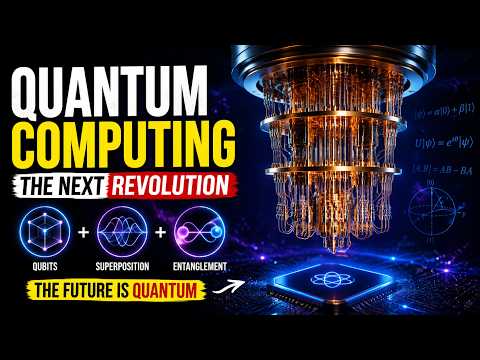
As we move deeper into the 21st century, technology continues to push beyond boundaries that once seemed impossible. Few areas capture that sense of possibility more than quantum computing. Unlike traditional computers, which process information in familiar ways, quantum computers operate according to the strange and often counterintuitive rules of quantum mechanics. It’s a field that sits at the intersection of physics, mathematics, and computer science, promising new ways to tackle problems that today’s most powerful machines struggle to solve.
Based on content from BioTech Whisperer
As we venture further into the 21st century, the horizons of our technological landscape expand in ways that challenge our understanding of reality itself. One of the most intriguing frontiers in this expansion is quantum computing—a realm where the curious rules of quantum mechanics govern how we compute and solve problems.
To appreciate the significance of quantum computing, we must first explore the foundation it’s built upon. Traditional computers, those that rest neatly on our desks or accompany us in our pockets, compute using bits. These bits are binary, flipping between zero and one, like the reassuring tick-tocks of a metronome keeping time.
Enter the quantum computer. Unlike its classical counterpart, it operates on quantum bits, or qubits. Each qubit is an enigmatic performer, capable of being in a state of zero, one, or both simultaneously—a phenomenon known as superposition. Imagine spinning a coin: as it twirls, it’s neither heads nor tails but a fluid potential of both. A qubit lives in this suspended reality at subatomic scales, where the universe as we know it becomes blurred.
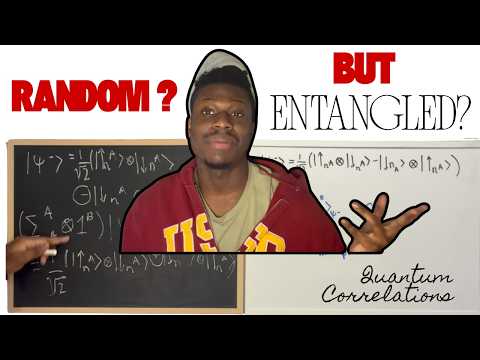
Another pillar of quantum computing is entanglement. When two qubits become entangled, they are inseparably linked, a profound connection where a change in one can instantaneously affect the other, regardless of distance. This concept, which once left Einstein mused about “spooky action at a distance,” is among the peculiar gifts quantum mechanics offer us.
Why do these concepts matter? Because they usher in a capability to tackle extraordinarily complex challenges that today’s computers struggle with or cannot resolve at all. Quantum computers, through their parallelism and entangled states, could revolutionize fields such as cryptography, drug discovery, artificial intelligence, and optimization—transformative tools for industries worldwide.
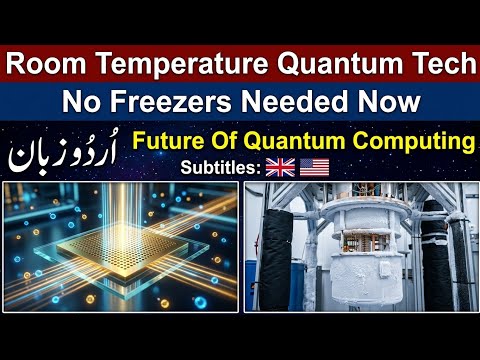
However, transitioning this vibrant theory into practical application is fraught with challenges. Constructing a reliable quantum computer is akin to maintaining a delicate dance in a world prone to interruptions. Qubits are sensitive to their environment; even minor disturbances such as heat or vibration can collapse their quantum states—a phenomenon known as decoherence. To mitigate this, many quantum systems are housed in conditions colder than outer space.
Furthermore, quantum error correction becomes a crucial field of study. Since quantum information is so fragile, devising methods to detect and correct errors without inadvertently disrupting the quantum state is a formidable challenge for scientists and engineers.
Despite these challenges, progress is far from stagnant. A global coalition of companies, universities, and governments pour resources into advancing quantum technologies, driven by the alluring potential they hold.
In contemplating the future, it’s clear that quantum computing offers no simple or singular path. Rather than seeing it as competition for classical computers, envision it as a complementary force, poised to unveil solutions presently beyond our reach. The realm of quantum computing teaches us that at the microscopic level, the universe dances to a different tune, where boundaries of the impossible may merely be opening acts.
As we stand on the precipice of this emerging technology, we might ask ourselves: by unlocking the secrets of quantum mechanics, are we merely uncovering the capabilities hidden within us—an invitation to reimagine what’s possible? The questions remain as vast as the answers, inviting us to dream further into the undiscovered potential of our future.
—