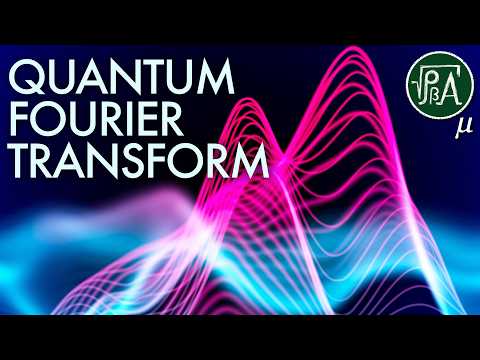
In the world of quantum computing, certain topics stir the air of mystery and fascination, often leaving even avid learners pondering, “What does it actually do?” The Quantum Fourier Transform (QFT) stands as a prime illustration of this enigma. Many explanations dwell on mathematical formulas or their lineage from classical Fourier Transforms, but here we’ll gradually unravel its essence—its real power and purpose—sans the heavy, often intimidating equations
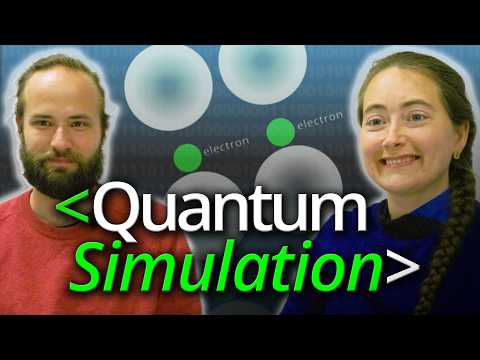
Based on content from Physics but Awesome
.
The QFT is a cornerstone algorithm that’s especially crucial for anyone curious about quantum computing, touted for its transformational ability much like its classical counterpart. But the enduring question remains: what is it precisely that the QFT enables us to accomplish? And why is it hailed as a groundbreaker in the field?
Understanding the Core: From Classical to Quantum
At its heart, a Fourier Transform is a mathematical technique transforming data into frequencies. In classical contexts such as audio and signal processing, it helps dissect the layers of sounds and signals into understandable frequencies. The Quantum Fourier Transform extends this concept into the quantum realm, operating not on functions or waveforms, but on quantum states themselves.
Peeling Back the Layers: Quantum Phases and Interference
To grasp the QFT’s role, one must first look at the concept of quantum phases—complex numbers that describe the behavior of qubits. Each qubit can exist in a superposition of states, described by ‘amplitudes.’ Contrary to what the term might suggest, these amplitudes aren’t just about likelihood; they have dimensions—magnitude and direction hence becoming entrenched in complex numbers. At a glance, each direction, or phase, seems benign, bearing no physical consequence when considered in isolation. But their true power is revealed in interference, where phases combine to create distinct, often startlingly different outcomes.
Imagine it like the gentle ripples on a pond: a singular ripple is harmless, almost unseen. Combine many, each with its unique rhythm, and watch waves unfurl, interference patterns telling untold tales.
The Quantum Fourier Transform: A Deeper Look
What does the QFT achieve then? It translates the intricate dance of quantum phases into new states where their once-hidden footprints become observable. Think of the QFT as a lens, bringing the whispering echoes of quantum states into sharp relief. We measure these states through their modified amplitudes, which now house the phase information previously concealed. Functionally, a QFT allows us to identify patterns in the winding frequencies of phases, offering insights into larger quantum algorithms like Shor’s algorithm—an algorithm famed for its capacity to threaten classical encryption methods.
Circuits and Complexity: The QFT’s Surprising Simplicity
A fascinating element of the QFT is its efficiency. A classical Fourier transform becomes increasingly resource-hungry as the system scales, but a QFT operates with extraordinary economy, necessitating only a fraction of the computational gates. This characteristic lends it unmatched potential, until, of course, we hit a familiar snag in quantum computing: the challenge of extracting useful results due to the probabilistic nature of quantum measurements.
While QFT allows us to expedite calculations, the real world demands turning these accelerated results into something tangible—a task frought with difficulty when the output of a quantum system gives probabilities rather than certainties. Yet in certain contexts, particularly those concerned with global characteristics rather than individual probabilities, the QFT shines with real promise.
Looking Forward: Toward New Horizons
Herein lies the enduring promise of the Quantum Fourier Transform: Though not a conqueror of all problems nor a harbinger of instantly crackable solutions, it’s a beckoning gateway to breakthroughs as we refine our capacity to implement and read quantum signals. In our quest to decouple these quantum insights from the enigmatic, unveiling the QFT lays the groundwork for potentially earth-shattering developments in secure communications, computation, and beyond.
The journey to comprehension reveals much about more than equations or quantum-specific contexts—it’s about developing something of an empathy with the quantum world. Today’s mystery is tomorrow’s clarity, urging us to remain not only curious but open to growth and understanding.
As we position ourselves at this frontier, the question transforms not into doubt or misunderstanding, but into an eager anticipation of answers a burgeoning quantum world might yet provide.
—