Imagine a race, not with sprinters or cars, but a competition spanning global proportions—one that involves the dizzying realms of quantum computing. This isn’t science fiction; it’s the reality we’re progressing into, as leading tech giants like Alphabet’s subsidiary, Google, push the boundaries of what machines can do. In fact, Google recently built a processor so advanced that it solved a problem in five minutes—a problem so complex that one of the world’s fastest supercomputers would need ten septillion years to crack it. Yes, that’s more time than the universe has been around!
The heart of this technological marvel lies in what we call quantum computing, a cutting-edge field that might just be the cornerstone of the next major geopolitical power struggle, from Washington to Beijing. Why all this fuss? Because the potential applications of quantum computing stretch from revolutionizing drug research and artificial intelligence to reshaping defense strategies and financial systems.
This video is from Bloomberg Television.
So, how does a quantum computer differ from the laptops and desktops we use today? The traditional computers operate on bits, using binaries (0s and 1s) to process information sequentially. Quantum computers, however, don’t play by the same rules. They employ quantum bits, or qubits, which can exist in multiple states at once, thanks to a phenomenon known as superposition. This allows them to process vast amounts of data in parallel, considering multiple outcomes simultaneously and arriving at solutions at speeds that are frankly mind-boggling.
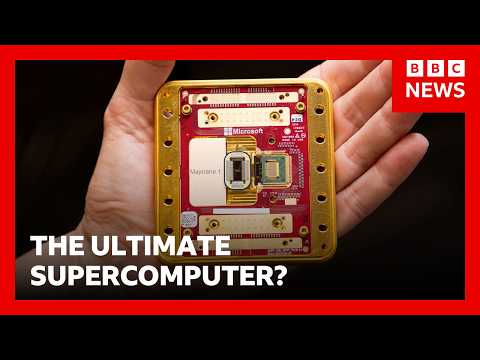
Companies like Google and IBM are at the forefront, racing toward a future where quantum computers solve real-world problems, hopefully, by the end of this decade. It’s an exciting promise, though not without its hurdles. Quantum computing requires enormous power supplies, needs to be maintained at ultracold temperatures, and suffers from high error rates that developers are striving to cut down.
Despite these challenges, the progress is tangible and exhilarating. Just last year, Google announced a significant advancement with its Willow quantum computing chip. They shared that an algorithm tested on this chip could potentially be replicated on similar quantum platforms, marking another giant leap forward in quantum computing capabilities.
In essence, this means that we’re not just approaching an era of faster computing; we’re stepping into a revolution that could redefine how we solve the world’s most complex problems. The implications are vast and varied. In medicine, for example, quantum computing could drastically speed up the development of new drugs by simulating molecular structures more efficiently than ever before. In the realm of artificial intelligence, these computers could accelerate learning and decision-making processes, pushing AI capabilities to new, perhaps even unimaginable heights.
As businesses and governments around the globe recognize and invest in this technology, we’re also likely to see shifts in power dynamics. Quantum computing may well become a strategic asset, much like oil reserves or technological prowess, influencing everything from global finance to military strength.
What does this all mean for us, today? It means that we are on the brink of a new technological epoch. As developers and engineers close in on the next breakthrough, and as nations vie for supremacy in this high-stakes technological race, it’s crucial for policymakers, business leaders, and even everyday tech enthusiasts to stay informed and engaged.
We’re not just observers but participants in this unfolding story. The coming quantum era isn’t just about faster computers but a reshaping of the digital landscape. It’s about rethinking what’s possible, in science, strategy, and society. So, let’s stay tuned, and stay curious.