In the evolving landscape of quantum computing, there’s a quiet yet transformative revolution underway. It’s a revolution that doesn’t center solely on the enigmatic qubits—the foundational units of quantum information—but instead on the sophisticated ecosystem that must be woven around them. Linsey Rodenbach from NVIDIA eloquently draws a parallel between quantum computers and the classic microscope. Both stand as monumental tools for scientific discovery, but neither could achieve its potential without an intricate assembly of supporting components. Just as lenses alone weren’t enough until combined with stages and light sources, qubits need more than just themselves.
Based on content from Open Compute Project
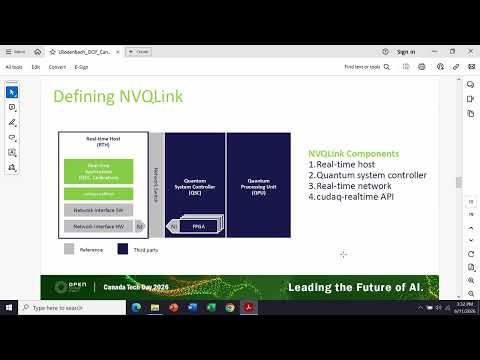
NVQLink, an open platform architecture from NVIDIA, is stepping in to bridge the chasm between quantum and classical computing. It suggests a future where quantum processing units (QPUs) coexists with accelerated classical computing resources, forming what NVIDIA calls an “accelerated quantum supercomputer.”
For anyone immersed in the intricacies of quantum systems, it’s clear that the journey to practical utility requires more than merely increased qubit reliability. There’s a compelling narrative here about integration—how AI, networking, and classical compute must harmonize with quantum mechanics to pave the way for a new era of computation. NVQLink emerges as a crucial piece, knitting together these diverse threads into a cohesive fabric capable of sustaining real-time quantum workloads.
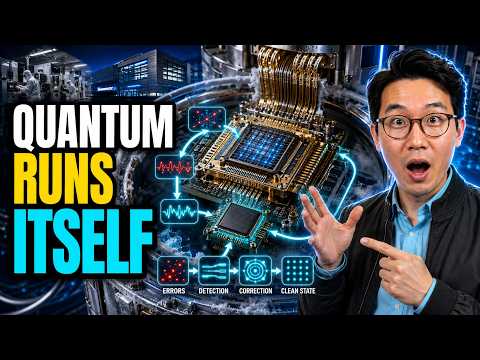
Today’s quantum systems, burdened with challenges of calibration and error correction, reveal a tantalizing glimpse of tomorrow’s capabilities. Rodenbach emphasizes the role of quantum error correction. It’s akin to a complex choreography involving multiple dancers—each physical qubit contributes to a greater whole, securing information across a broader construct known as a logical qubit. With NVQLink, real-time calibration and error correction become not only feasible but optimized for scalability.
Beyond technical specifications lies the vision of a unified supercomputing architecture where quantum and classical resources converge within the same data center. Here, hybrid algorithms can flourish. Imagine AI not merely sitting as an external monitor but actively participating in the calibration and correction of QPUs. The structure of NVQLink ensures this orchestration happens seamlessly, maintaining low-latency connections that keep pace with quantum advancements.
The concept of NVQLink also expands into scalability. Anticipating a future with millions of qubits, NVQLink must handle unprecedented data flows—in the terabit per second range—ensuring systems remain calibrated and effective. This requirement positions NVQLink as an architectural keystone, adaptable yet robust enough to support both current innovations and those on the horizon.
Looking at specific scenarios, NVQLink has demonstrated substantial improvements, such as reducing communication latency and enhancing logical error rates through collaborative efforts with partners like Continuum and Quantum Machines. These success stories underscore the platform’s potential, validating NVQLink’s approach to addressing the inefficiencies and demands inherent in quantum operations.
Recently, attention has also turned towards the inclusion of open model families designed for quantum computing. These models indicate a shift towards more automated, AI-driven processes that further reduce the burden on researchers and expand the functionality of quantum systems. This development could be pivotal, allowing researchers to focus more on discovery than on the tedious nuances of manual calibration.
The emergence of NVQLink and NVIDIA’s accelerated quantum supercomputing initiative reflects a broader conversation about the future of computing. It invites us to consider how we could harness the potential of quantum mechanics harmonized with conventional powerhouses of compute. It urges us to imagine a world where quantum breakthroughs come not just from isolated advancements in qubit technology but from an extensive, supportive framework that allows these breakthroughs to matter.
As we envision this trajectory, we’re left to ponder how other industries might evolve, adopting these same principles of integration to achieve their own revolutions. Quantum computing stands not as an isolated endeavor but as part of a tapestry, one whose threads, when interwoven with purpose and precision, promise a panorama of possibilities for technology and society alike.
—