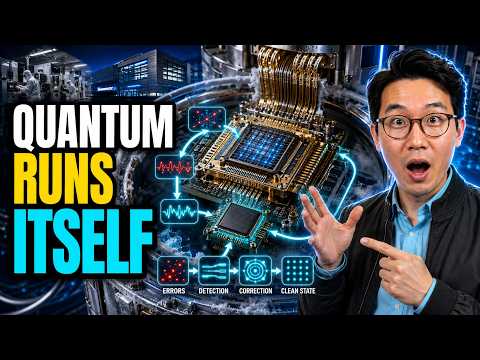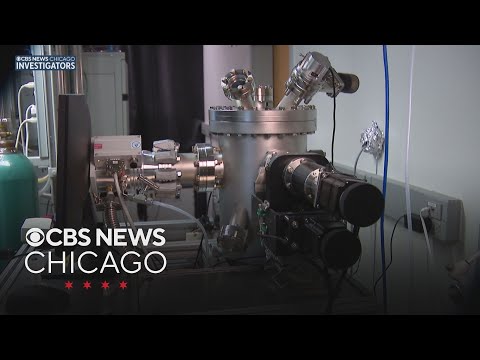
In a groundbreaking development, researchers at the University of Chicago have unveiled a “self-driving” laboratory on their campus, marking a significant leap forward in the field of quantum computing research. This innovative lab integrates cutting-edge robotics and artificial intelligence (AI) to execute tasks that would traditionally consume weeks or even months for human researchers.
Based on content from CBS Chicago
Autonomous Innovation: The concept of autonomous vehicles and delivery robots is familiar to most of us. However, this latest breakthrough presents the first self-driving laboratory in the Midwest, an endeavor that automates intricate research processes autonomously. Unlike the typical lab setting, here, the automation isn’t about moving objects but about conducting high-level research autonomously.
Assistant Professor Xiaolong Yang, from the University’s Pritzker School of Molecular Engineering, is spearheading this revolutionary prototype. He stated, “I thought, why couldn’t we use AI and robotics to automate this entire process?” This self-sufficient system is set to expedite the discovery of materials essential to the development of future quantum computers and electronics.
Synergizing AI and Robotics: The self-driving lab blends AI with robotic engineering, creating a high-speed shortcut to quantum computing advancements. More than just a time saver, the system learns and adapts through its operations, further pushing the boundaries of material discovery not just in quantum computing, but potentially across other domains as well.
Rest assured, this technological advancement is not aimed at replacing human researchers. Instead, it’s a tool that allows these skilled individuals to focus on more critical and creative aspects of their work, freeing them from the mechanical, manual labor traditionally required in laboratory settings.
Energy Efficiency and Future Applications: One of the most pressing issues tackled by this self-driving lab is energy consumption, particularly relevant to the growth of data centers. As utility costs rise due to data infrastructure demands, quantum materials developed at the University of Chicago could introduce superconductors to significantly reduce energy usage, making quantum computing an attractive solution for eco-friendly technology.
The project receives funding that extends for another year, with the university committed to continuing support thereafter. This pivotal research is reshaping how we approach material science and quantum technology, promising a more efficient and sustainable future.