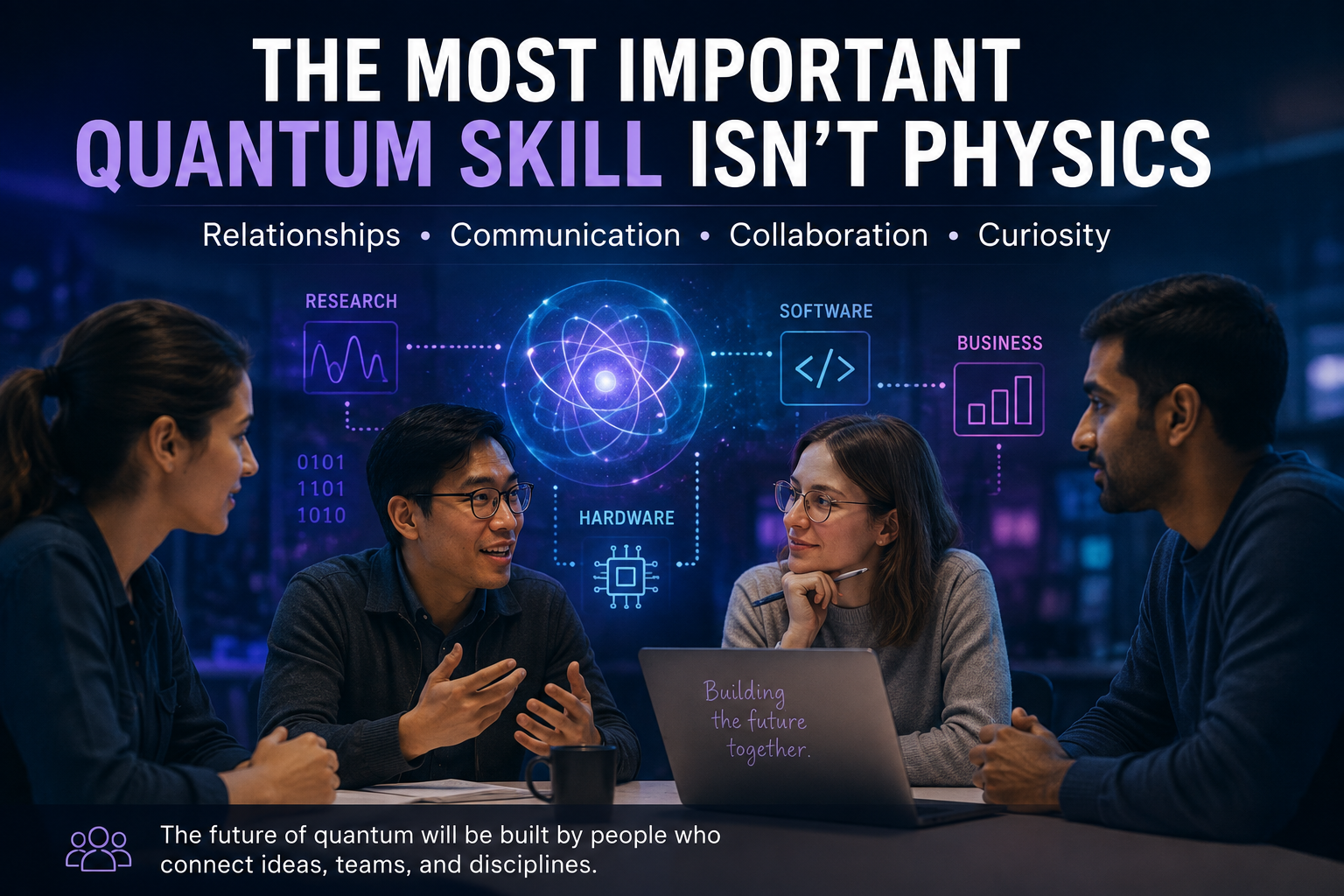
Every once in a while on Impact Quantum, a guest drops a thought that gently rewires how you see an entire field. When doctoral candidate Michael Magid joined us to talk about system science and quantum AI, he delivered one of those moments with a simple insight that has stayed with me.
If you feel like you do not understand quantum computing, that means you are learning.
If you feel like you fully understand it, you are definitely missing something.
That idea feels like a slight shock to the system, especially for anyone who has ever tried to wrap their head around quantum mechanics. You read the books, watch the videos, and ask the questions, and still end up wondering if you somehow skipped an instruction manual. According to Michael, that feeling is normal. In fact, it is a sign that you are on the right path.
The Quantum Mindset Shift
Michael explained this idea through a well-loved physics story. A professor begins Quantum 101 by telling the class, “Right now, I do not know anything about quantum. And by the end of this course, none of you will know anything about quantum.” The entire room laughs, but the message lands. Quantum mechanics is not something you conquer. It is something you approach, circle, and gradually develop a sense for, even as pieces remain mysterious.
Quantum concepts are slippery because they do not behave like anything in the classical world. The math is intense. The intuition is strange. The rules bend in ways that feel unnatural. That is why Michael’s point matters so much. The feeling of not knowing is not a mistake. It is the experience of learning quantum.
Why This Lesson Matters for Our Community
Impact Quantum has always been about accessibility. Our goal is to bring people into the field who may never have considered themselves technical, academic, or math-trained enough. Hearing someone doing quantum research say that confusion is the expected state should feel like a relief to anyone listening.
Quantum is young. The language is unfamiliar. Even the brightest minds in the world debate how it all works. You are not behind. You are already on the road.
Michael also pointed out that clarity grows through questions. Not easy questions, but repeated ones, persistent ones, and sometimes questions that feel a little embarrassing. The field rewards curiosity more than confidence.
Learning as Curiosity, Not Perfection
The most memorable part of the conversation was how human Michael made the learning journey sound. Not elitist. Not closed off. Just honest. He reminded us that professors love to teach and researchers love to share, and that learners should never be afraid to ask for help.
His advice was simple.
Keep asking questions.
Let confusion guide your next step.
Be patient with yourself.
Do not expect certainty in a field built on uncertainty.
The Takeaway
The most valuable lesson from this conversation was not a technical breakthrough or a new algorithm. It was a mindset.
Confusion is not a signal that you do not belong in quantum.
Confusion is the doorway into quantum.
Embrace it. Stay curious. And trust that the feeling of not understanding is the clearest sign that you are learning exactly the way you should.