Cryptography, decentralized networks, and open protocols exploded out of research labs and hacker garages. What came next was an entire digital economy built on top of math, consensus, and a whole lot of faith in the limits of classical computing.
But the next reinvention won’t be accidental.
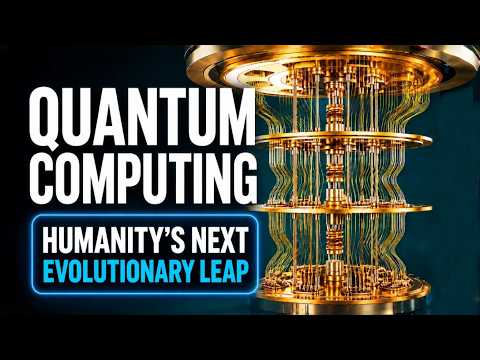
It will be engineered step by step, as quantum computing muscles its way into reality and forces every digital system to grow up fast.
If the first article explored what quantum means for blockchain, this one looks at what quantum means for the world blockchain is about to inherit. Think of it as a field guide for the transition.
The Quantum Migration Era Has Already Started
Here’s the uncomfortable truth. Most blockchains today would not survive contact with a mature fault-tolerant quantum computer. And while we don’t have that machine yet, the industry isn’t waiting politely for it to arrive.
Banks, exchanges, and even national governments have already started testing their migration paths into the post-quantum world. Blockchains will need to do the same, but with far more complexity. Why? Because you can’t just patch a decentralized network like you would a browser or a router.
Upgrading a blockchain is like trying to change the engine of a plane while it’s flying, and while thousands of pilots have equal say over every bolt.
And yet, the migration has already begun.
The Slow Rewrite of Cryptographic Foundations
Bitcoin developers are watching NIST’s post-quantum cryptographic standards closely. Ethereum researchers are experimenting with multi-signature schemes that combine classical and post-quantum protection. Newer chains like Algorand and Cardano are exploring hybrid approaches that blend classical speed with quantum-resistant safety.
This might seem academic, but history tells another story. Every protocol change that keeps the internet running began as a quiet draft years before it became necessary.
Right now, we are in the drafting stage for a quantum-proof blockchain.
The Rise of Quantum-Aware Nodes
Picture nodes that don’t just validate blocks. They monitor for quantum-era threats in real time. They detect abnormal factoring attempts, suspicious key behavior, or sudden bursts of computational power that would have been impossible just a day ago.
In the future, node operators may run classical validators alongside quantum security modules. These will act like digital immune systems that adapt as quickly as quantum hardware evolves.
This isn’t science fiction. Teams in Japan, Germany, and the United States are already testing early versions of these ideas inside financial networks.
The New Players Who Will Shape the Quantum Blockchain Future
Here’s the twist no one saw coming. The biggest innovators in quantum blockchain probably won’t be the crypto maximalists or the hardware giants. It’ll be the people working at the intersection.
Quantum security researchers. Blockchain protocol architects. AI-driven threat analysts. Policy designers. Energy optimization engineers. And yes, the marketers and educators who make this all understandable to the rest of the world.
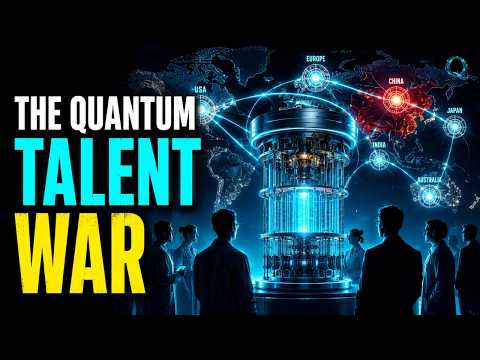
This isn’t just a technical leap. It’s a talent leap.
Quantum Risk Architects
These specialists will model scenarios like quantum-enabled double spends, signature forgeries, and cross-chain quantum attacks. Their work will influence everything from token design to consensus rules.
Quantum Economic Designers
Once scarcity is defined by physics rather than cryptography, economic theory itself needs an update. These designers will shape what value looks like in a world of unforgeable digital assets.
Quantum Governance Engineers
Quantum-safe protocols won’t matter if no one adopts them. These engineers will design voting systems, forks, and community transition plans for the largest blockchains on earth.
This is where your whole thesis about quantum being a team sport lands with full weight. No single discipline can build what’s next.
The Most Overlooked Challenge: The Quantum Data Gap
Blockchains are supposed to be immutable. But here’s the uncomfortable question. What about all the data already written to those chains under classical cryptography?
Public keys. Signatures. Wallet metadata. Smart contract inputs. Billions of historic transactions.
Once quantum machines reach a certain threshold, that old data becomes low-hanging fruit. Which means our future security can’t just protect us moving forward. It has to protect us in reverse.
This creates a new industry category: quantum data sanitization. Tools that will:
- Identify vulnerable legacy keys
- Migrate ownership proofs
- Generate quantum-hardened versions of existing identities
- Seal old data behind new cryptographic structures
Think of it like a massive digital archaeology project. But instead of digging for lost knowledge, the goal is preservation.
So What Does a Quantum-Native Blockchain Actually Look Like?
Let’s pull it together.
It would run on:
- Post-quantum encryption
- Quantum random number sources
- Quantum-resistant signatures
- Quantum-enabled consensus
- Hybrid classical and quantum-aware nodes
- Quantum-secure messaging for validator coordination
- Self-authenticating quantum money or asset proofs
In this world, blockchain stops being just clever software. It becomes a physics engine for trust.
Transactions become tamper-evident by the laws of nature. Identity becomes both private and provable. Economic systems become more stable because randomness is no longer synthetic. It’s real.
And consensus could become dramatically more energy efficient.
The Roadmap From Here to There
This transition won’t be linear. It will unfold in four overlapping phases.
Phase 1: Awareness
Where we are now. Developers and policymakers are educating themselves and drafting standards.
Phase 2: Hybridization
Blockchains are starting to blend classical and quantum-resistant systems. Wallets get upgrades. Nodes diversify.
Phase 3: Migration at Scale
Chains execute major protocol upgrades. Some fork. Some collapse. Some leap ahead.
Phase 4: Quantum-Native Networks
Entire ecosystems emerge that are designed from scratch with quantum physics in mind. These become the backbone of Finance 2.0.
The Bottom Line
Quantum computing isn’t coming to destroy blockchain. It’s forcing blockchain to evolve.
The chains that survive won’t be the ones with the loudest communities or the largest market caps. They’ll be the ones who can reinvent themselves fast enough.
We are entering a decade in which trust, identity, money, and value are rewritten in the language of physics.
So the question every blockchain project now faces is simple.
Are you preparing to defend the past?
Or are you preparing to build the first economy of the quantum future?
Because ready or not, that future is already knocking.