When Brian Lenahan talks about quantum computing, he doesn’t start with the physics. He begins with people, focusing on risk, readiness, and what it truly means to prepare for change that’s already here.
Lenahan, founder of the Quantum Strategy Institute and author of Quantum Boost and Quantum Excellence, has made it his mission to translate the complex and beautiful world of quantum mechanics into something every business leader can apply. In his conversation with Frank La Vigne and me on Impact Quantum, he reminded us that the “someday” era of quantum computing is over. The future boardroom conversation isn’t about if quantum matters; it’s about how soon.
The Quantum Wake-Up Call
For years, quantum computing lived somewhere between science fiction and academic papers—fascinating, yes, but far from the everyday concerns of business. That’s no longer true. Governments are moving, and they’re moving fast. Canada, for example, recently launched its national quantum strategy, and Lenahan is preparing to moderate a Vancouver panel that explores what that means for the industry.
“Whether you agree with their timeline or not,” he said, “governments are preparing for the quantum future today.”
That, he noted, is a signal. When policy starts running ahead of business, it’s time to pay attention.
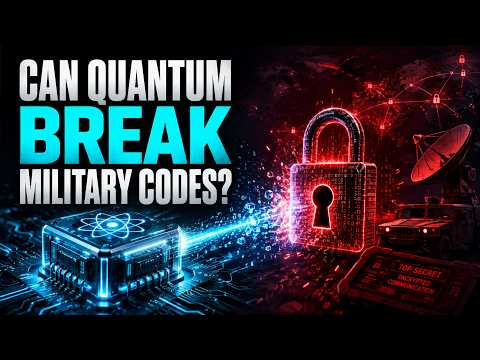
The real driver of this movement isn’t hype; it’s risk. If quantum computers could someday crack the cryptography that keeps our most private data safe, then the time to act isn’t when it happens; it’s now. “If you understand that your data, your client’s data, could already be harvested by bad actors,” Lenahan said, “then you realize we need protection.”
Technologies like post-quantum cryptography (PQC) and quantum key distribution (QKD) may sound like alphabet soup, but they’re quickly becoming the seatbelts and airbags of our digital lives.
From Anti-Hype to Action
Lenahan’s take on readiness feels refreshingly grounded: don’t chase the shiny object, learn what it means for you. “The number of qubits doesn’t matter nearly as much as what quantum can do for your business,” he told us.
In other words, quantum readiness isn’t about waiting for the “big reveal.” It’s about cultivating awareness, credibility, and strategic foresight. Companies need to know which vendors they can trust, which research efforts are genuine, and how government regulations might soon change the playing field.
“Most of the investment in 2025 is coming from governments, not venture capital,” Lenahan pointed out. “That tells you where the priorities are.”
Readiness used to mean hiring one curious person to “keep an eye on quantum.” Today, it’s a collective responsibility: understanding your country’s quantum roadmap, your organization’s vulnerabilities, and your team’s capacity to adapt.
The Missing “ChatGPT Moment”
Despite the growing buzz, quantum computing hasn’t yet had its “ChatGPT moment,” that lightning-bolt instant when everyone suddenly gets it. HSBC’s early experiments in quantum trading are impressive, but as Frank said, “It’s not a generational shift.”
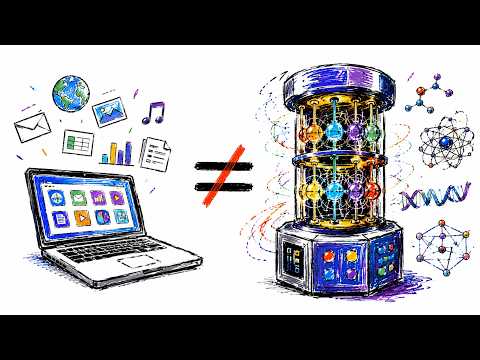
Lenahan agreed. “Quantum computing won’t be used for every application,” he said. “It’s within the toolbox, not the toolbox itself.”
Still, the potential is enormous. Imagine a company that can make decisions even 10% faster or more accurately across trillions of data points, and the ripple effects would be transformative.
Selling Outcomes, Not Qubits
One of my favorite moments in the conversation was when Brian shared how he discusses quantum mechanics with the C-suite, without mentioning superposition or entanglement once.
“I start by asking, ‘What are your hardest technology problems?’” he said. “Then I ask, ‘What if I had a solution that could address those challenges faster than anything today?’ Now we’re having a real conversation.”
It’s a perfect example of what Frank and I explore in The Quantum Sales Playbook: Selling Outcomes, Not Qubits. The path to adoption isn’t paved with physics; it’s built on empathy, clarity, and storytelling.
The Quantum Workforce
When we turned to the topic of workforce development, Lenahan lit up. The future of quantum, he said, will depend on more than physicists and engineers. It will require communicators, policymakers, HR specialists, strategists, and individuals who can bridge the gap between science and its human impact.
“Someone inside every organization must become the ‘quantum strategist,’” he explained, the bridge between business priorities and technical potential.
That bridge will be strongest when it’s built by diverse minds. I asked about attracting more cognitive and cultural diversity into quantum fields, and Brian’s answer was beautifully simple: influence and awareness. “LinkedIn influencers and podcasts like this one, that’s how curiosity spreads,” he said. “People hear about quantum, and they start to see where they fit.”
Policy, Ethics, and the New Arms Race
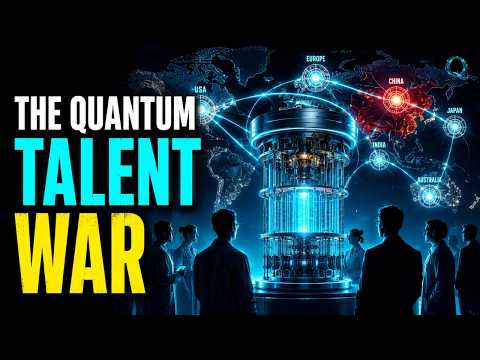
Of course, no discussion of quantum readiness would be complete without discussing the geopolitical implications. Quantum is no longer a lab curiosity; it’s a policy concern, a national security issue, and yes, a new kind of arms race.
Lenahan painted a picture of a fragmented global landscape, with North America emphasizing security, Europe weaving ethics into regulation, and Asia accelerating on its own path. “There’s no one-size-fits-all approach,” he said. “The moment a competent quantum computer exists, the creator probably won’t announce it; they’ll use it.”
I likened the moment to a new Sputnik race, not about rockets, but about qubits and trust. Lenahan nodded. “The question isn’t whether hybrid systems will exist,” he said. “It’s how.”
The Human Factor
For students and professionals wondering how to begin, Lenahan’s advice was wonderfully freeing: curiosity beats credentials. “You don’t need a physics degree to have a role in quantum,” he said. “Learn from credible sources like LinkedIn, Substack, and YouTube, and start connecting the dots between what you do now and where the field is going.”
He compared this stage of quantum to AI a decade ago, full of potential, not yet ubiquitous, but growing fast. “If you start now,” he said, “you’ll be ready when the world catches up.”
Quantum Optimism
By the end of our talk, the takeaway was clear: we don’t need to wait for a single “breakthrough moment” to start engaging. “We’re making steady, meaningful progress,” Lenahan said. “The runway is long, and the opportunities are vast.”
From quantum sensing in agriculture to quantum chemistry in drug discovery, the transformation is already underway, albeit quietly, in the hands of those who are paying attention.
As Brian put it, “We’re nowhere near taking quantum computing off the shelf, but now is absolutely the time to get your team thinking about it.”
That’s the heart of quantum readiness: not knowing everything but staying curious enough to keep asking the right questions.
Listen to the full episode now on Spotify.