When most people picture quantum computing, they imagine whiteboards filled with Greek letters or physicists huddled around cryogenic chambers in dimly lit labs. It’s easy to assume that only a rare few, with doctorates and a tolerance for equations that stretch across walls, get to join this revolution.
But as explored in The Advent of Quantum Computing: Practical Implications and the Quantum Curious, the truth is far more exciting and far more inclusive.
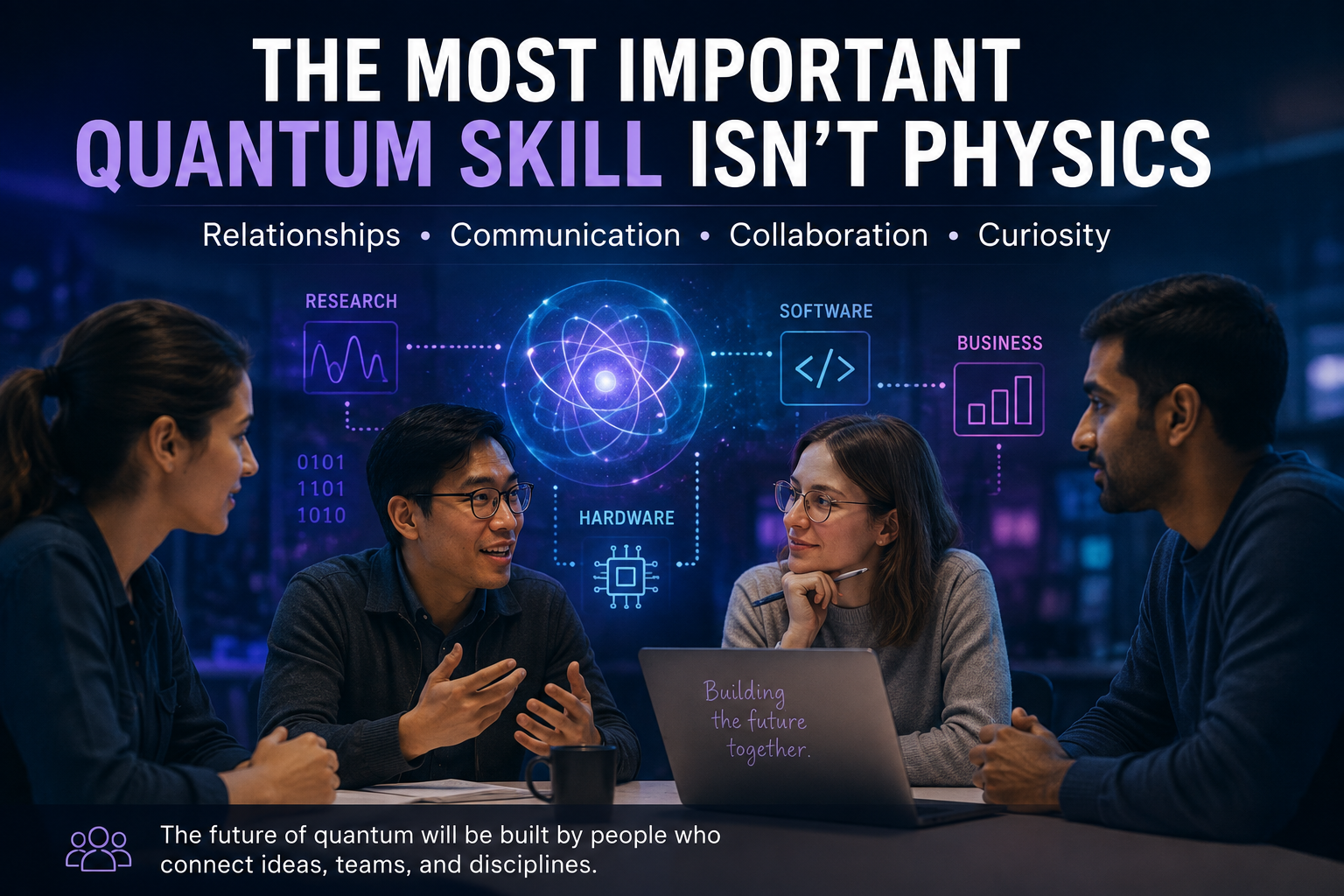
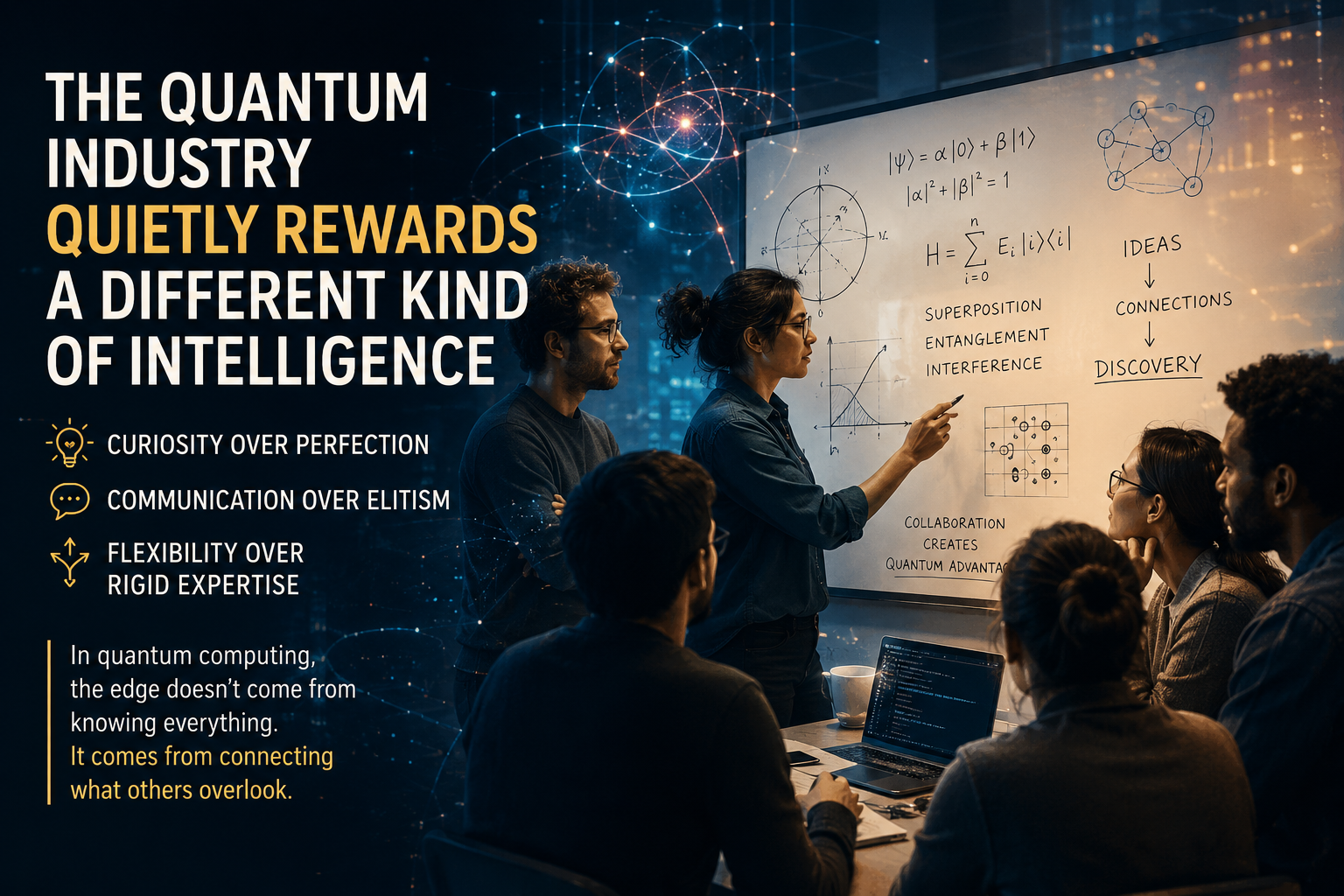
As Candace Gillhoolley and Frank La Vigne explain, curiosity has become the new currency of entry. Quantum’s next generation of innovators isn’t coming solely from physics departments. They are emerging from software engineering, data science, design, policy, marketing, and even education. The field’s boundaries are expanding, and that expansion is precisely what gives the quantum movement its spark.
A New Kind of On-Ramp
Quantum computing is still in its formative years. The rules are not written yet, the job titles are not fixed, and the career paths are still being built as we walk them. That is both a challenge and an opportunity.
Because science is so young, it needs more than quantum theorists. It needs translators.
Frank likes to call this moment “the charcoal phase,” where the fire has not quite caught, but the heat is unmistakable. In that glow, people from nontraditional backgrounds are finding their way in.
A cloud engineer might join a quantum startup to help scale hybrid architectures.
A policy analyst might examine the ethical implications of quantum encryption.
A marketer might craft stories that make the field approachable to industries that barely know what “qubit” means.
These contributors may never touch a dilution refrigerator or derive Schrödinger equations, yet they are the connective tissue linking research to reality.
Why Curiosity Matters More Than Credentials
Candace, who proudly calls herself “quantum curious,” embodies this shift. She does not come from physics but from storytelling. Her curiosity drives her to ask questions that physicists sometimes overlook. Why should the public care? How could quantum change daily life? Who is being left out of the conversation?
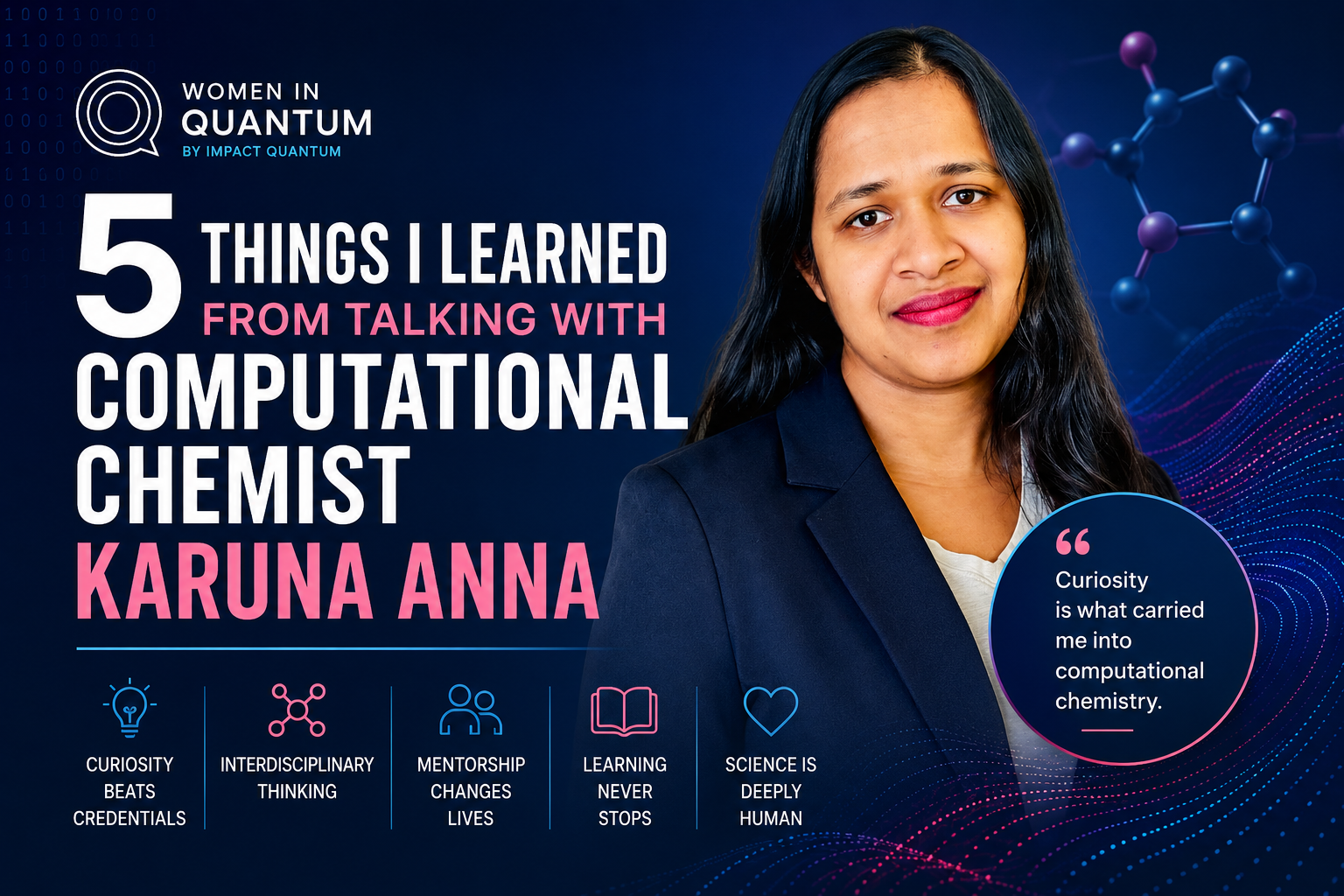
Curiosity turns complexity into connection. It is the same spirit that once drew hobbyist coders into early computing circles or designers into the first UX teams.
In quantum, curiosity bridges disciplines. It lets a biologist grasp quantum chemistry or a game developer explore quantum simulation. It also keeps the field honest.
When newcomers from marketing or education ask simple questions, such as “Why does superposition matter?” or “How do we measure progress?”, they help puncture echo chambers. They remind experts that the story of discovery only has meaning if others can join the conversation.
As Frank put it, “The people who keep asking ‘what if’ are the ones shaping the field.”
Beyond Physics: The Many Pathways In
The idea that quantum computing belongs only to physicists is as outdated as the notion that software development belongs only to mathematicians.
Today, the quantum ecosystem includes:
- Software developers, building frameworks like Qiskit, Cirq, and Braket so others can experiment.
- Data scientists, adapting machine-learning models for quantum systems to test how entanglement might enhance pattern recognition.
- Policy makers, wrestling with encryption standards, data sovereignty, and national strategies.
- Designers and educators, translating abstract principles into visuals and lessons that make students’ eyes light up.
- Marketers and communicators, turning dense research into language that executives, investors, and the public can understand.
Each role reflects a new kind of literacy that blends technical fluency with creative empathy. The quantum workforce of tomorrow will not be a solo act. It will sound more like a symphony.
The Power of the Quantum Curious
One of the most transformative insights from The Advent of Quantum Computing is that curiosity multiplies everything it touches.
When people outside physics ask “why,” “how,” and “what next,” they expand what is possible.
Think about the teachers designing workshops for high school students using visual quantum simulators. Or the artists building immersive installations that help people feel what entanglement means. Or the cybersecurity experts preparing us for a post-quantum internet. None of them fit the old mold of “quantum scientist,” yet all of them are building the future.
Online courses, open-source tools, and communities are fueling this momentum. IBM’s Qiskit textbook, AWS Braket tutorials, and forums like the Quantum Open Source Foundation invite anyone to play, learn, and build.
In these spaces, physicists meet programmers, marketers meet ethicists, and artists meet educators. That cross-pollination, the spark between unlikely collaborators, is what keeps quantum innovation alive.
The Human Side of Quantum
Beneath all the math, quantum computing is a profoundly human story. It is about a generation learning to collaborate across boundaries that once divided science, business, and art.
Candace and Frank’s partnership reflects that blend: one a technologist, the other a storyteller. Together, they remind us that quantum’s promise is not only faster computation but broader participation.
The “quantum curious” are not dabblers. They are explorers who keep asking why it matters and who it will help. They connect the theoretical with the emotional and the technical with the tangible. That is what makes quantum real.
The Road Ahead
As technology matures, multidisciplinary voices will become increasingly important. Companies will need translators who can bridge physics and finance, algorithms and ethics. Governments will depend on communicators who can explain why quantum investment matters to national security and competitiveness. Startups will rely on marketers who can turn uncertainty into opportunity.
If you are new to quantum, the best credential you can bring is not a PhD. It is curiosity. Read. Listen. Ask questions. Join a forum. Take a class. Curiosity does not just open doors. In a field this new, it builds them.
As Candace said on the podcast, “You do not have to understand physics to understand the importance of curiosity. It is the one thing that keeps the future open.”
Quantum computing may be grounded in physics, but its growth depends on people who are willing to think differently. Curiosity, not pedigree, is what moves the field forward.
And in this new world, where qubits replace bits and probability replaces certainty, curiosity is not only valuable. It is the currency of progress.